
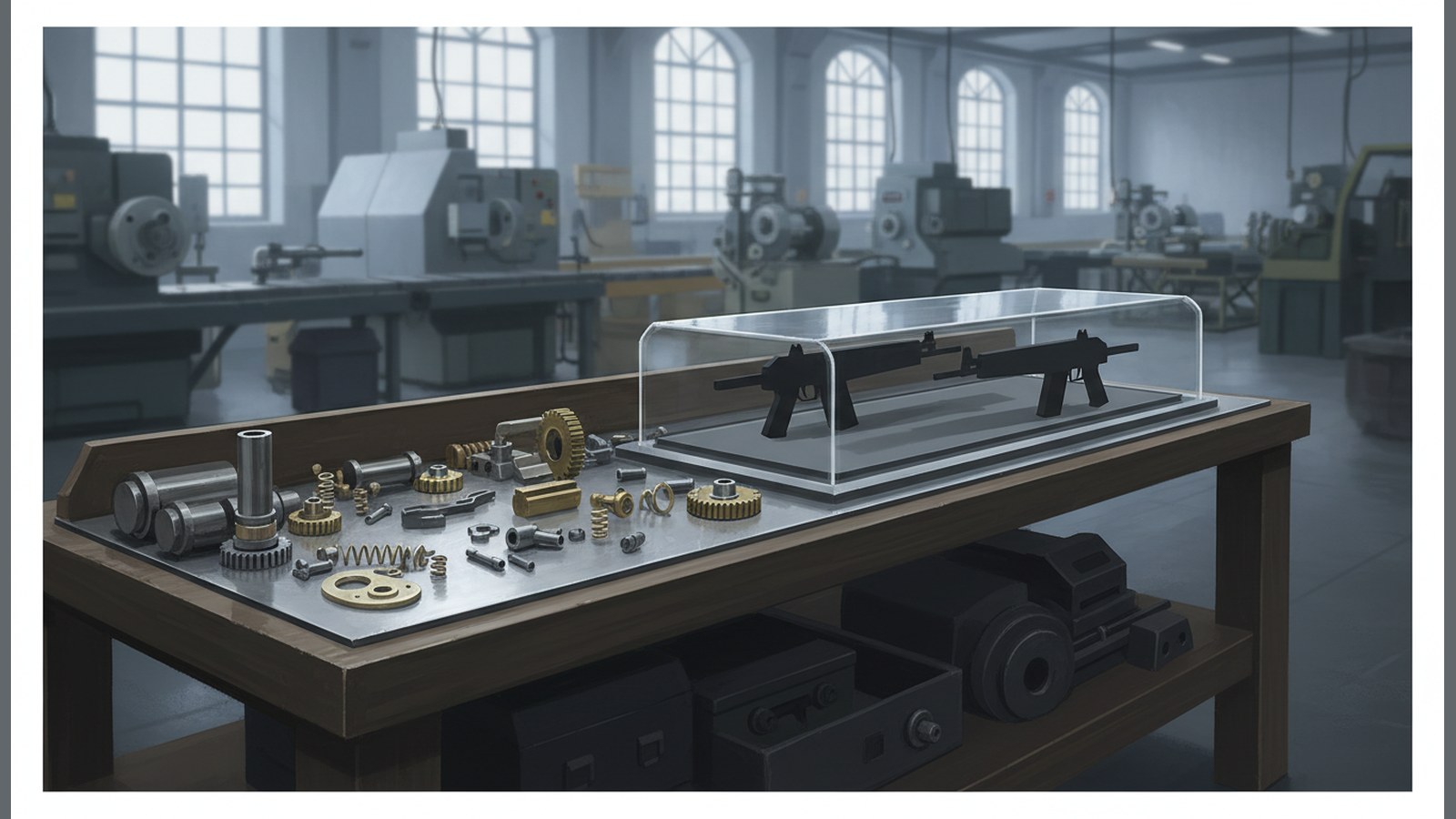

Lithuania’s state-owned arms manufacturer Giraitės ginkluotės gamykla has presented its first assembled automatic rifles, marking an expansion beyond the ammunition production that has been its core work for more than two decades.
The development is an early-stage assembly and maintenance project, rather than an announcement that complete rifles are now being manufactured in Lithuania. The company said its immediate priorities are training staff, preparing infrastructure and testing the rifles it has assembled.
Those first steps are intended to build technical capacity before the business moves towards industrial-scale assembly. The longer-term ambition is to manufacture rifle components in Lithuania and create a national centre of expertise in weapons.
Assembly capability is the initial focus
The distinction between assembly and manufacture is central to the announcement. At this stage, the work concerns bringing together rifles and developing the skills and facilities to maintain them. The company has not said that it has begun producing complete automatic rifles domestically.
Its next planned work includes further staff training and developing expertise in weapons repair. The intended capability is to be shaped around the requirements of Lithuania’s defence and security institutions. No timetable for moving from the initial phase to wider industrial assembly was set out.
The announcement also did not identify a rifle model, the number of rifles assembled, a procurement order or a production target. That leaves the presentation as evidence of a new capability programme, rather than a measure of current output or a confirmed supply contract.
Partnership supports the programme
The company is developing the project with EMTAN, an international arms manufacturer. The partnership is intended to help it acquire technical expertise, train specialists and develop manufacturing operations in Lithuania.
For Giraitės ginkluotės gamykla, the programme adds a new line of activity to its established ammunition business. The company has produced ammunition for Lithuania’s defence needs for more than 20 years. It has recently invested in bullet-making and other production equipment, and introduced an anti-drone cartridge for use with standard NATO weapons.
Its products are exported to more than 30 countries, while its stated strategic aims include increasing production capacity, attracting foreign investment, diversifying production and maintaining dependable supply. The company is wholly owned by the Lithuanian state, with shareholder rights exercised through the finance ministry.
Finance Minister Taurimas Valys said investment in defence should strengthen military security while creating long-term economic value. He linked the plan to increasing Lithuania’s pool of defence-industry technology, specialists and production capacity, which he said would support the state’s resilience.
What the announcement means now
The presentation on 23 October signals the start of a structured move into small-arms assembly and maintenance. It does not by itself establish the scale of the operation, when component manufacture might begin or whether the assembled rifles will enter service.
Those questions will depend on the completion of training, testing and infrastructure preparation, as well as on decisions taken as the industrial assembly plan develops. The longer-term component-manufacturing goal would represent a further step beyond the capability described in the current announcement.
For now, the immediate change is that a Lithuanian state-owned ammunition maker has demonstrated its first assembled automatic rifles and set out the work it says is needed to turn that initial activity into a broader national weapons capability.







