
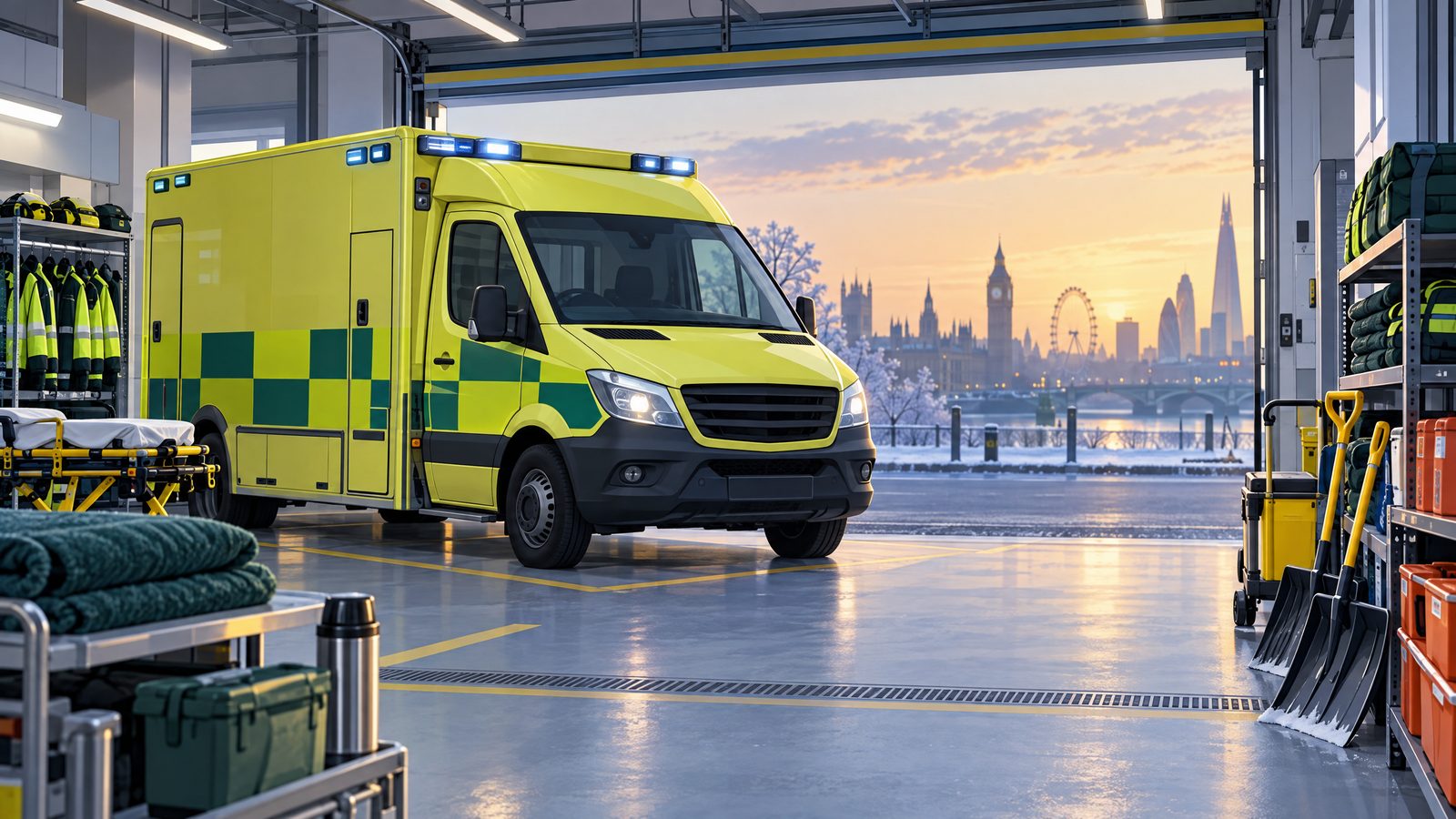

London’s ambulance service says it is entering winter with respiratory-related calls already above its usual levels, alongside increases in urgent calls and demand through the 111 service. It has set out a package of operational measures intended to help manage the pressure, from adding ambulances at peak times to expanding telephone care and hospital handover work.
The service’s demand figures are not a clinical surveillance assessment of infections across the capital. They do not establish which illness or combination of factors is driving the rise, and no independent current dataset was available to test the totals. The comparisons nevertheless give a dated snapshot of the workload the service says it is preparing to handle.
Respiratory calls rise into October
In September, the service dealt with more than 10,000 patients with breathing problems, an average of just over 330 a day. In the first week of October, it reported almost 360 such patients a day. The figures compare a full month with a seven-day period, so they show the recent daily rate running higher than September’s average rather than providing a like-for-like monthly comparison.
Category 1 calls, the most urgent requests for an ambulance, have recently been well above 500 a day, the service said. It compared that with about 400 on a typically busy day. That difference matters operationally because the most urgent calls require a rapid response, although the announcement did not provide a breakdown of response times or explain how many vehicles were available on each day.
Across all 999 calls, daily volumes are running at 6,000 to 6,500, against a typical busy-day level of about 5,500. The service identified 5 October as a particular peak, when it received more than 6,800 calls. Separately, it reported that 111 calls were 19 per cent higher than at the same point a year earlier. These are distinct measures of activity; the announcement did not say that the 111 increase translates directly into ambulance dispatches.
Five strands of the winter response
The plan includes additional ambulances at times of peak demand. The service did not state how many vehicles would be added, where they would be based or the hours they would operate. The commitment is therefore a description of the intended response, not a published deployment schedule or a guarantee that pressure will be removed.
A second element is the use of artificial intelligence to help with clinical note-taking. The stated role is administrative support for recording information, not making clinical decisions. No technical details, evaluation results or timetable were included in the announcement, so the extent of any time saving is not yet clear from the published information.
Other measures involve providing more care by telephone, increasing cleaning capacity and expanding vehicle repair capacity. More telephone care could allow some people to receive help without an ambulance journey, but the service did not quantify the additional provision or specify eligibility. Cleaning and repair work address the readiness of vehicles between jobs; the announcement gave no figures for staffing, turnaround times or the number of vehicles affected.
The plan also includes work with hospitals on handovers. Ambulances can be unavailable for new calls while patients are transferred into hospital care, making handover arrangements one part of overall capacity. No particular hospital, target handover time or change to local procedures was identified in the announcement.
What the figures can and cannot show
Taken together, the reported breathing-problem totals, Category 1 calls, 999 volume and 111 increase indicate pressure across several parts of the service’s workload. They are service activity figures, however, and cannot by themselves show the prevalence of flu, cold or other respiratory illness in London. Nor do they establish that respiratory cases account for the increase in all emergency calls.
The announcement sets out the direction of the winter response but leaves important measures of delivery unanswered: how much extra capacity will be deployed, when the measures begin, and what outcomes will be tracked. Without those details or independent current monitoring, the figures are best read as the service’s account of demand and preparations, not a complete assessment of the capital’s health pressures.
For Londoners, the practical point is that the service is planning for a busier period while reporting elevated demand already. Its response combines more peak-time ambulance provision with changes to telephone care, vehicle readiness, clinical administration and hospital transfers. Whether those steps prove sufficient will depend on how they are implemented and how demand develops through the winter.







