
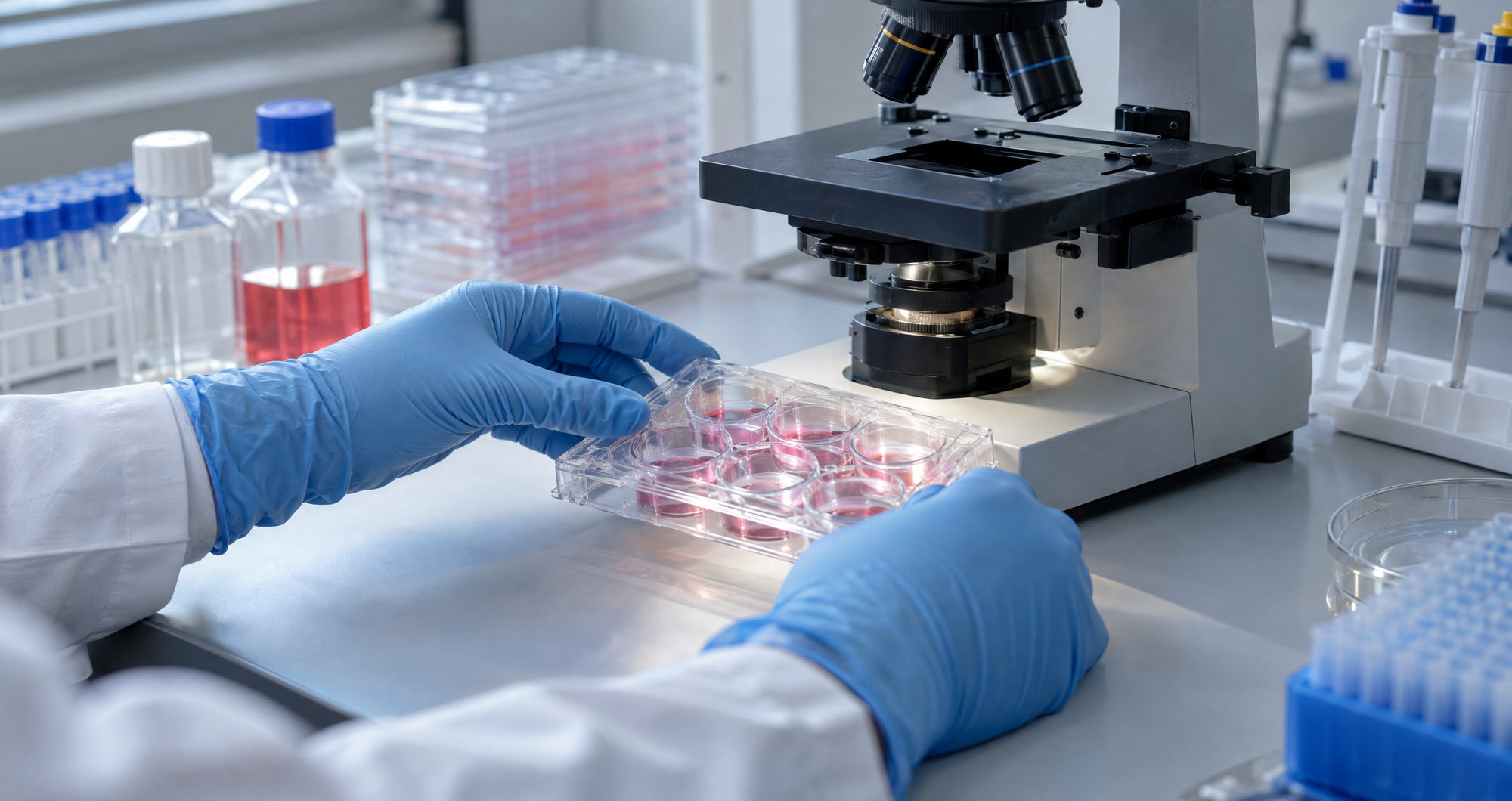

Researchers working in London and with international colleagues have shown that correcting a specific error in RNA processing can restore some signalling in laboratory-grown human nerve cells designed to model aspects of motor neurone disease.
The peer-reviewed study, published on 11 November, examined what happens when a protein called TDP-43 stops functioning normally. The team found that an error affecting another protein, UNC13A, was a major contributor to disrupted communication in their models. Short synthetic molecules designed to correct that error improved measures of signalling between the cells.
The work is preclinical: it does not show that a treatment can restore nerve function in people with motor neurone disease, slow their illness or cure it. A different experimental molecule aimed at the same target is being assessed in an early human trial, but the laboratory results are not clinical results from that study.
How the researchers tested the idea
Motor neurone disease is a progressive condition in which nerve cells controlling muscles become damaged. Amyotrophic lateral sclerosis, or ALS, is its most common form. The condition can affect movement, speech, swallowing and breathing.
TDP-43 is a protein involved in processing RNA, the molecular material that carries instructions used to make proteins. In many people with ALS, TDP-43 is displaced from its usual position inside the cell nucleus. The resulting loss of its normal function can lead to errors when RNA is assembled.
The research team used human stem-cell-derived neurons and deliberately depleted TDP-43 to model that loss of function. In their experiments, an unwanted section was included in the RNA instructions for UNC13A, reducing the amount of functional protein produced. UNC13A helps nerve cells release the chemical signals they use to communicate at junctions called synapses.
The scientists tested whether correcting this one error would affect the disrupted activity. They used two approaches: removing the unwanted section through genetic editing and applying molecules known as antisense oligonucleotides, or ASOs. These short pieces of synthetic genetic material are designed to bind to RNA and influence how it is processed. The ASO approach does not involve permanently changing the cell’s DNA.
Correcting UNC13A processing restored protein production and improved several measures of synaptic transmission in the laboratory models. The researchers also observed recovery in the coordination of activity across networks of neurons. In separate tests on human spinal motor neurons, the ASOs partially restored an electrical response that had fallen after TDP-43 was depleted.
What the findings do and do not show
An earlier, non-peer-reviewed version of the research was made public in 2024 and had already reported that UNC13A-directed ASOs could restore synaptic function in human neurons. The newly published paper includes further experiments, including work with spinal motor neurons and a mouse model carrying a humanised section of the relevant gene. In the mice, the researchers measured a partial reduction in the RNA-processing error in spinal cord tissue; they did not report that the treatment restored the animals’ movement.
Not every effect of TDP-43 loss was corrected. The researchers found that the number of active synapses was not restored by the ASOs. They also cautioned that their cell models had a more uniform loss of TDP-43 than the mixed pattern seen in people with ALS. Results in isolated cells and engineered mice cannot establish whether the approach will be safe or effective in patients.
The team includes Pietro Fratta and Juan Burrone, who led the collaborative research. Fratta is also a founder of, and holds shares in, the company developing the related trial drug. The paper declares further financial relationships and patent interests among some researchers, and the company helped fund the work.
A separate human trial
The investigational drug TRCN-1023 is another ASO designed to address UNC13A dysfunction. It is being studied in a randomised, double-blind early-stage trial in which participants receive either the experimental drug or a placebo. The study is designed to assess safety and tolerability, how the drug behaves in the body and its biological effects.
The trial’s first UK participant received a dose in October 2026. That is a trial milestone, not evidence that the drug works. The study’s laboratory findings and the clinical trial investigate a similar target, but they concern different experimental molecules and answer different questions.
The laboratory work provides a more detailed picture of how one RNA-processing error can affect nerve-cell signalling. Whether correcting that error can make a meaningful difference to symptoms or disease progression in people remains to be established through clinical research.







