
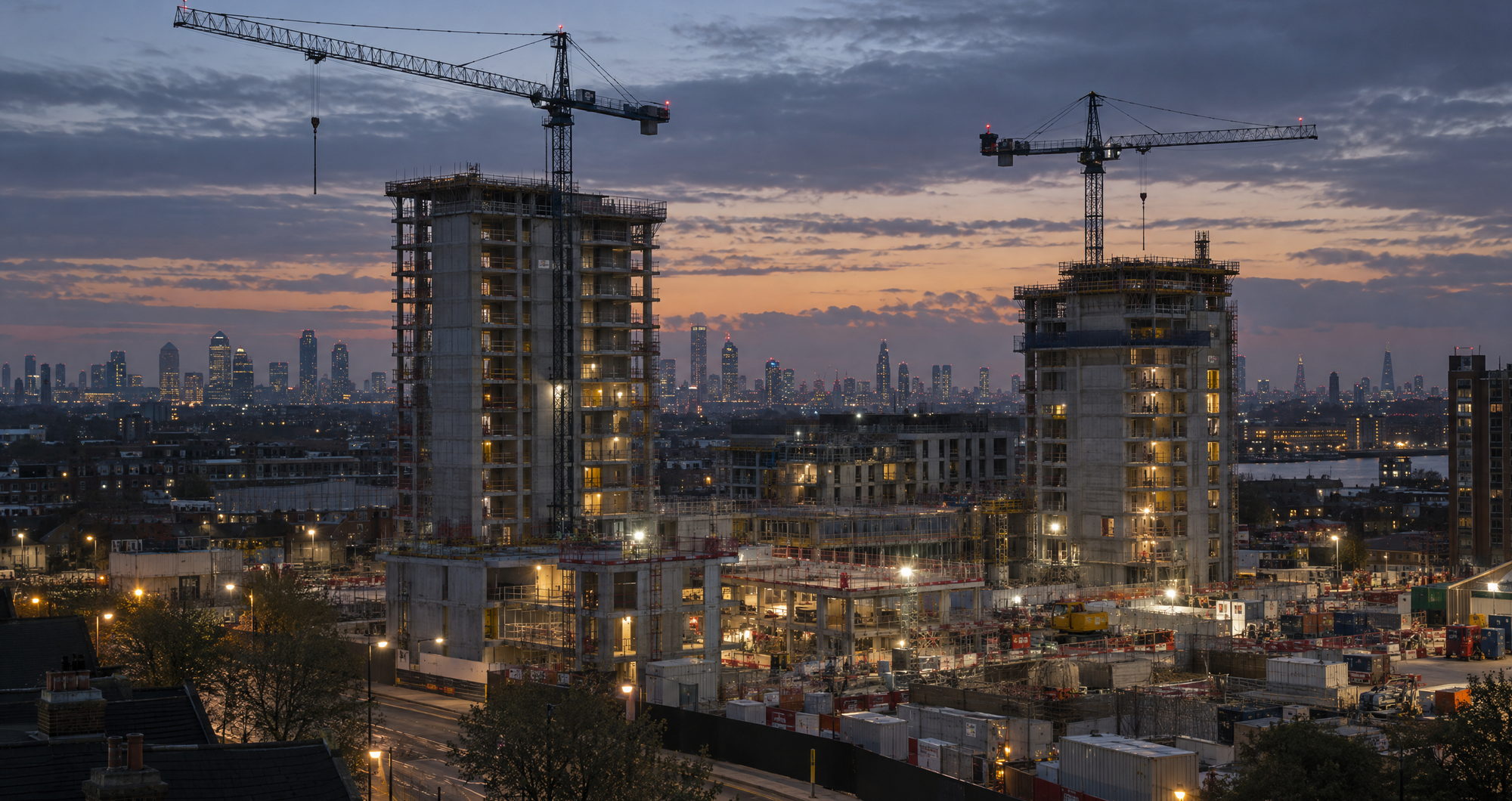

Sadiq Khan has taken control of two large housing schemes in Southwark that the borough refused after the developer cut the amount of affordable housing on offer, putting the future of nearly 2,000 homes in the hands of City Hall.
The Mayor called in the Borough Triangle scheme in Elephant and Castle on 5 October and the Bermondsey Place scheme on the Old Kent Road on 26 October. Both were rejected by Southwark’s planning committee, which found the revised affordable housing offers unacceptable. No date has been set for a hearing, and the applications now sit with the Mayor’s planning team.
What the two schemes contain
Borough Triangle would provide 892 homes across four towers, one of them 44 storeys high, on the site currently occupied by the Mercato Metropolitano food market. Bermondsey Place at Malt Street would provide 1,060 homes across eight buildings ranging from six to 36 storeys.
Berkeley Homes, the developer behind both applications, returned to the council seeking to reduce affordable housing at Borough Triangle to 10 per cent and at the final two phases of Bermondsey Place to 12 per cent, citing build costs and viability. At Borough Triangle, the change would cut the number of on-site affordable homes from 230 to 60.
Southwark’s planning committee turned both revised schemes down at separate hearings. Councillor David Watson accused the developer of pleading poverty while publishing healthy margins, a characterisation the company disputes.
Why the call-in matters
When a borough refuses a major application, the Mayor has the power to take the decision himself if he considers the scheme to be of strategic importance to London, particularly for housing numbers. The mechanism has been used sparingly, but it has become more visible as boroughs push back on schemes that cut affordable housing to protect developer returns.
The political difficulty for City Hall is that the same decision produces two incompatible headlines. Approving the schemes would add close to 2,000 homes to the capital’s pipeline at a time when the Mayor is under pressure over delivery. Approving them with 10 per cent affordable housing would also be read as City Hall overruling a borough that tried to defend its own planning policies.
Southwark has more than 22,000 households on its housing waiting list, including more than 4,200 in temporary accommodation. Councillor Victor Chamberlain, the council’s deputy leader, said he was very disappointed by the call-in and would write to the Mayor urging him to stand by the committee’s refusals.
The wider planning argument
Both cases turn on viability, the mechanism that lets developers argue a scheme cannot support the affordable housing required by policy. Councils have become more sceptical about viability claims since interest rates rose, arguing that developers inflate cost assumptions while keeping land values and profit margins intact.
The Mayor’s planning team will need to decide whether the schemes as submitted meet the London Plan’s affordable housing requirements and whether the public benefit of the homes justifies the reduction. The hearing will take place in public, with the council, the developer and local campaigners able to make representations.
Borough Triangle has been contentious since the food market was earmarked for redevelopment, with traders arguing that the site’s character depends on the market rather than the towers proposed to replace it. Bermondsey Place has drawn objections over height and the loss of light industrial space on the Old Kent Road.
If the Mayor approves either scheme, the decision is likely to be challenged by the council or by local groups. If he refuses, the developer can appeal to the Planning Inspectorate, which would move the argument out of London’s hands entirely. Either way, the two applications have become a test of how far the capital’s affordable housing requirements can bend before a borough’s refusal is overturned.







