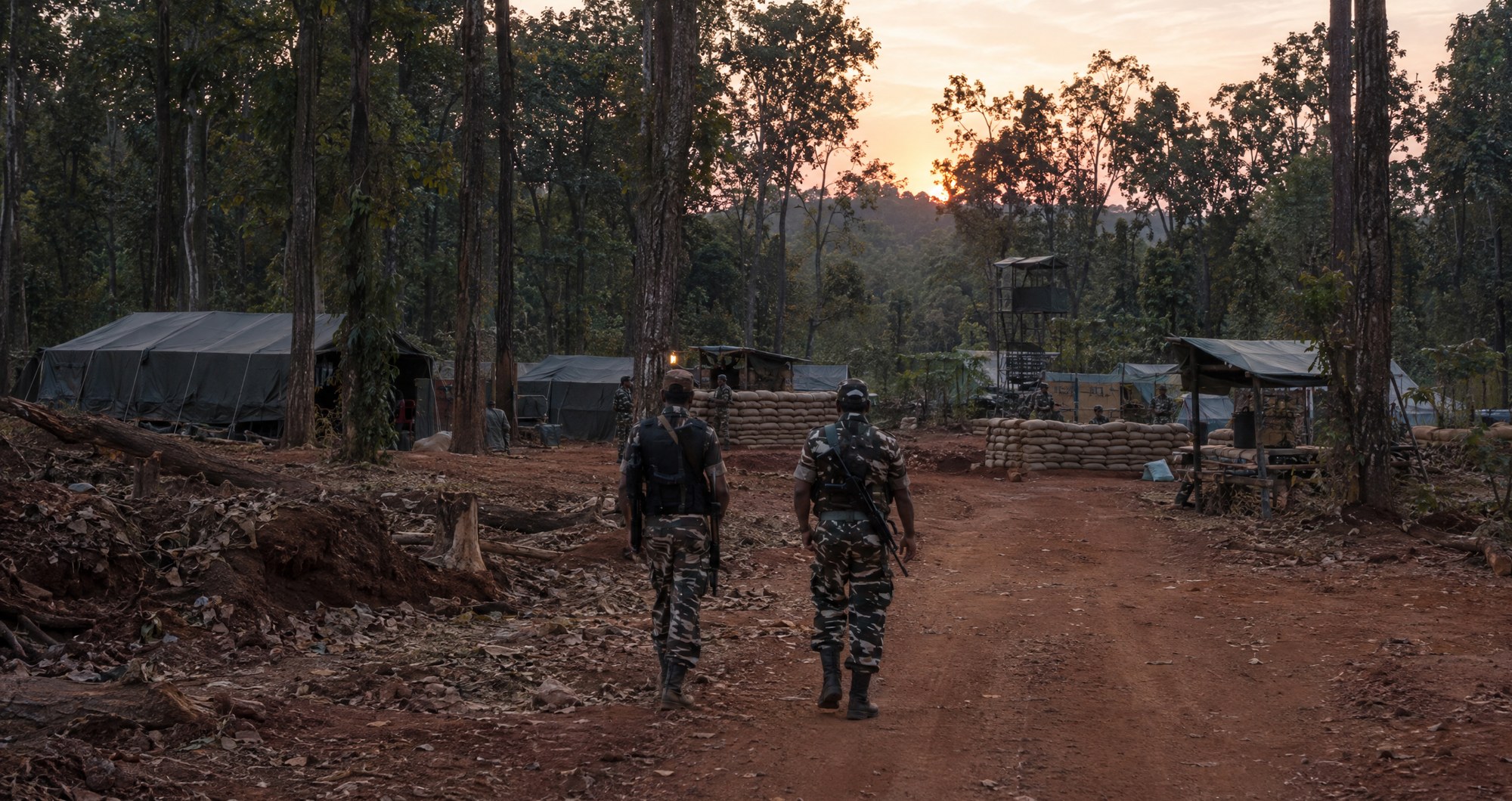

Narendra Modi has declared every Indian district free of Naxalism, claiming the end of a Maoist insurgency that has killed thousands over six decades, while warning that ideological sympathisers remain active in political parties and organisations. The prime minister made the declaration during a Diwali visit to a CoBRA base in Karanpur, in Chhattisgarh’s Bastar region, on 8 November.
Modi said this was the first Diwali on which no district in India was affected by Naxalism. His statement went further than the figures he cited in the same speech, which put the number of affected districts at 11, down from 125 over the past decade.
That distinction matters to the claim that the armed conflict is over. The government has long argued that organised Left-wing extremism has been militarily defeated, but declaring every district free of it is a broader assertion. The information supplied does not resolve the difference between that declaration and the remaining 11 districts in Modi’s account.
A declaration beyond the district figures
Speaking at the jungle base, Modi said more than 230 districts across nearly 20 states had historically been affected by the insurgency. He presented its retreat as a major change for areas that had experienced decades of violence.
He also said 303 Maoists had surrendered within 75 hours. That figure formed part of his account of the weakening of the armed movement, although the number of surrenders alone does not establish that all remaining armed activity has ended.
Modi claimed that, for the first time in 47 years, no Central Reserve Police Force personnel had been killed on duty during the preceding year. The claim concerned deaths on duty, rather than a narrower measure limited to deaths in clashes with Maoists.
He recalled the 2010 Dantewada attacks, in which 76 CRPF personnel and 44 civilians were killed. The reference placed his declaration against some of the violence associated with the conflict in Chhattisgarh, where he chose to spend Diwali with security personnel.
The district totals, surrender numbers and account of CRPF deaths were presented by Modi. They have not been independently verified in the information available for this article.
Roads, mobile towers and schools
The prime minister linked the security claims to the expansion of infrastructure and public services in former conflict zones. He cited 15,000km of new roads, 9,500 mobile towers and 175 Eklavya schools, alongside about 50 industrial training institutes.
Those figures were central to his presentation of change in areas previously affected by the insurgency. Roads and mobile connections represent a different measure from armed activity: they concern access and infrastructure, rather than whether an insurgent organisation retains the capacity to operate.
Modi also said 50 crore Indians, equivalent to 500 million people, had left extreme poverty, citing a World Bank report. That was a national poverty claim, separate from the figures he gave for development in former conflict zones.
If the armed insurgency has ended, the implications extend beyond the security statistics. India could have scope to shift police and paramilitary resources towards border and urban security, while opening mineral-rich central forests further to mining and infrastructure. Neither a redeployment nor new projects were established by the details of the speech supplied.
Warning over ideological sympathisers
Alongside his declaration about armed Naxalism, Modi warned about what he called “dimagi Naxals”, or ideological sympathisers. He alleged that they had taken over organisations and political parties and were inciting people against the Constitution.
These were allegations, not established findings. The supplied account names no organisation, party or individual accused by Modi, and gives no specific evidence supporting his warning.
The framing nevertheless broadens the conflict he described. Even as he claimed that districts were free of Naxalism, he presented an ideological threat as continuing within political and organisational life. Ending an armed rebellion and identifying alleged sympathisers are distinct questions.
Such a definition could create pressure on political opponents and civil society organisations, and could be used to justify wider surveillance or criminal cases against dissenters. Those are possible consequences of the framing, not measures shown to have been announced or implemented following the speech.
What the claim leaves unresolved
The immediate question is how Modi’s declaration of a country free of Naxalism fits with his own count of 11 affected districts. A reduction from 125 districts is not, by itself, the same as a reduction to none.
Any shift in security deployments or expansion of mining and infrastructure would depend on conditions beyond the declaration. For now, the speech combines a claim of military success with a warning of a continuing ideological threat, leaving the boundary between the two unresolved.