
Network Rail is investing £200,000 to replace power cables and 16 control units at Goole Swing Bridge, a Grade II*-listed railway crossing over the River Ouse. The work is intended to reduce the risk of equipment faults affecting trains on the Doncaster–Hull route.
Passengers will need to account for a planned two-day interruption: buses are due to replace trains between Doncaster and Hull on Saturday 17 and Sunday 18 October while the engineering work is carried out. Travellers are advised to check their full journey with National Rail or their train operator before setting out. The replacement-bus arrangement is prospective; the work has not yet taken place.
Controls help position the bridge for trains
The cables and control units form part of the equipment that ensures the bridge is correctly positioned for trains to pass. Network Rail says renewal will replace ageing equipment with modern components and improve infrastructure reliability. The announcement does not quantify expected reductions in faults or delays, and does not specify how many individual services will be affected.
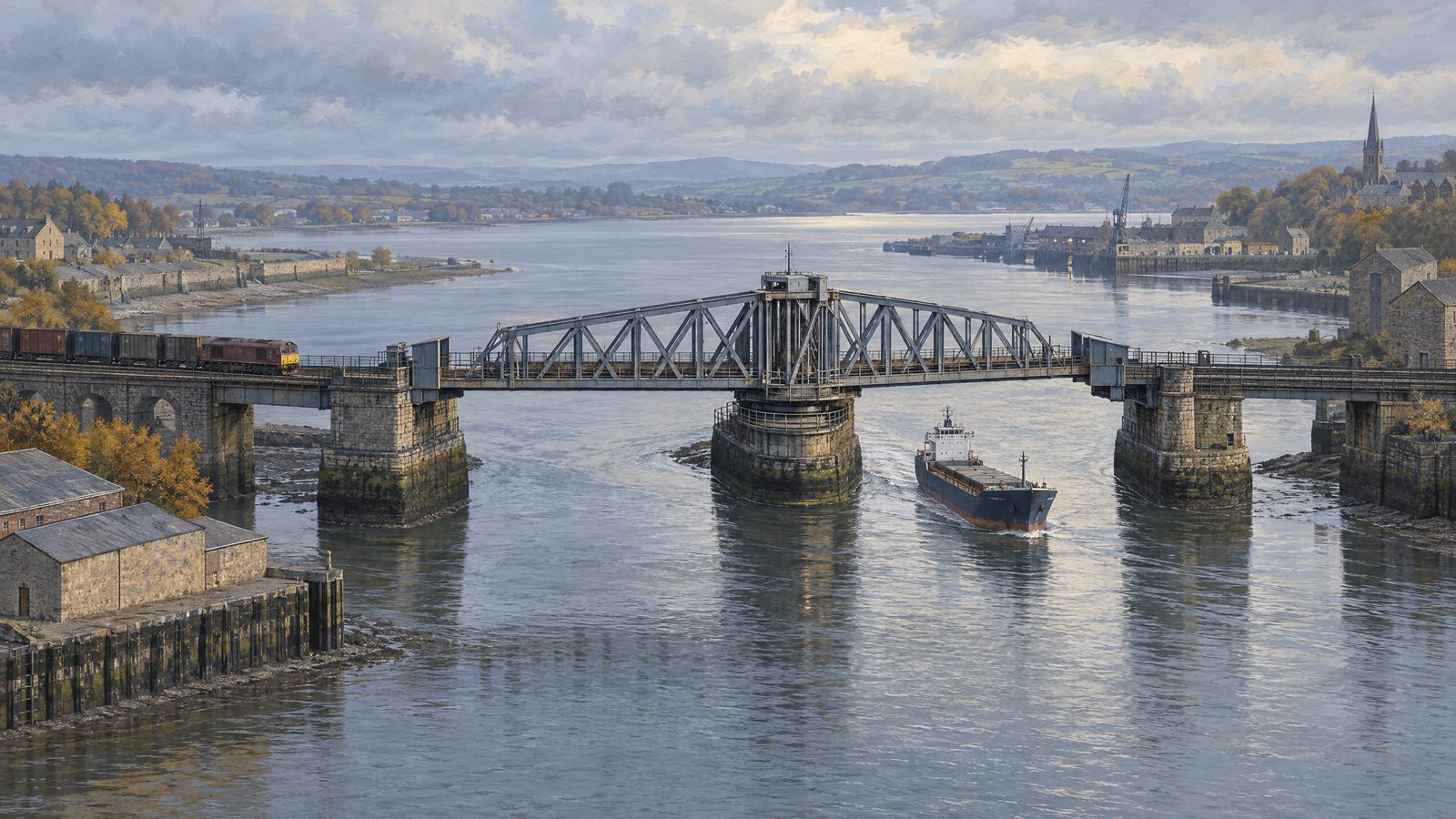
Goole Swing Bridge carries passenger and freight trains across a navigable stretch of the Ouse, while also opening to let river traffic through. It is among the country’s oldest surviving railway swing bridges. The crossing opened in 1869, and the swing span turns to create two openings for vessels. Its railway role therefore has to coexist with the needs of shipping on the river.
The Grade II* designation recognises the bridge as a structure of more than special interest. Its historic fabric and machinery make renewal a matter of maintaining railway operation while caring for a protected piece of engineering. The current announcement describes the controls and cabling being renewed, but does not say that the bridge itself is being replaced or that the work changes its operating arrangements.
Follow-up to earlier refurbishment
The latest investment follows a major refurbishment programme carried out in 2023. That project addressed the bridge’s operating systems, including hydraulic turning and jacking equipment, control systems, electricity supply and navigation lights. The crossing’s original signal cabin and retained mechanical features are part of the historic structure, while modern controls have been incorporated into its operation.
The earlier work was extensive because the bridge must both carry trains and swing clear for vessels. Network Rail’s engineering account describes a central moving span supported by a large turning mechanism, and the need to keep the bridge accurately aligned when it is returned to its railway position. The new cable and control-unit renewals are a further, specific package; the announcement does not describe them as a repeat of the 2023 refurbishment.
Network Rail says the investment forms part of its continuing maintenance and renewal programme for passenger and freight infrastructure. It has not published a more detailed cost breakdown or a longer-term timetable for further work at the bridge in this announcement.
Travel plans for 17 and 18 October
During the planned work, replacement buses will cover the Doncaster–Hull section on both Saturday and Sunday. Passengers should allow for the change from train to bus and check the arrangements for the individual legs of their journey, including connections and any operator-specific advice. The public announcement gives the route and dates but does not list bus stopping points or journey times.
For rail users, the work brings a short-term disruption to deliver a targeted renewal at a crossing where safe positioning is essential to trains passing over the river. Network Rail says replacing the cables and 16 control units will help reduce the risk of equipment failure and support reliable services. The outcome will depend on the work being completed as planned; passengers should use current travel information before departure.