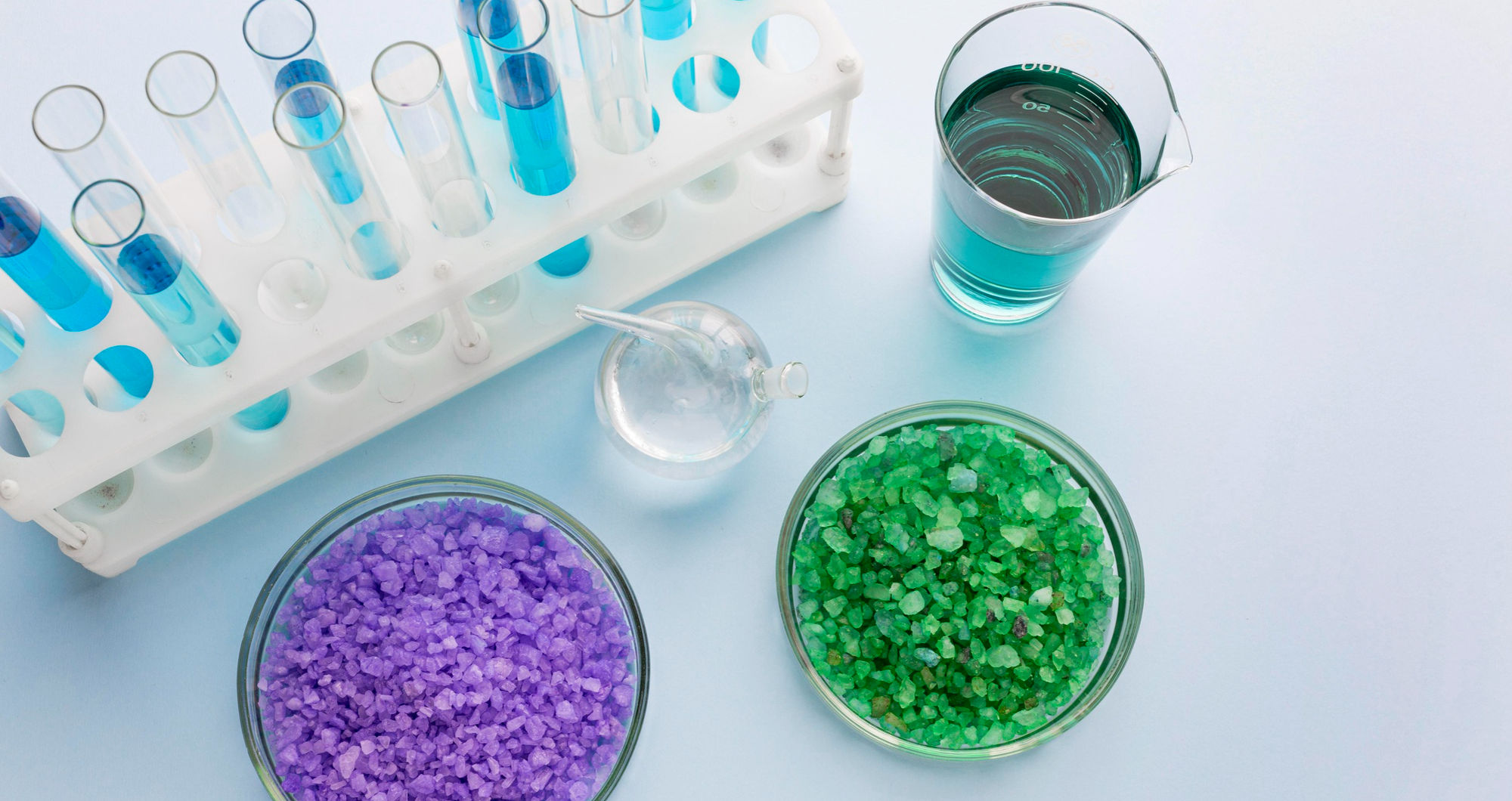

Many photochemical reactions are driven by catalysts made from precious metals like platinum, iridium, and ruthenium—materials that are rare, expensive, and difficult to mine. However, a recent study from Johannes Gutenberg University Mainz in Germany could revolutionise this field. The team has developed a manganese-based photocatalyst that is not only highly efficient but also inexpensive.
Manganese is over 100,000 times more abundant in the Earth’s crust than ruthenium, making it extremely cheap. Yet, scientists have rarely used it in the past because manganese complexes are typically difficult to synthesise and have very short excited-state lifetimes. They often “deactivate” immediately after being photoexcited, leaving no time to participate in reactions.
This time, the research team designed a manganese complex that overcomes both limitations at once:
- One-Step Synthesis: Commercially available raw materials are mixed directly in solution, instantly forming a deep purple product—as simple as mixing ink.
- Ultra-Long Lifespan: The excited-state lifetime reaches 190 nanoseconds, 100 times longer than previous manganese or iron complexes, allowing sufficient time for electron transfer.
What does this mean? In photocatalysis, after a catalyst is excited by light, it must remain “active” long enough to find a reaction partner and transfer electrons. Although 190 nanoseconds may sound short, in the molecular world, it is enough to complete a precise “electron handoff.”
The research team not only synthesised the complex but also confirmed its photoreactivity through spectroscopy and theoretical calculations—electrons were indeed successfully transferred.
This achievement, recently published in Nature Communications, provides a solid foundation for moving photochemistry beyond its reliance on precious metals. In the future, whether in hydrogen production, organic synthesis, or environmental catalysis, this low-cost, high-efficiency, and sustainable manganese-based material could become widely adopted.