

Manchester-based startup Nuclear Turbines has emerged from stealth, announcing a £15 million foundational funding round to revolutionise the nuclear energy sector. The significant investment was led by deep tech venture capital firm IQ Capital, with robust participation from Rhapsody Venture Partners, Zero Carbon Capital, and Empirical Ventures. This financial backing marks a pivotal moment for the energy spinout from BAE Systems, which originated from the defence giant’s in-house “Launchpad” initiative.
Founded in 2024 by Jeremy Owston, a former BAE Systems principal engineer, and Professor Tim Abram, an internationally renowned nuclear engineer from the University of Manchester, the company is set to tackle the critical cost and scale challenges associated with traditional nuclear power. Working in partnership with Empirical Ventures’ venture studio, the team has developed a groundbreaking approach to energy generation.
Flipping the Script on Nuclear Power
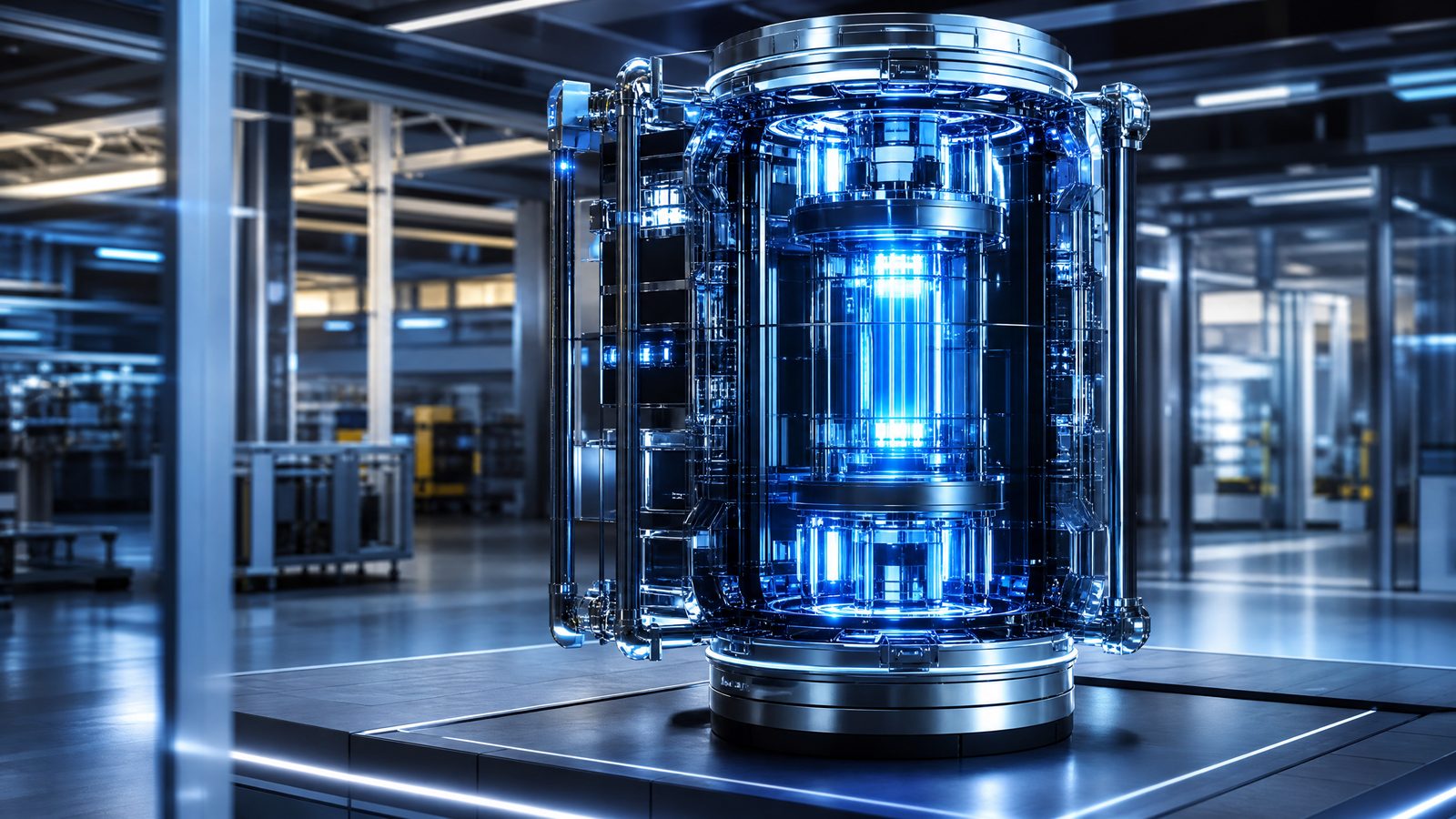
The startup aims to replace traditional, expensive steam turbine systems with highly efficient, high-temperature gas turbine technology. This innovative method is similar to the technology used in jet engines and gas-fired power plants. By removing the need for bulky steam infrastructure, Nuclear Turbines claims its compact modular reactor design can be deployed “behind the meter” directly at industrial sites, data centres, and manufacturing facilities. This offers a resilient and cost-effective alternative to grid-connected electricity.
According to the company’s projections, this new technology could generate electricity at one-fifth the cost of today’s nuclear plants, potentially undercutting fossil fuel prices. Jeremy Owston, Co-founder and CEO/CTO, highlighted their unique approach: “The nuclear industry has always designed reactors first, then figured out what to do with the heat. We flipped this script: we started with the cheapest way to generate power and designed a reactor to fit. If we’re serious about reindustrialising while meeting climate goals, we need energy that’s clean and cheap. We’ve created the only tech that solves both, from the UK.”
Strategic Expansion and Commercialisation
The £15 million investment will be strategically utilised to advance and validate the reactor design, build large-scale test rigs, and expand the team as the company prepares to manufacture its first fuel elements. To bolster its commercial strategy, Nuclear Turbines has appointed Lauren Dickerson, formerly Strategy Director at Centrica, as Chief Commercial and Strategy Officer.
Jordan Billiald, Principal at IQ Capital, expressed strong confidence in the startup’s potential, noting that this is the first time he has seen a small modular reactor design that genuinely solves the economic and sustainability equation. He added that the company is perfectly positioned to capture that opportunity and ensure the UK remains competitive in the global nuclear race.
David Ewing, Head of Technology Commercialisation at BAE Systems, praised the development, stating that the launch and funding of the spinout demonstrates the power of their Launchpad initiative to turn bold ideas into high-growth businesses. This aligns with broader industry trends, as seen when the British Business Bank committed £10m to Odyssey Ventures to back UK AI and deeptech founders, highlighting a strong support ecosystem for innovative ventures.
Addressing the UK’s Energy Challenges
The funding comes at a critical time for UK businesses, which currently face electricity prices up to 50% higher than their counterparts in France and Germany. The UK government is actively seeking to expand nuclear capacity to meet net-zero targets and power energy-intensive industries like AI and advanced manufacturing. This push for advanced industrial solutions is echoed across the sector, with companies like London AI startup Arrakis securing £22.5m to automate industrial workflows.
With its innovative approach and strong financial backing, Nuclear Turbines is well-positioned to play a crucial role in the UK’s energy transition. The successful commercialisation of their high-temperature gas turbine technology could provide the clean, affordable, and reliable power needed to drive the next wave of industrial growth, ensuring a sustainable and economically viable future for energy-intensive sectors.







