
If you’re heading to Bali, understanding om swastiastu meaning will unlock a side of the island most tourists never see.
This is not just a “hello” — it’s a sacred blessing condensed into four syllables. Get it right, and you might find yourself invited to a temple ceremony, a family feast, or a grandmother’s kitchen for banana leaf-wrapped treats.
What does om swastiastu really mean?
The phrase has deep spiritual roots.
- Om – the universal vibration, the sound of creation.
- Swasti – Sanskrit for harmony, safety, and well-being.
- Astu – “May it be so,” much like “amen” but in the Balinese context of divine order.
Put together, it means: “May divine harmony be with you.” More than words, it’s a prayer — a cultural handshake that blends respect, spirituality, and connection.
When to use om swastiastu like a local
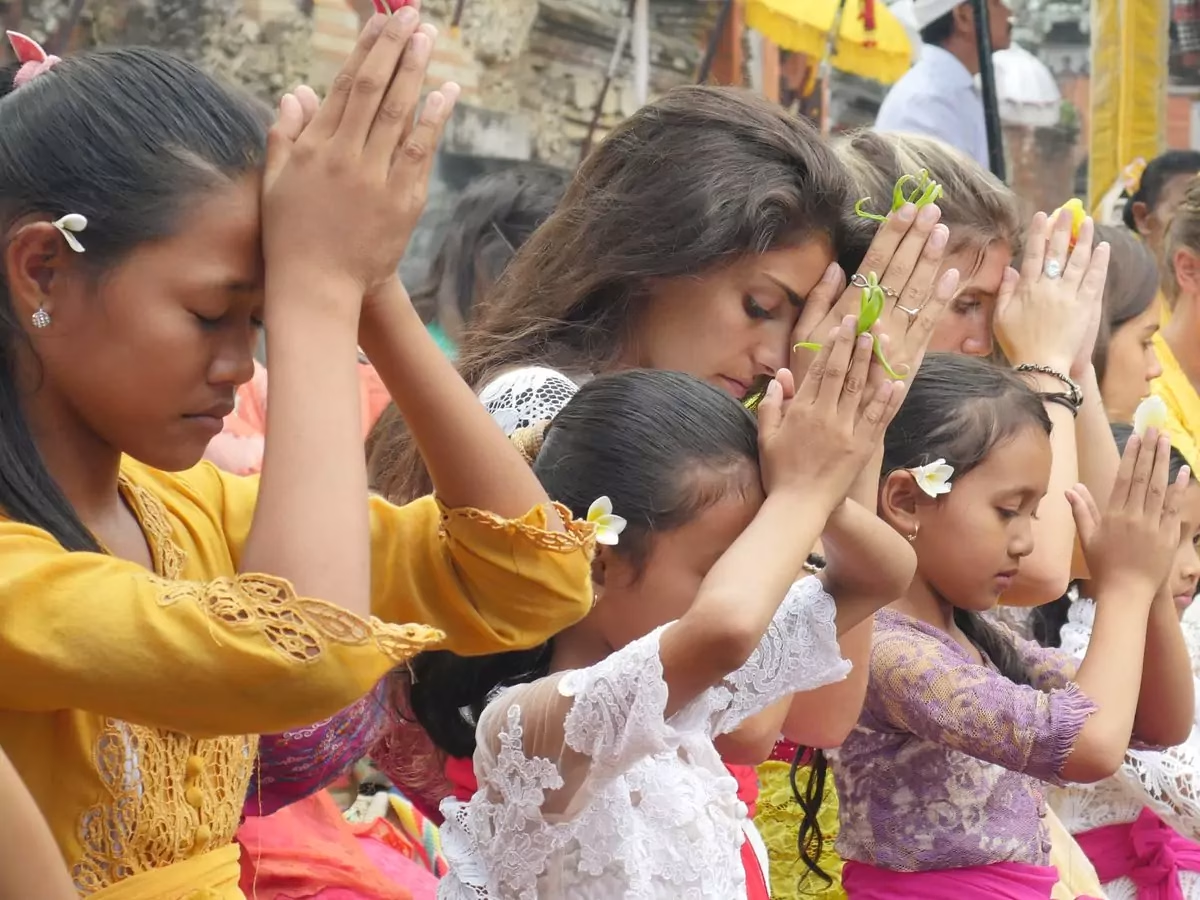
Balinese people use this greeting in temples, ceremonies, and when meeting elders. For travellers, using it appropriately shows respect and opens doors:
- At temples — especially when approaching a priest.
- During religious ceremonies — when receiving holy water or blessings.
- When meeting community leaders or elders.
Avoid using it casually in beach clubs or markets where informal greetings work better. And definitely skip it after a few beers — sacred words deserve sober delivery.
Om swastiastu vs. namaste
Visitors often confuse the two. Namaste is an Indian Hindu greeting meaning “the divine in me bows to the divine in you.” While beautiful, it’s not part of Balinese daily life. Om Swastiastu, on the other hand, is rooted in Balinese Hinduism’s Tri Hita Karana philosophy — the harmony between humans, nature, and the divine.
Using Namaste in Bali isn’t wrong, but it feels imported. Om Swastiastu is the local cultural key.
How to pronounce om awastiastu
Forget rigid phonetics — focus on the flow:
-
Om – like a soft meditative hum.
-
Swas – rhymes with “pass,” smooth and light.
-
Tee – short, almost like a gecko’s chirp.
-
Ahs – open and gentle, like tasting warm tea.
-
Too – end softly, no dragging.
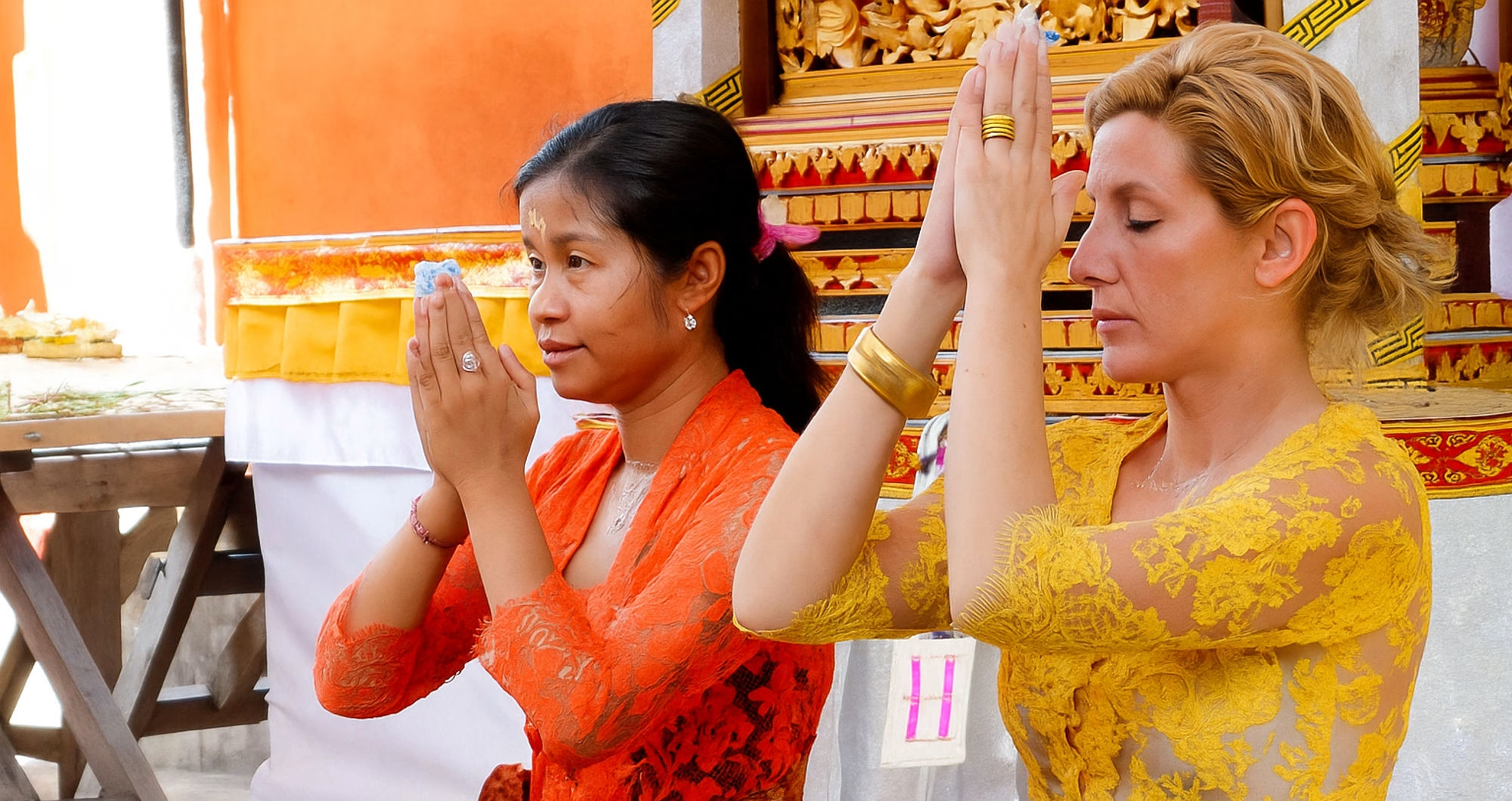
Say it in one breath, with your hands gently pressed together at chest height (sembah position), a slight bow, and a warm smile.
The benefits of getting it right
Travellers who master om swastiastu meaning often find their Bali experience transforms:
- Deeper connections – Locals see you as someone who values their culture.
- Ceremony access – From being an observer behind ropes to carrying offerings alongside locals.
- Better deals – In markets, knowing the greeting can change the tone of negotiations.
It’s not magic, but it is a signal that you’re here to engage, not just consume.
Common mistakes to avoid
- Mispronunciation – Saying “Om Swasti-ass-too” changes the meaning into something awkward.
- Wrong setting – Greeting your scooter rental guy this way will get confused looks.
- Poor body language – Over-bowing, crushing your hands together, or avoiding eye contact feels unnatural.
Pro tip: Watch how locals use it, especially in village temples, and mirror their tone and body language.
Why it matters for travellers
In an age where tourism can feel transactional, greetings like Om Swastiastu cut through the surface. They’re small acts of cultural alignment that can lead to genuine exchanges. You’re not just visiting — you’re participating in a tradition that’s been alive for centuries.
Whether you’re in Bali for a week or a year, learning this greeting isn’t just about etiquette; it’s about unlocking a deeper version of the island — one that won’t show up on your booking confirmation.
If you want a complete guide — from cultural context to pronunciation audio — read the full article here: Om Swastiastu Meaning Decoded.
“In Bali, Om Swastiastu isn’t just how you start a conversation — it’s how you start belonging. And if you say it right, you might just get invited to the kind of party Google Maps will never find.”
— Giostanovlatto
This article was written by Giostanovlatto, Founder of Hey Bali, for London Daily News and for every traveller in the world who dreams of visiting Bali.