
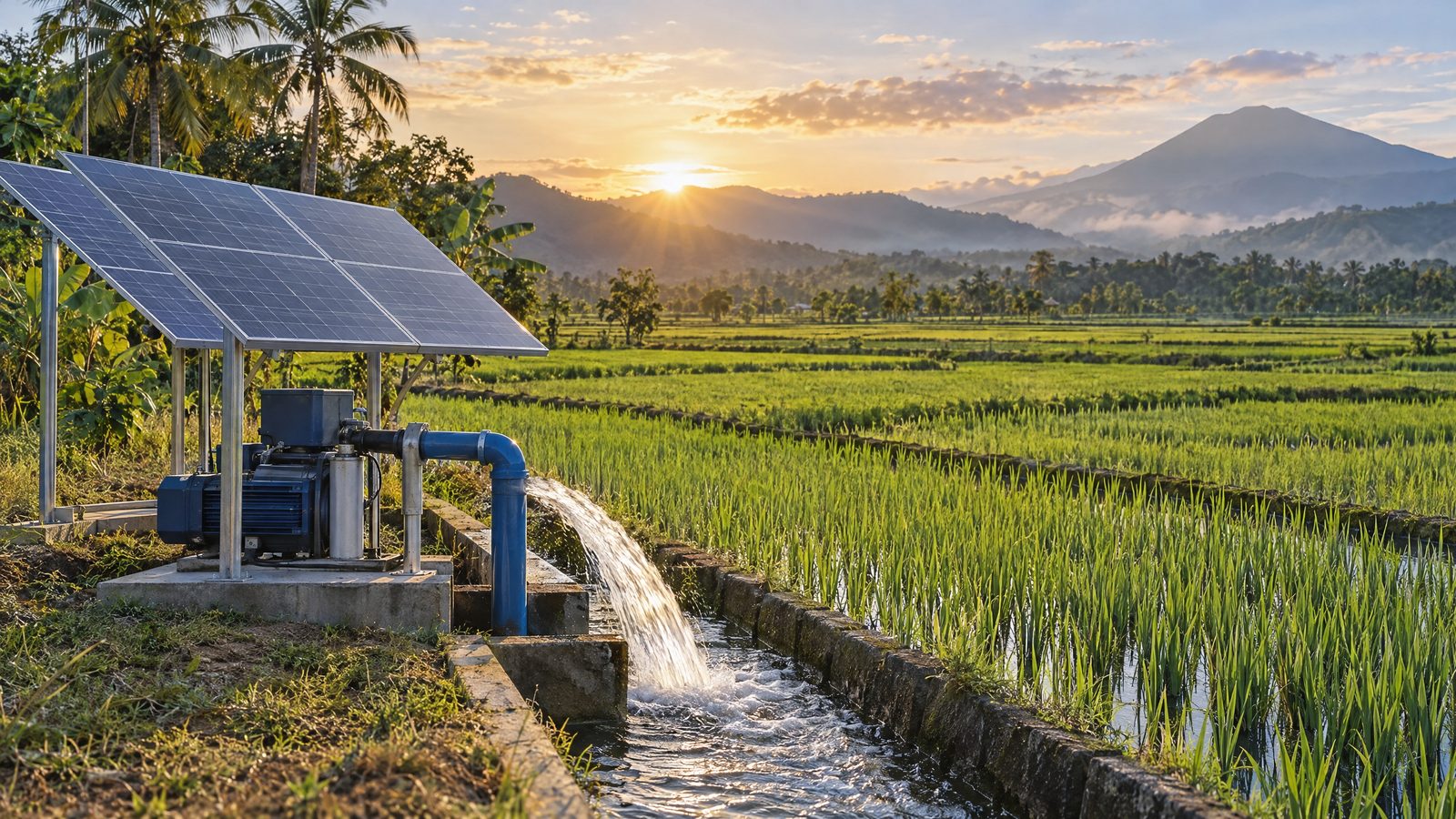

Pamplona solar irrigation project is inaugurated in the Philippines
President Ferdinand R. Marcos Jr. has inaugurated the Pamplona Solar Pump Irrigation Project in Barangay Gattu, Pamplona, Cagayan, putting a solar-powered water-supply system at the centre of a wider effort to prepare farms for more difficult dry conditions.
The project is designed to serve about 603 hectares of farmland across five barangays and to benefit 307 farmers. The coverage includes 100 hectares that previously had limited irrigation access. Those figures describe the intended reach of the scheme; they do not mean that every field will automatically see the same result or that higher yields have already been achieved.
At the Pamplona pumping station, the system combines three solar-powered submersible pumps, each rated at 50 horsepower, with 384 solar panels. It also has electric pumps that can provide backup when needed. The arrangement is intended to keep water moving to agricultural land while reducing reliance on fuel-powered pumping.
The facility had already undergone a test run and site walk-through before the inauguration. Engineers checked the start-up process, operational efficiency and the continuous performance of the solar pumps. That earlier work was intended to establish that the equipment could meet technical and operational standards before full use.
Pamplona’s scheme has been described as the municipality’s first hybrid irrigation facility. Its purpose is not simply to introduce solar panels to an existing site. The project is intended to improve the regularity of water delivery to farms, where the timing of irrigation can be as important as the total volume available. More dependable pumping can help farmers plan planting and cropping activity, although outcomes will still depend on rainfall, river and groundwater conditions, maintenance and the way the system is operated.
The inauguration came as the government prepares for the possible effects of El Niño, which can put pressure on agricultural production and water availability. Marcos said solar-powered irrigation was being expanded to help farms cope with unpredictable weather and to reduce recurring operating costs. He said roughly 3,000 solar-powered irrigation systems had been established nationally since 2022.
Marcos also gave a comparison between conventional, fuel-dependent pumping and solar-powered systems. He said monthly operating expenses for the former can be about P300,000 to P400,000, while a solar-powered system could cost about P50,000 to P100,000 a month to run. These are estimates presented at the event rather than audited operating results from the Pamplona facility, so the actual savings will need to be borne out in use.
For farmers, the significance of a lower running cost is practical. Money that would otherwise go on diesel or petrol can potentially remain available for seed, fertiliser, household needs, repairs or other farm expenses. Yet solar equipment also brings its own operational requirements, including upkeep of the panels, pumps and electrical components. The project’s long-term value will depend on reliable maintenance as well as the performance seen during its initial tests.
The project sits within the East Apayao-Abulug Irrigation System and is part of a broader drive to extend irrigation coverage in northern Cagayan and nearby areas. Irrigators’ associations, local officials and representatives of the National Irrigation Administration attended the ceremony. Farmers’ groups also used the occasion to highlight the importance of assistance with operating and maintaining irrigation facilities, not only their construction.
Marcos raised the potential for irrigation sites to support fish production as an additional source of income alongside crop farming. No fish-production operation was announced as already running at Pamplona. For now, the immediate measure of the project will be whether it delivers the intended water supply across the farms it is designed to serve, especially when dry weather makes access to irrigation more important.







