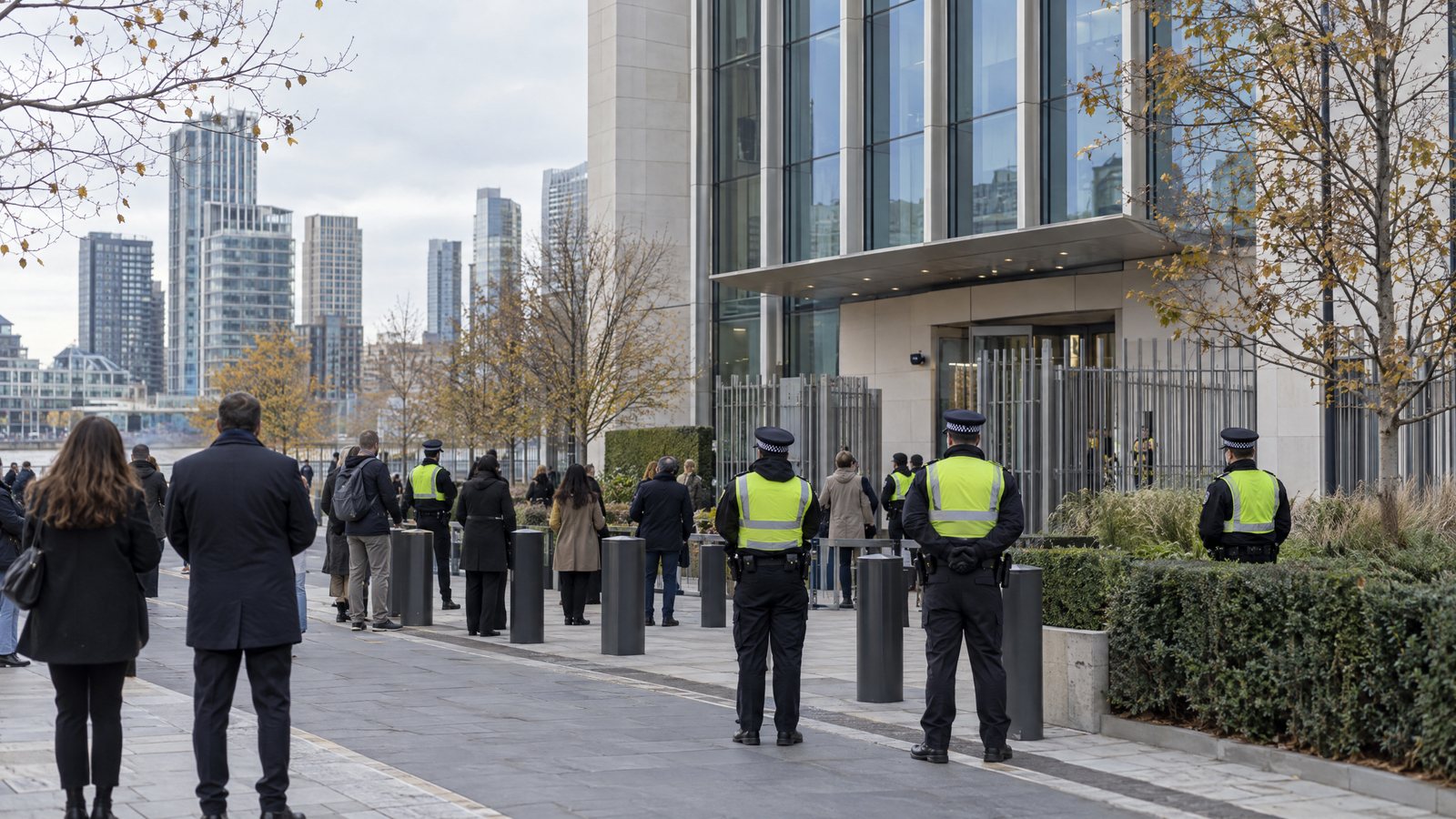

Police said 139 people were arrested during a demonstration outside the embassy of the United States in Nine Elms, central London, on 31 October. Most of those arrested were detained for allegedly expressing support for a proscribed organisation. The arrests do not establish that any individual committed an offence.
The demonstration followed an announcement by police the previous day that officers would be deployed near the embassy. Police had warned that certain conduct could lead to arrest under the Terrorism Act. That warning set out the police position ahead of the gathering, rather than a court finding about any participant.
The reported total concerns arrests during the demonstration. It should not be read as a count of people charged or convicted. Individual legal outcomes are unknown, and the allegation of support must remain distinct from any determination of whether an offence was committed by a particular person.
Warning before the demonstration
On 30 October, police announced an operation near the embassy in anticipation of the following day’s activity. Their warning concerned specified conduct that they said could result in arrest. The sequence places the arrests after an advance announcement of the police approach to the planned demonstration.
There is an important distinction between that advance warning and the subsequent arrest figure. The warning described what police considered could lead to enforcement action. The figure of 139 describes the number police said had been arrested; it does not, by itself, explain the circumstances of each detention.
Most arrests were described as relating to alleged expressions of support for the proscribed organisation. That description does not establish that every person arrested faced the same allegation. Nor does the overall number provide a basis for drawing conclusions about the conduct or legal position of any individual participant.
Legal challenge due before the court
The demonstration took place shortly before an appeal concerning the organisation’s designation was due before the court on 4 November. The scheduled appeal forms part of the legal context surrounding the arrests. Its timing does not establish what the court would decide or what consequences any decision might have.
The organisation’s designation and the allegations against those arrested are related elements of that context, but they are not interchangeable. A challenge concerning the designation is not itself a ruling on the circumstances of individual arrests. Equally, the arrests do not determine the outcome of the appeal.
The dispute involves contested questions surrounding legality, alleged support and civil liberties. Care is therefore needed in describing both the police action and the status of those detained. Police said arrests had been made; whether those arrests lead to charges or other legal outcomes remains unknown.
What the arrest total establishes
The central development is the police account of 139 arrests at the Nine Elms demonstration. The main allegation described was support for a proscribed organisation. Both points require attribution and qualification: the total was given by police, while the alleged conduct has not been established as guilt.
The chronology is clear: police announced their planned operation on 30 October, the demonstration and arrests followed on 31 October, and the appeal concerning the designation was due on 4 November. Beyond that sequence, the arrest count should not be treated as a prediction of charges, convictions or the court’s decision.