
The United States, India, Japan and Australia have agreed to widen cooperation on electricity cables and cybersecurity at a Quad leaders’ summit in Manila, alongside plans for their maritime patrol aircraft to take part in an exercise in 2027.
The summit took place on 17 November, bringing together US President Donald Trump, Indian Prime Minister Narendra Modi, Japanese Prime Minister Sanae Takaichi and Australian Prime Minister Anthony Albanese. Its outcomes extend the four-country partnership’s work on regional infrastructure and security, while reaffirming earlier cooperation on artificial intelligence.
The maritime exercise remains a future activity. P-8 and P-3C patrol aircraft from the member countries are scheduled to fly in an exercise for the first time in a Quad context next year. No precise date, location or number of participating aircraft has been set out.
Maritime surveillance and electricity cables
The aircraft plans sit within the Indo-Pacific Maritime Surveillance Collaboration, an initiative designed to improve information sharing and maritime domain awareness. Its focus is on giving the partners a clearer understanding of activity at sea and supporting safer maritime routes.
The four governments also committed to working together on open, safe and resilient maritime transit corridors across the Indo-Pacific. Protecting freedom of navigation and overflight forms part of that agenda. The planned exercise is one practical element of cooperation, rather than evidence that a new patrol operation is already under way.
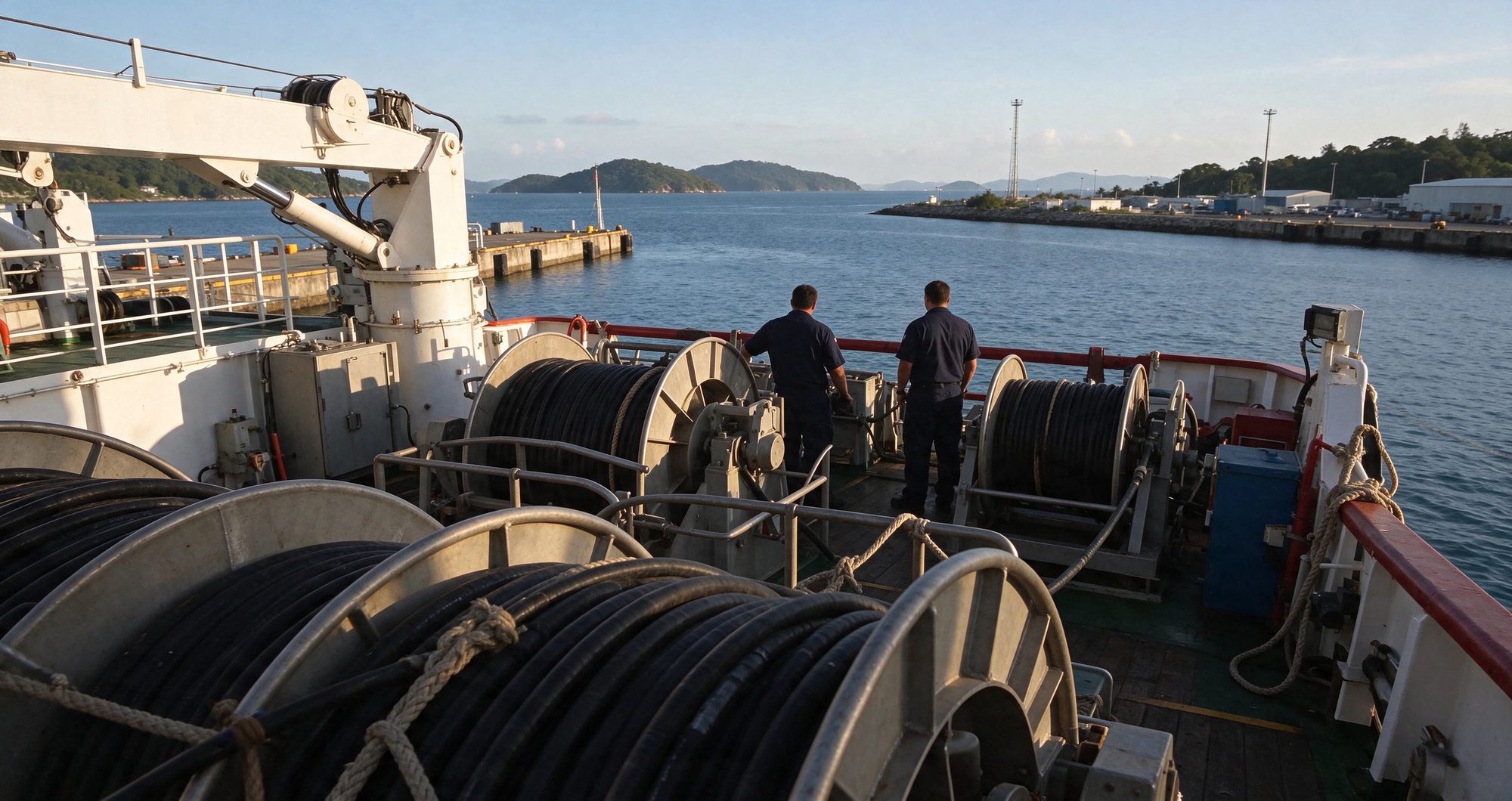
Australia’s contribution to the Quad Partnership for Cable Connectivity and Resilience is expanding to include electricity cables. The partnership has previously focused on access to secure and trusted communications infrastructure across the region. The expansion adds an energy-security dimension to that work, with regional energy connectivity among its aims.
Upcoming undersea cable projects in the Indian Ocean also form part of the connectivity agenda. The summit outcomes do not identify individual routes, project budgets or completion dates. The measures concern cooperation and future infrastructure development, not a claim that additional cables have already been installed.
Cyber cooperation and business ties
The partners announced enhanced Quad Cybersecurity Cooperation as they seek an open and secure cyberspace. The four leaders identified the rising number and scale of cyber incidents in the region as a concern. They did not set out a numerical assessment of those incidents or a detailed operational timetable for the enhanced cooperation.
A first Quad Business Leaders’ Forum is scheduled for early 2027. It is intended to bring business leaders together with government officials and policy experts from the four countries, encouraging closer private-sector ties, commercial deals and partnerships across the Indo-Pacific.
The summit also reaffirmed the AI Accelerator previously announced by the countries’ foreign ministers in Atlanta. That initiative is intended to coordinate and fund support for trusted artificial intelligence, including access, deployment and technical assistance. The Manila gathering did not represent its first announcement.
Regional security commitments
The four leaders opposed destabilising unilateral actions that seek to change the regional status quo through force or coercion. They expressed concern about economic coercion, including arbitrary export restrictions, and continued to place secure critical supply chains among their shared priorities.
They also committed to strengthening existing counterterrorism cooperation and condemned terrorism and violent extremism, including cross-border terrorism. Support for the central role and unity of the Association of Southeast Asian Nations remained part of their regional approach.
The meeting marked ten years since the Free and Open Indo-Pacific vision was first articulated by Japan’s late prime minister Shinzo Abe in 2016.