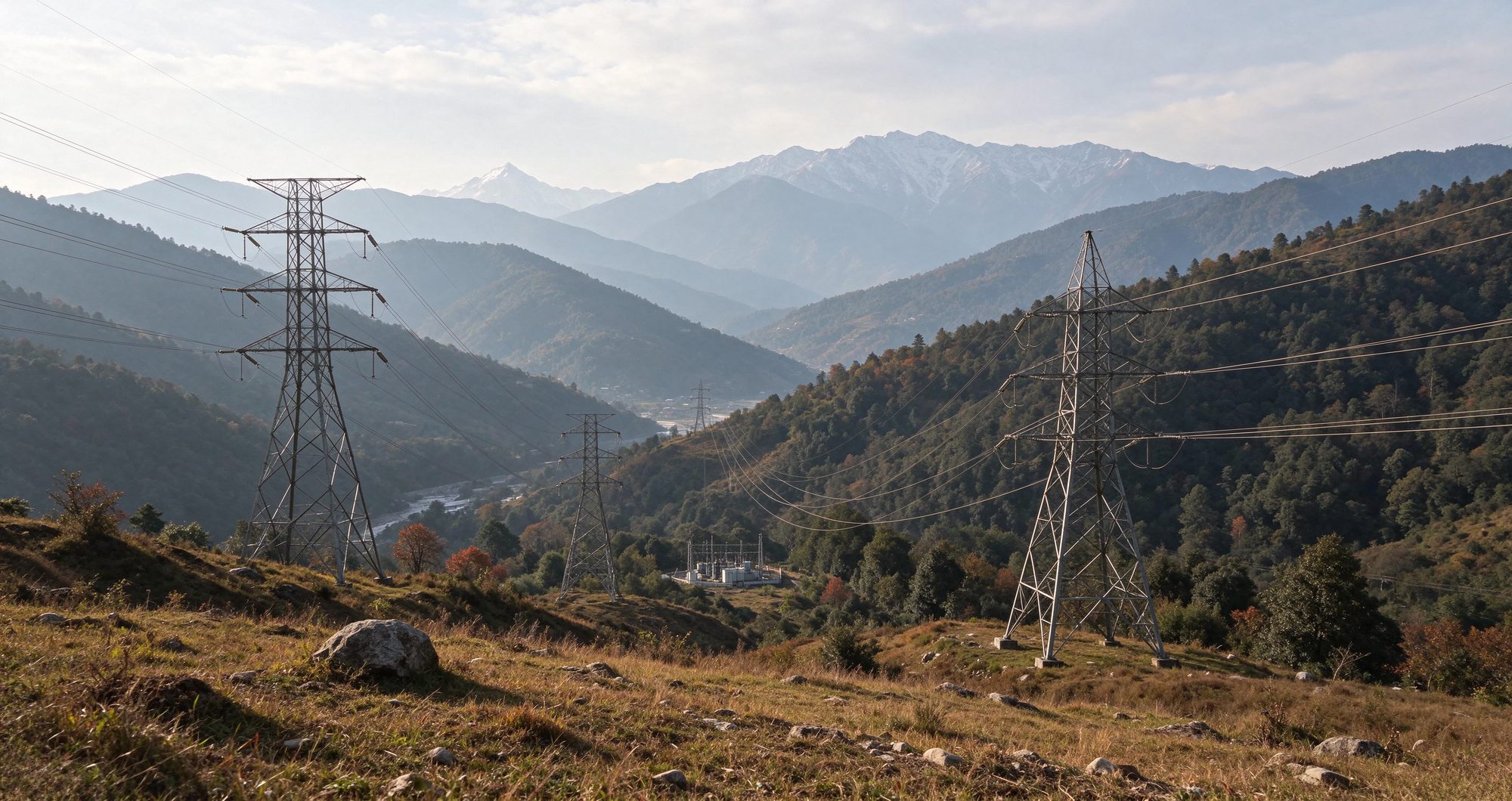

India has authorised Nepal to import up to 350 megawatts of electricity for the coming winter, giving its national power authority access to supplies for up to 17 hours a day as domestic hydropower output is expected to fall below demand.
A separate approval allows the Nepal Electricity Authority to export 56MW generated by three hydropower projects through the Indian Energy Exchange. Both permissions take effect on 17 November 2026 and remain valid until 31 July 2027.
The import arrangement has an important restriction: purchases under this approval are not permitted between 5am and 8am or between 5pm and 9pm. Those morning and evening periods coincide with peak demand, leaving the authorisation short of an unrestricted round-the-clock supply arrangement.
Four transmission routes
The Central Electricity Authority, which operates under India’s Ministry of Power, has approved purchases at competitive rates through the exchange’s day-ahead and real-time markets. The permission concerns access to those markets, rather than a fixed amount of electricity that Nepal has already bought.
Of the 350MW ceiling, 300MW can be imported through the Kataiya–Kushaha, Ramnagar–Surajpura and Raxaul–Parwanipur transmission lines. A further 50MW can pass through the New Nautanwa–Mainahiya line. All four routes operate at 132 kilovolts.
The route allocations define how the approved imports can enter Nepal’s network. The 300MW figure applies to the first three corridors together, rather than to each line individually, while the fourth corridor accounts for the remaining approved capacity.
Winter demand expected to exceed generation
The electricity authority’s preparations come after flooding in the Bhotekoshi river damaged hydropower facilities and transmission infrastructure. Projects with a combined installed capacity of 431MW were disconnected from the national grid.
That figure describes the rated capacity of the affected projects. It is not a measurement of the amount of electricity they would otherwise have generated at every moment, since hydropower production also varies with river conditions.
Using last year’s demand and generation patterns, the authority expects domestic production to be insufficient for approximately four months, from mid-December to mid-April. Imports are expected to be especially important between mid-January and mid-March, when the forecast requirement is around 450MW to 500MW continuously.
At peak-demand times, the projected import requirement could reach 800MW to 900MW. These are planning estimates for the coming season, not confirmed quantities that have already been supplied or a prediction that demand will be identical on every day.
The newly approved 350MW ceiling is below those forecasts for the most demanding part of winter. Its excluded morning and evening hours are also significant. The permission therefore does not, by itself, establish that Nepal’s full seasonal shortfall or peak-hour requirements have been covered.
Imports and exports have separate permissions
Imports are expected to be lower in the weeks at either end of the four-month deficit period. As river flows increase in spring, the authority expects domestic hydropower generation to rise, reducing the need for imported electricity and creating conditions for a return to exports.
The 56MW export authorisation provides permission to sell electricity from three approved projects on the Indian exchange. It is distinct from the import permission and does not mean Nepal has a surplus available throughout winter.
The approvals give the authority defined market access over the months ahead. The amount of electricity actually traded will depend on the balance between domestic generation and demand, within the capacity limits and purchasing hours that have been authorised.