
A towel radiator used to be a purely practical object. It warmed the room and dried the towels. Nothing more. In 2026, it has become a design feature in its own right. The right radiator can anchor a bathroom scheme, add a sculptural element, or disappear entirely into the background. The wrong one can date a room or fight against everything else in it. Here is how to think about the aesthetics before you buy.
The Two Broad Camps
Towel radiators fall into two broad visual categories. The first is the traditional ladder style, with two vertical rails and a series of horizontal bars between them. The second is the designer or sculptural style, where the form itself becomes the statement. Understanding which camp suits your bathroom is the first decision. A period property with original tiles will usually suit a classic ladder design. A contemporary wet room will usually suit something cleaner and more architectural.
Traditional Ladder Radiators
The ladder radiator is the workhorse of British bathrooms. It is familiar, practical, and available in almost any size. Its aesthetic strength lies in its simplicity. In a white or chrome finish, it reads as a neutral fixture. In a coloured finish, it becomes part of the scheme rather than apart from it. The risk with ladder radiators is that a cheap version can look utilitarian. The bars feel thin, the joints feel sharp, and the finish looks flat. A well-made ladder radiator has weight, clean welds, and a finish with depth. The difference is visible from across the room.
Designer And Sculptural Styles
Designer radiators move away from the ladder form entirely. Some use curved bars. Others use vertical panels with subtle indentations. Some use a single folded sheet of steel. Others resemble a piece of wall art more than a heating appliance. These designs suit bathrooms where the radiator is visible on entry and where the room can carry a bold element. They work best against plain walls and simple tiles. A sculptural radiator in a busy room becomes visual noise. The same radiator against a clean backdrop becomes a focal point.
Finish Choices
Finish has more impact on the aesthetic than shape does. Chrome remains the most common choice. It is reflective, neutral, and pairs easily with glass, white ceramics, and polished taps. Its downside is that it shows water marks and fingerprints quickly. Brushed stainless steel and satin nickel offer a softer, less mirrored look. They hide marks better and suit both modern and traditional schemes.
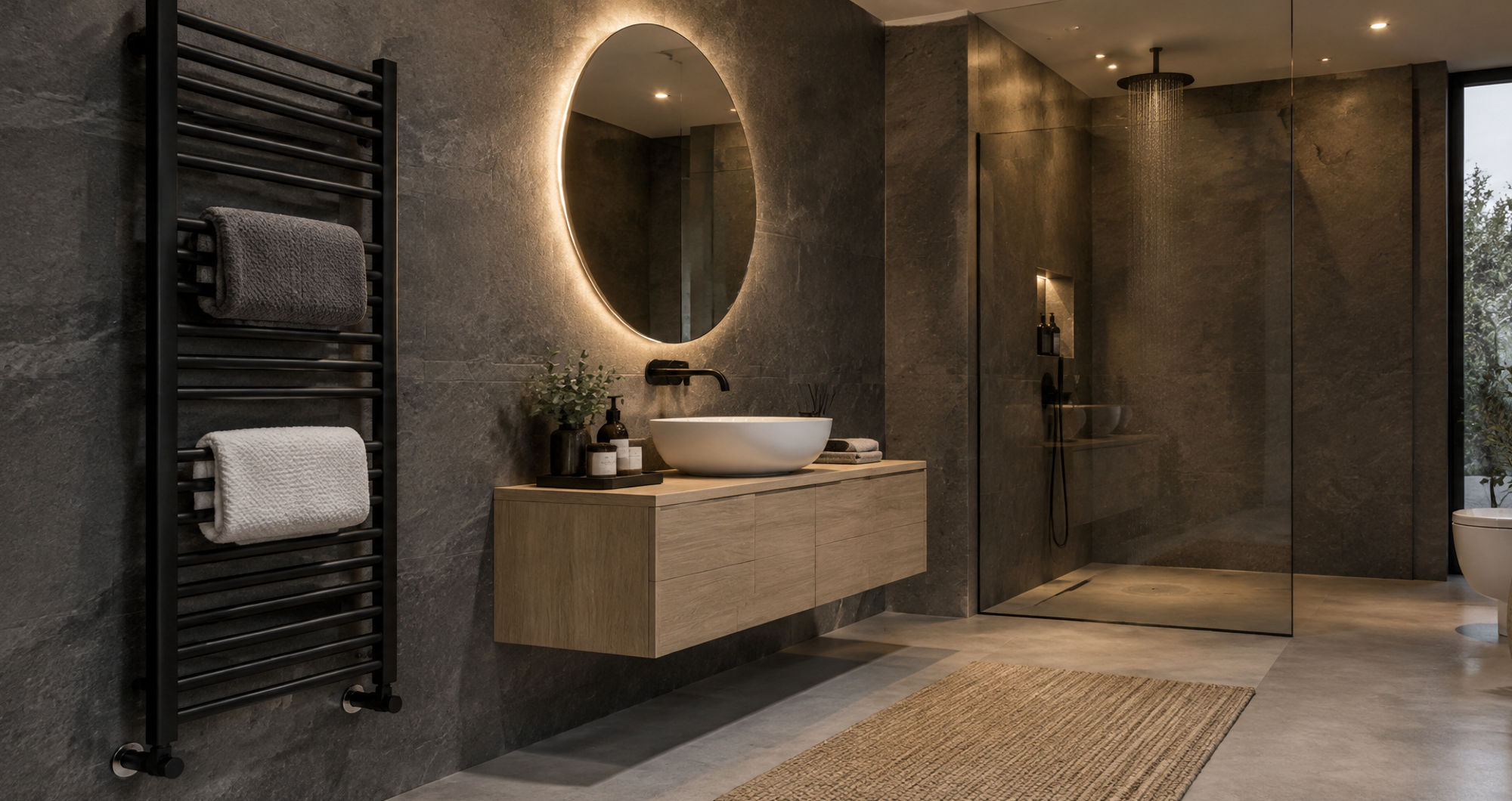
Matte black has become one of the most requested finishes in recent years. It creates strong contrast against pale tiles and white sanitaryware. It works particularly well in industrial and minimalist bathrooms. Anthracite and graphite offer similar drama with a slightly softer edge. White radiators blend into pale walls and make small bathrooms feel less crowded. Coloured finishes, including brass, copper, and bronze, add warmth and suit period properties or bathrooms with a vintage influence.
Shape And Orientation
Vertical radiators are popular in small bathrooms because they use wall height rather than wall width. They free up floor space and allow better furniture placement. Horizontal radiators suit wider walls and lower ceilings. The orientation you choose should follow the room’s proportions. A tall, narrow bathroom usually benefits from a vertical design. A wide, short bathroom usually benefits from a horizontal one. Getting this wrong makes the room feel awkward, even if the radiator itself is beautiful.
Size And Proportion
A radiator that is too small will not heat the room. A radiator that is too large will overwhelm it visually. The aesthetic question is not only about heat output but about balance. As a rough guide, the radiator should occupy a similar proportion of the wall as a piece of art would. It should feel intentional. It should not look like an afterthought squeezed into a gap. If the wall is large and the radiator is small, the space around it will feel empty. If the radiator fills the entire wall, the room will feel compressed.
Placement And Visual Weight
Placement determines how the radiator reads. Putting it on the wall opposite the door makes it the first thing you see. That is the right choice if it is a design feature. If it is a plain white ladder radiator, the same placement draws attention to something that is not meant to be noticed. In that case, place it on a side wall or beside the shower where it supports the room rather than leading it. Towel radiators also have visual weight. Dark colours feel heavier. Light colours feel lighter. A dark radiator on a pale wall will dominate. A pale radiator on a pale wall will recede.
Practical Aesthetics
Aesthetics and function are linked here more than in most purchases. A radiator that is difficult to clean will look tired within a year. Wide gaps between bars are easier to dust than tight ones. Smooth finishes wipe down faster than textured ones. A radiator that dries towels poorly will always be covered in damp towels, which undoes any design advantage. Consider how the radiator will look in daily use, not just in a showroom.
The Bottom Line
The best towel radiator is the one that suits the room it is in. Decide first whether it should be a feature or a background element. Then choose the finish and shape that support that decision. Chrome and white recede. Matte black, anthracite, and brass command attention. Vertical designs suit small rooms. Ladder designs suit traditional ones. Get the proportion right, and the radiator will look like it was always meant to be there. Combine these with underfloor heating and you’re bathroom will not be cold during winter months.