As fans start flocking to the U.S. to watch the 2026 World Cup, new research reveals the best host cities for fans planning a remote work-cation to follow the tournament.
Web hosting provider 20i analysed all 16 FIFA World Cup host cities across North America against ten elements that make for a good remote work experience, including internet reliability, workspace availability, and the price of celebratory post-match beer or meal out.
Houston and Philadelphia are the best host cities for remote workers who are following the tournament, thanks to their strong availability of affordable accommodation, high-speed internet, and low cybersecurity risks when working on unsecured networks.
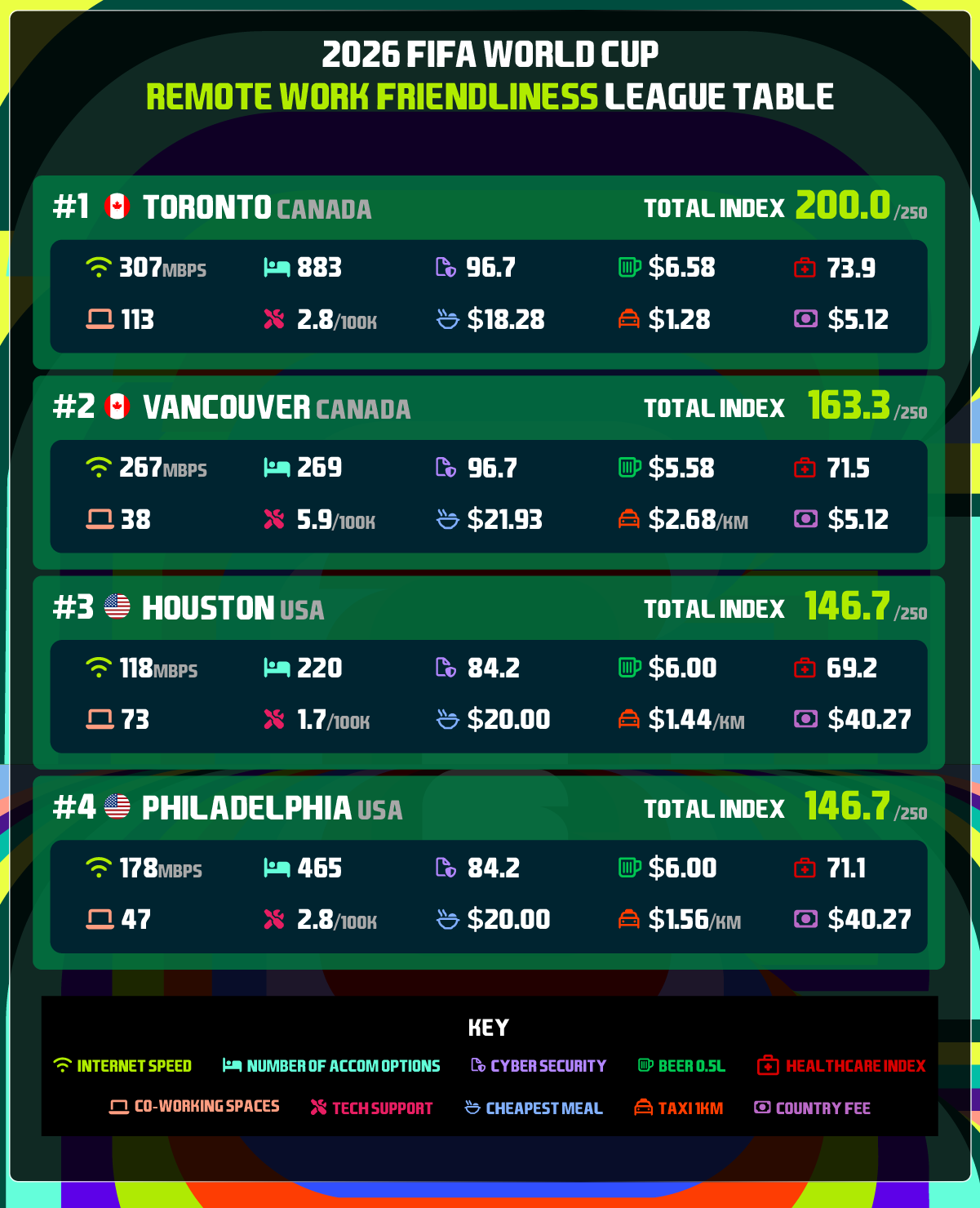
Houston tourists benefit from some of the highest numbers of affordable accommodation options within walking distance of Houston Stadium. People travelling in the city can also log in from over 70 coworking spaces, with a very fast average broadband speed of 177.81 Mbps. It’s also one of the most budget-friendly cities, post-game beers could cost $6 on average, a meal at a budget restaurant around $20, and taxi fares average just $1.44 per km.
Philadelphia is another great option for fans who want to utilise their flexible work policy during the tournament to go to a game. The city offers fast internet speeds of 177.66 Mbps, alongside over 45 coworking spaces and 465 accommodation options under $4,000 for a week, within a 1km radius of its stadium.
Following widespread controversy after transport tickets in other cities have been inflated ahead of the game, Philadelphia also announced it’s offering free train travel for all fans leaving the stadium, although a taxi would only cost around $1.56 per km.
New Jersey stands out for those who need a professional setup while watching the tournament. It has the highest number of coworking spaces at 266, and some of the fastest internet speeds at 183.52 Mbps – Miami being fastest at 216.14 Mbps – and a robust tech-support network of repair shops.
But fans should allow a bigger budget here, as train fares to MetLife Stadium have increased eightfold from $12.90 to $105 during the World Cup, a draught beer averages $8, and a meal at a budget-friendly restaurant could cost around $25.
On the other hand, soccer fans heading to Boston, Los Angeles, Seattle, and the San Francisco Bay Area may find it more difficult to balance remote work with watching the tournament.
Across Booking.com and Airbnb, no available accommodation was found within 1km of Boston Stadium for under $4000 for 7 nights. Atlanta offered just one choice, followed by Dallas with 17, and the San Francisco Bay Area with 20. This means fans would need deeper pockets or to find affordable accommodation further out, which could incur higher travel costs.
Seattle also offered low accommodation options (46) and coworking spaces (37), making it more competitive for remote workers to find spaces to work from. It also had the slowest internet speeds of the U.S. host cities at 140.98 Mbps.
Costs are steeper in Los Angeles and San Francisco, where ‘inexpensive’ meals could cost $25, and a post-match beer about $8.
Lloyd Cobb, director at 20i said:
“Remote working has given people far more flexibility in how they travel and experience major events, but staying productive still depends heavily on reliable digital infrastructure. “A city might have an incredible atmosphere, but unreliable internet, limited coworking options, or poor cybersecurity can make longer stays difficult to manage.
“More budget-friendly cities like Philadelphia or Houston can help fans offset the tournament price surges. For remote professionals, the goal is to find a host city that is budget-friendly but uncompromising on the digital infrastructure and reliability needed to stay connected to the office.”