
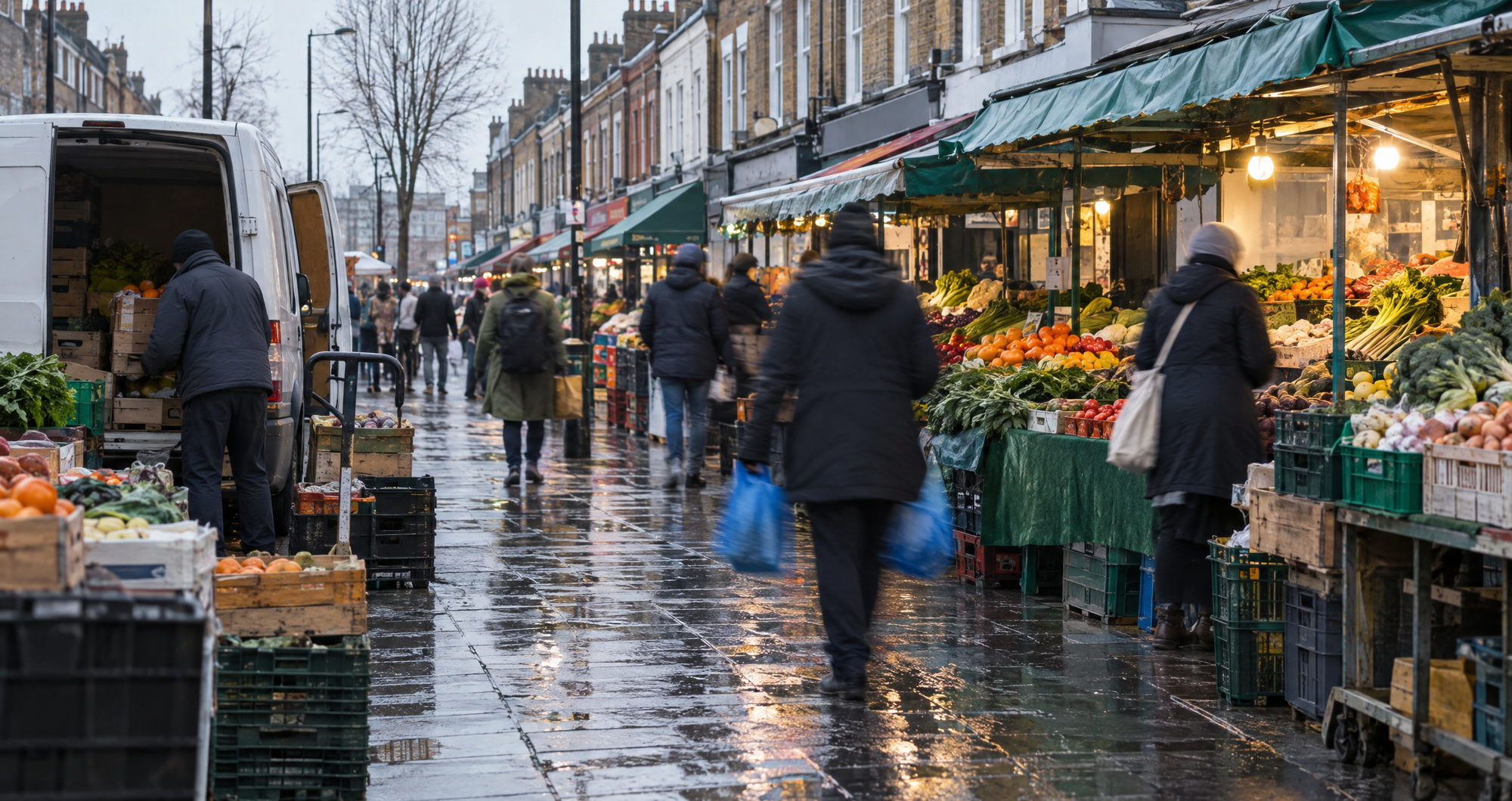

Traders at Ridley Road market in Dalston have warned that proposed traffic restrictions could put them out of business, arguing that a ban on the turn from the market road onto Dalston Lane would disrupt deliveries and drive away customers.
The restriction forms part of Hackney Council’s Dalston Liveable Neighbourhood proposals, which are backed by nearly £3 million of Transport for London funding. The package also includes new School Streets, a 24-hour bus gate and new pedestrian crossings.
The proposals were published in October and are now out for final consultation. The council says no decision has been made and maintains that every existing road providing access to the market would remain open and fully accessible.
The dispute centres on how changes intended to improve road safety would affect the daily operation of a street market where trading dates back to the late 1880s. For traders, the question is not simply whether roads remain open, but how restrictions would change the routes used to reach and leave their stalls.
Delivery routes disputed
Fruit and vegetable seller Jimmy Edwards and fishmonger Sikander Akram are among those criticising the proposals. They say the restrictions would push them onto congested roads and cost them customers, with the proposed turning ban a particular concern for delivery access.
The traders’ warning is about the practical consequences of changing vehicle movements around the market. They argue that losing the turn onto Dalston Lane would cut off a delivery route, even if the roads leading into Ridley Road remained accessible.
That distinction lies at the centre of the disagreement. Keeping an access road open does not, in the traders’ view, resolve their concerns about the journeys needed to supply the market. The council, however, says the scheme would preserve access to every existing road serving it.
The consultation findings show a closely divided response to the turning restriction. It was opposed by 45 per cent of about 1,000 respondents and supported by 44 per cent. Those results relate to the proposed ban, rather than establishing support or opposition to every element of the wider neighbourhood scheme.
Safety and shopping journeys
Road safety is a central part of the council’s case for change. Council and Transport for London data record 119 collisions involving injury within the scheme boundary between 2020 and 2024.
The council also cites 99 collisions in the last year alone, including 60 involving pedestrians or cyclists and five involving children. These figures are presented with different time periods and descriptions, and should not be treated as directly comparable totals.
The proposed crossings, School Streets and bus gate sit alongside the turning restriction within the broader package. The traders’ objections focus on the effect of vehicle restrictions on business, while the council points to the safety of people travelling through the area.
The council says 83 per cent of Ridley Road shoppers arrive on foot or by public transport, while 9 per cent arrive by car or taxi. Councillor Jacob Cable, cabinet member for climate, clean air, energy and transport, has also said fewer than 6 per cent of market visitors arrive by car.
Those descriptions distinguish car travel from the combined category of car or taxi. They concern visitors’ journeys, rather than the delivery movements that traders say would be affected by the restriction.
Decision still pending
Cable’s response is that the market would remain accessible and that the proposals have not yet been decided. That leaves the turning ban, along with the other measures in the neighbourhood package, subject to the final consultation.
The competing positions reflect different priorities for the same streets: safer journeys for pedestrians and cyclists, and workable access for businesses supplying and selling goods at Ridley Road. The practical effect of the proposed routes remains disputed.
The next stage is the conclusion of the final consultation and a council decision on the proposals. Until then, traders do not know whether the turning restriction they oppose will proceed, and the council has not settled the final arrangements for the scheme.







