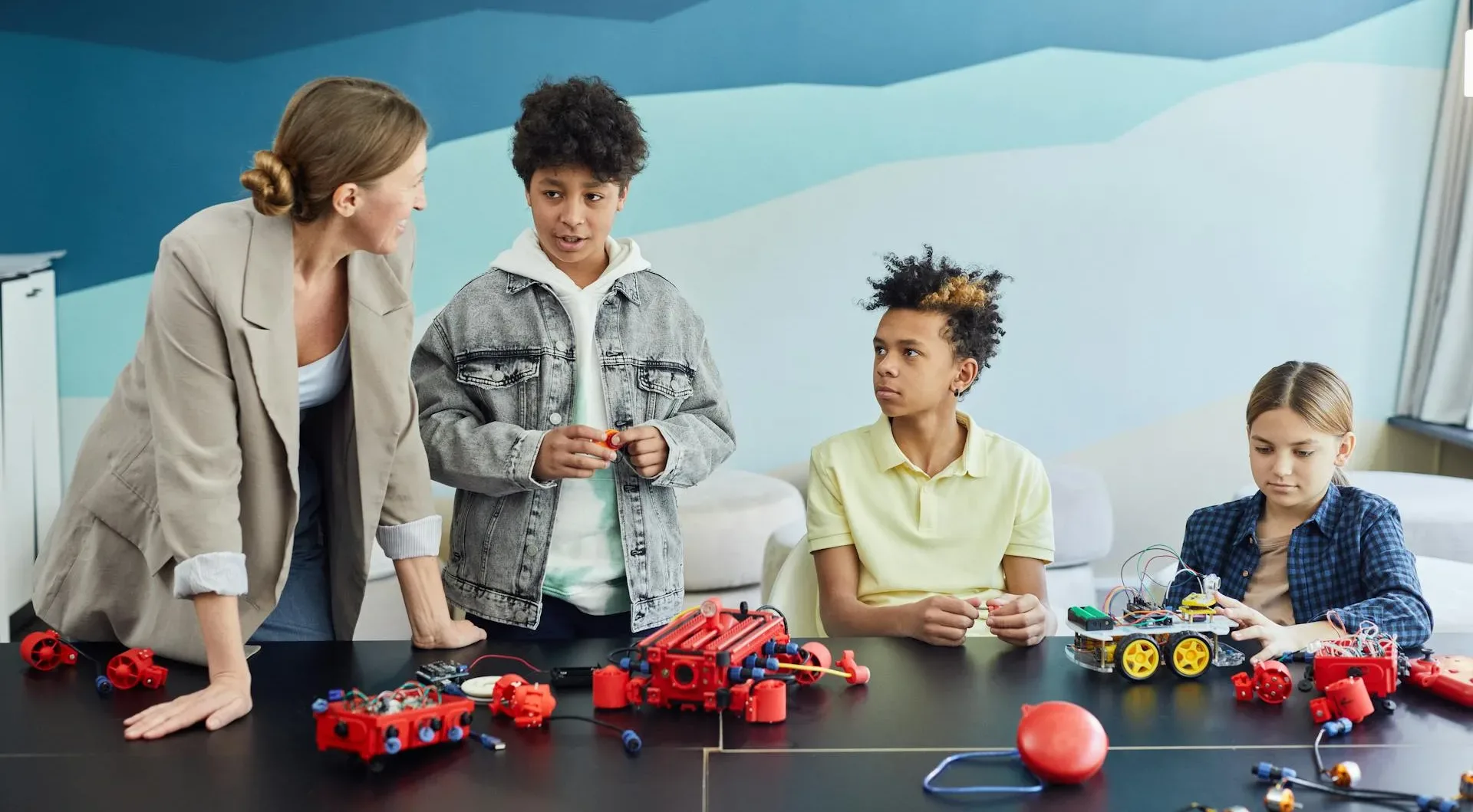

Love for technology is best inculcated in children from an early age. Robotics education for kids introduces them to the basics of engineering, coding, and problem-solving in a manner that seems like fun and is educative while fostering creativity and critical thinking. This way of learning leads to a vast understanding of the structure in science, technology, engineering, and mathematics and thus equips the young learner with relevant skills that will more than likely be useful in the future.
Why Robotics Education for Kids?
Robotics education for kids surpasses the conventional ways of learning. It amply presents an interactive and dynamic way of showing children how technological development shapes the world they live in. In interacting with robots, kids are not passive recipients of information but are actively involved in their learning process. Hands-on experience plays a vital role in laying a foundation that will be helpful throughout their education and later on in their professional lives.
One of the most prized values in teaching robotics to kids is problem-solving skills. While dealing with robots, kids are inevitably going to face different problems that require critical thinking and ingenuity. For instance, while programming a robot to execute some particular task, they should be able to see the logic behind the coding and know how to debug any errors that may appear. It is during this process of trial and error that their resilience and persistence will be built.
The Role of STEM Education for Kids in the Modern World
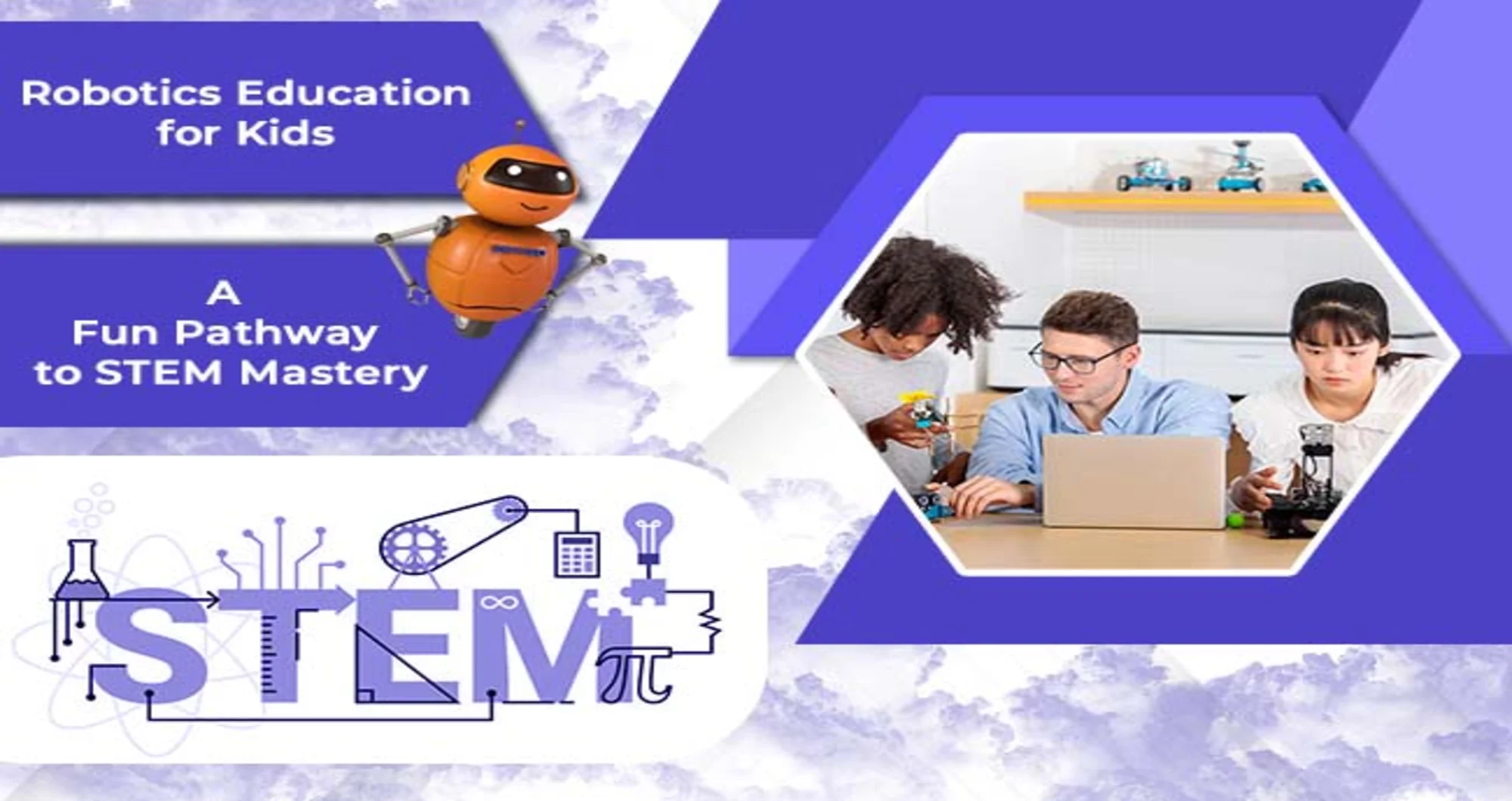
While robotics education for kids is a great introduction to technology, it is also an important part of the more general STEM education for kids. The education in STEM- or Science, Technology, Engineering, and Mathematics developed in a way to combines these four fields into one coherent learning model, with application to the real world. By allowing kids to be involved in this area of education, their understanding of the world and how it functions becomes better grasped as preparation for future challenges.
For kids, STEM education hopes to instil a sense of wonder and drive innovation. It’s important because kids can acquire a deep understanding ability on scientific conception, reason mathematically, and have a notion about how things work.
Second, the concept of STEM education for kids is all about inclusion. It allows every child from every kind of background to attain opportunities in science and technology, hence helping to bridge the gap between the genders in these fields and the socio-economic divides. This way, we provide opportunities to learn and excel equally in STEM, which usher in a very diverse generation of future leaders, scientists, and innovators.
Tips to Get Kids Started with Robotics Education
For either parent or educator who wants to introduce robotics education to kids, here is how one can go about it:
- Introduction of Simple Robotics Kits: Avail some simple robotics kits that are designed for young children. They often contain instructions that are pretty simple to follow and thus work as a great introduction to the basic concepts.
- Joining Robotics Clubs or Competitions: Many schools and community centres have clubs or competitions in robotics that offer a non-threatening atmosphere of learning.
- Take help from online resources and tutorials: Many videos, tutorials, and interactive courses are available online, helping the kids learn at their own pace.
- Make it a family game: Most importantly, all family members can take part in working on robotics projects together. It may be not only enjoyable in learning but also gives loads of benefits to family bonds.
The Future of Kids’ Education in STEM
As technology continues to evolve, the role of STEM education in children’s lives will continue to rise. Most STEM-related careers are expected to grow at an incredible rate over the coming years. Furthermore, it is crucial to instil the required skills in the child at a tender age, and robotics proves to be a door to all these fields, hence an indispensable part of modern education.
By developing in them an interest in robotics and STEM, we would have already begun to empower our children to create their futures in any career that they may want. This is the kind of education that lets kids be adaptable, creative, and even critical characteristics that are sought after in today’s job market.
Conclusion
The introduction of robotics education for kids forms one of the most potent tools for opening up a world of possibilities. This provides the ground upon which the basic competencies in science, technology, engineering, and math will be built while nurturing a love for technology and innovation. Robotics as part of STEM education for kids would mean that in the future, children will be equipped to do more than just meet the challenges but be driven enough to become innovators and problem solvers of tomorrow.
Feature image by Vanessa Loring on Pexels