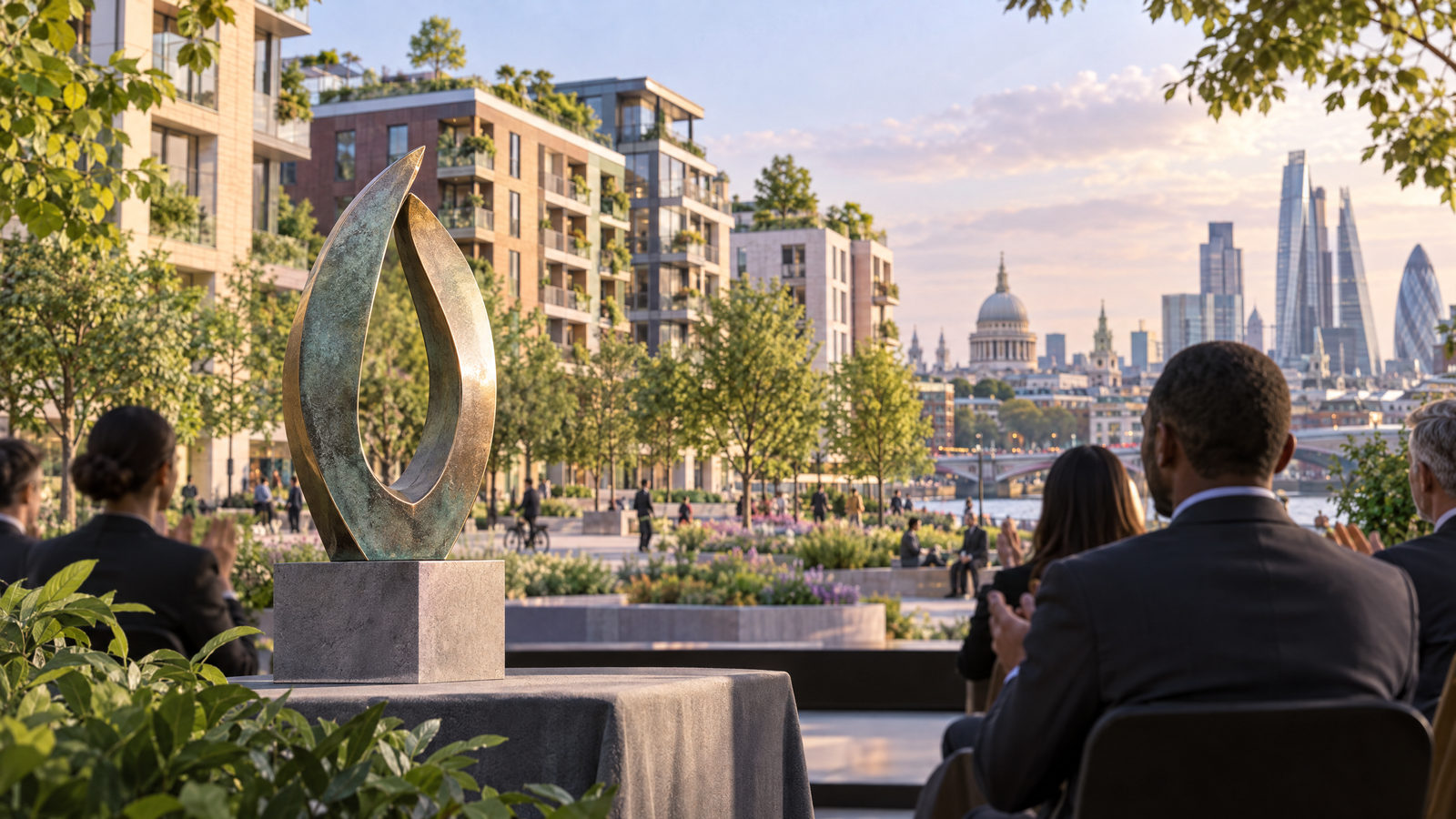

Mayor honoured at World Habitat Day event
Mayor of London Sadiq Khan has received the 2026 UN-Habitat Scroll of Honour for work on affordable and sustainable housing and inclusive, climate-resilient urban development in the capital. The award was presented in Muscat, Oman, on 5 October during the global observance of World Habitat Day.
The annual honour recognises people and organisations whose work contributes to adequate housing, sustainable urbanisation and better urban life. This year’s ceremony was held under the theme “Adequate Housing for All”. Khan was one of five recipients selected from 101 nominations submitted across Africa, Asia, Europe and the Americas.
The other recipients were Housing NOW in Myanmar, Tunisian construction innovator Abdelmalek Ghannem, the Indigenous village Aldeia do Espraiado – Tekoa Ara Hovy in Brazil, and Pakistan’s Punjab Housing and Town Planning Agency. Their work ranged from affordable construction materials and support for displaced communities to housing that reflects Indigenous culture and land rights.
Housing policies highlighted in London
In London, Khan’s recognition centres on a set of housing and planning measures rather than a single building project. The mayor’s Building Council Homes for Londoners programme has supported councils to develop new homes. The approach places local authorities among the bodies involved in adding housing, at a time when demand in the capital has outpaced supply and many workers struggle to live near their jobs.
A further strand is Key Worker Living Rent, a tenure designed to set rents in relation to the incomes of workers such as nurses and teachers. The intention is to make housing costs more closely reflect what people in essential roles can afford. It is one part of a broader housing offer, alongside council homes and affordable homes within larger developments.
Planning policy has also been used to increase the proportion of affordable homes in major schemes and to set expectations for energy use, living space and building safety. Those standards connect the question of how many homes are built with the conditions residents will experience inside them. Energy performance matters to household running costs and emissions, while adequate space and safe construction shape the quality and resilience of a home.
Residents are also involved in decisions about the future of some neighbourhoods. Before a large social housing estate is rebuilt, residents vote on the proposals. That process gives people living on the estate a formal role in deciding whether redevelopment plans should proceed, rather than leaving the decision solely to landlords and planners.
A recognition, not a measure of future delivery
The award’s rationale also points to the relationship between homes and the wider city. Public transport investment and cleaner air form part of the urban context in which housing is planned. Homes that are better connected to jobs and services can support more inclusive neighbourhoods, while climate resilience and lower energy demand are increasingly important considerations for cities facing environmental pressures.
The honour recognises this combination of housing, planning and environmental priorities. It does not, by itself, set a new target for London or specify how many additional homes will be delivered. The practical test remains whether affordable options become available to more residents and whether new and renewed neighbourhoods meet the needs of the people who live in them.
World Habitat Day begins Urban October, a month-long international focus on sustainable urban development. The 2026 award places London’s housing policies alongside initiatives from other countries, reflecting the range of approaches being taken to the challenge of providing adequate homes.