
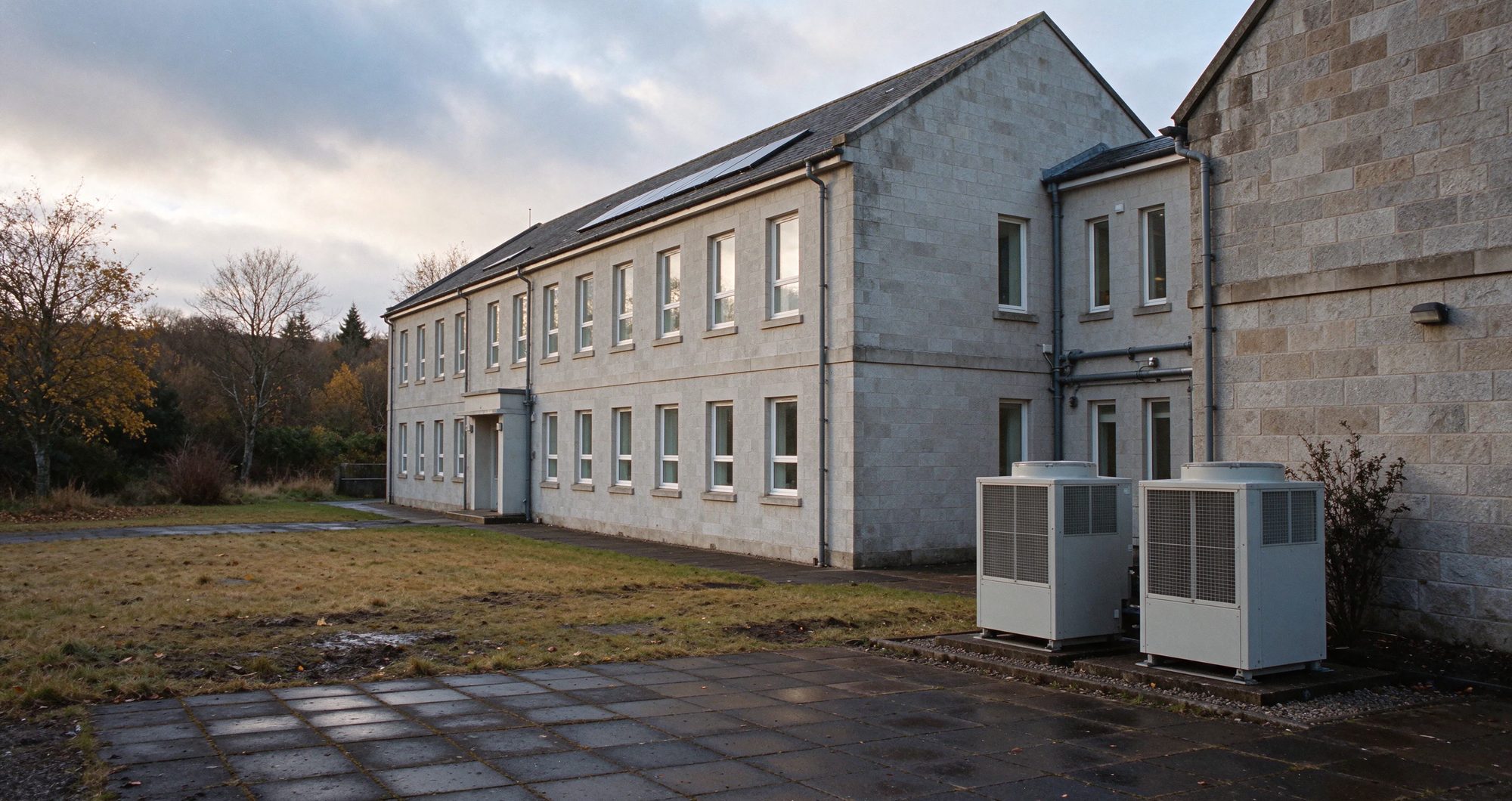

Schools, health centres and community facilities across Scotland are among the buildings set to benefit from more than £15 million in grants for cleaner heating and energy-efficiency improvements.
The Scottish Government announced on 25 November that 17 public-sector organisations would share the latest awards from Scotland’s Public Sector Heat Decarbonisation Fund. The work ranges from replacing fossil-fuel boilers to improving insulation and preparing buildings to connect to shared heat networks.
A separate allocation of around £246,000 will support ten earlier-stage projects through the Public Sector Clean Heat Development Fund. Those awards are for studies and planning to prepare for future investment, rather than installing heating systems now.
Schools and civic buildings among recipients
Glasgow City Council has been awarded £2,425,998 for the West Building at Glasgow City Chambers. The government’s project description says an air-source heat pump will replace existing gas boilers, alongside loft insulation, glazing improvements, a building energy management system and solar panels.
In Aberdeen, a £375,875 award will help connect Kirkhill Primary School to the Sillerton Lane district heat network. The proposed work includes removing the current boilers, laying underground connecting pipes and installing new hot-water infrastructure and heating controls.
Shetland Islands Council will receive £360,976 for Nesting Primary School, Urafrith Primary School and Sandwick Junior High School. Their oil boilers are to be replaced with air-source heat pumps, with electric boilers providing backup. Solar panels are also planned to help meet the new systems’ electricity demand.
Fife Council’s £1,526,675 project covers Kelty Primary School, Lynburn Primary School and Lindsay House Care Home. Heat pumps will replace gas boilers at all three sites, with solar panels, insulation and heating-control improvements also included.
Preparing older buildings for cleaner heat
Not every grant involves an immediate change of heating system. Edinburgh’s £350,000 award is for improvements to Gilmerton Community Centre, a category B-listed building dating from 1912. Double glazing, loft insulation and underfloor insulation are intended to improve its energy performance.
The government says the centre’s existing oil-fired boiler is planned for replacement with a heat pump later in 2027. That planned replacement is distinct from the fabric improvements described in this award.
Midlothian Council will receive £538,321 for Danderhall Community Hub and Gorebridge Leisure Centre. Danderhall’s proposed upgrades include energy-management equipment, air-handling units and solar panels, preparing it for a future connection to a local energy-from-waste heat network.
At Gorebridge, the project includes double glazing and insulation to reduce heating demand, as well as replacing gas boilers with air-source heat pumps.
Healthcare buildings also feature in the capital awards. NHS Fife will receive £254,030 for draught-proofing, glazing, loft insulation and solar panels at Cardenden Medical Centre and Pitteuchar Health Centre.
Studies explore data-centre and mine-water heat
Six of the ten development projects will examine heat-network connections, while four will investigate cleaner heating at sites currently off the gas grid, the Scottish Government said.
The University of Glasgow will assess whether waste heat from its data centre could help decarbonise and expand its existing district heat network. NHS Ayrshire and Arran will explore a mine-water heat source for the Ayrshire Central Hospital campus, including three listed buildings. Both proposals remain development studies, not confirmed installations.
Energy Minister Stephen Gethins said cleaner, more efficient heating could help public bodies lower energy bills and emissions while improving facilities. The announcement does not provide quantified savings for individual projects.
The capital programme is delivered by Salix Finance and builds on more than £23 million awarded through its first two phases. Salix describes its approach as addressing the whole building, combining cleaner heating with measures that reduce energy demand.







