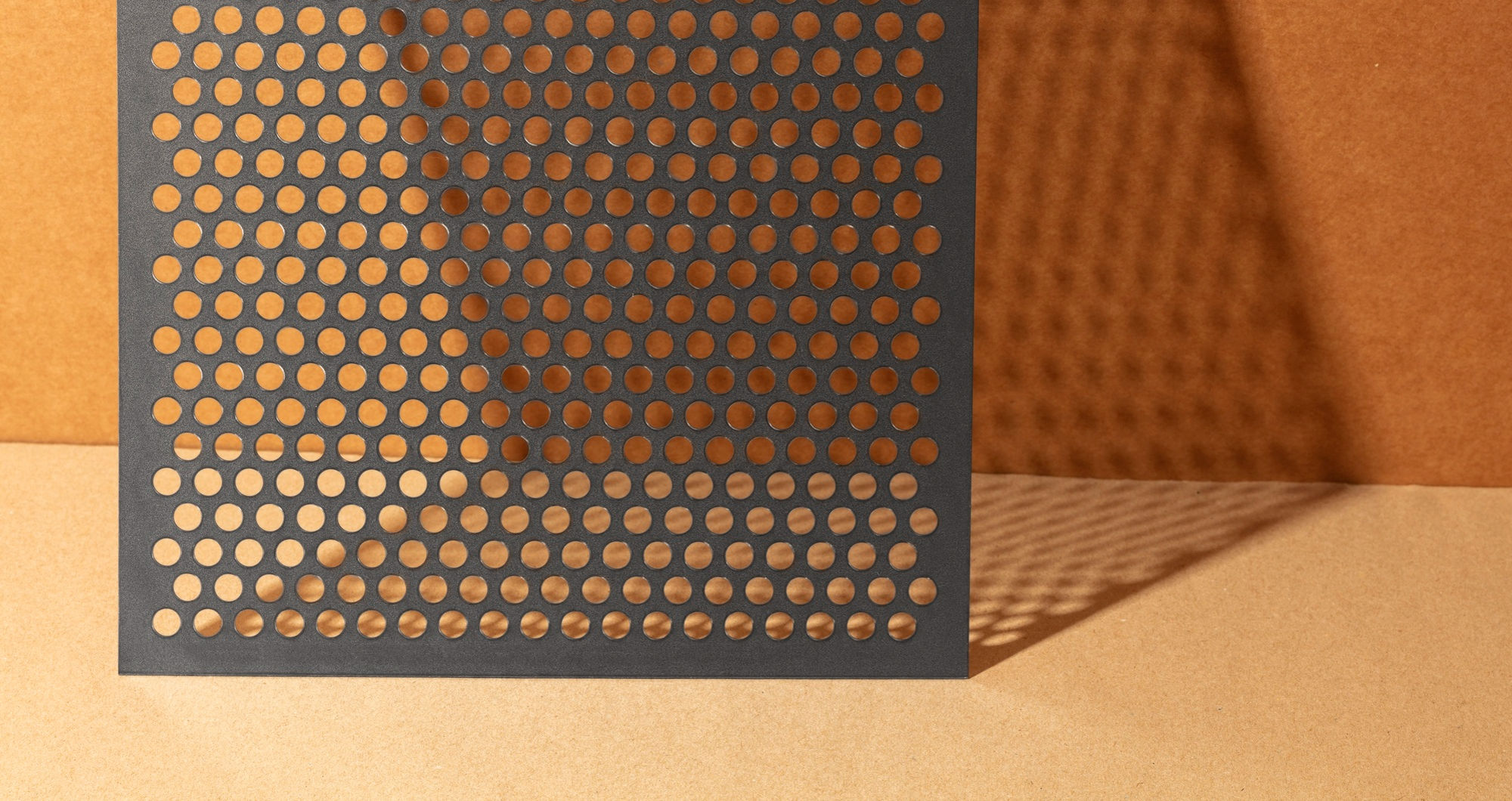

Sheet metal embossing is a unique manufacturing method that utilises the controlled deformation of thin metal sheets to produce raised and recessed patterns in embossed sheet metal. The goal of sheet metal embossing is to manufacture parts that offer surface functionality. The sheet metal embossing process begins with the preparation of the initial design and die fabrication, and involves precision pressing using hydraulic presses to create embossed sheet metal.
Sheet metal embossing is a highly efficient process and can produce smooth and textured surfaces.
What Is The Sheet Metal Embossing Process?
The subtractive manufacturing process of CNC machining uses precise machine operations to create parts by cutting material blocks into their final shapes. The process operates through machine-based hydraulic or mechanical deformation techniques.
The CNC machining process differs from casting because it uses computer-aided designs to guide material removal through controlled cutting operations. The setup process for CNC machining demands careful tool selection and precise machine programming to execute exact movements.
The entire manufacturing process depends on the precise execution of each operation to achieve both accurate dimensions and smooth surface quality. The production of complex shapes for the aerospace and consumer goods industries depends heavily on this manufacturing technique.
Design Phase
Sheet metal embossing begins with digital models in CAD software. Here, the design must clearly state the relief, recess, and contour profiles, along with draft angles for material flow. Many manufacturers also introduce a step called FEA simulation for deformation stresses and simulate the pressing process, ensuring the design avoids thinning. In the design phase, springback (the material’s ability to return to its original form after forming) is also considered.
Material Preparation
Sheet metal components are sheared and blanked to precise dimensions, and after embossing, most sheets only require degreasing and cleaning to remove oils before contact with the sheet die. Some sheet metal fabrication also involves annealing to restore ductility in work-hardened metals.
Die Fabrication
Most custom sheet metal fabrication designs require custom die manufacturing. Dies are CNC machined with extremely high precision and close tolerances using tool steel D2 or A2 for how to emboss sheet metal. Dies often have a male and female die pair with a surface finish of Ra 0.4 – 0.8 µm to ensure a clean transfer of design from the die to the sheet.
Ram speed (the speed at which the die contacts the sheet metal) is controlled between 10 and 50 mm/s to allow for uniform strain distribution and reduce defects in sheet metal embossing.
Embossing Operation
Sheet metal is positioned between the dies in a hydraulic press or mechanical press, which applies a large force, often exceeding 50 tons, and can reach up to 500 tons or even more, depending on the thickness of the sheet. There are two types of embossing operations.
- Single-stroke embossing for simple patterns
- Progressive tooling for multi-stage forming and more complex geometries.
Finishing
After the parts are embossed, they undergo deburring and vibratory finishing to remove flash and protruding edges. At this point, CMMs and micrometres are also used to check for material thickness at certain points and for visual inspection to detect tears and unnecessary shears.
Materials in Sheet Metal Embossing
Choosing the material dictates how embossing works, requiring a balance among ductility, yield strength, and surface finish requirements. Typical sheet thicknesses range from 0.5 mm to 3 mm, and their formability is evaluated using Erichsen cupping tests, which target a minimum cup depth of 6–10 mm. The following section evaluates the materials, outlining their engineering properties and suitability.
Aluminum Alloys
The Series 3003 and 5052 alloys lead the market because they offer exceptional ductility, with elongation values above 25%, and lightweight properties at 2.7 g/cm³, which allows for deep drawing operations that reach 40% reduction without material failure. The alloys’ high thermal conductivity of 200 W/m·K facilitates heat dissipation in the embossed heat sink; however, their oxide layers require a pre-etching treatment for proper adhesion of subsequent coatings.
Stainless Steels
The corrosion-resistant properties of austenitic 304 grade steel make it suitable for harsh environments, as it exhibits 50% elongation. The material requires progressive dies to control springback between 2-5°, a pitting potential greater than 0.3 V, and moderate formability that reaches 40% due to its high work-hardening properties. Dry film lubricants help prevent galling when working with steel sheets thicker than 1.5 mm.
Copper and Brass
ETP copper material offers high malleability, with more than 45% elongation, and superior electrical conductivity at 58 MS/m, making it suitable for embossed busbars and decorative components. The machinability of brass (Cu-Zn alloys) improves during die preparation; however, its material properties exhibit directional behaviour, necessitating an equal distribution of blanks to prevent earing during forming operations.
Low-Carbon Steels
Mild steels (e.g, 1010) provide affordable solutions because they have yield strengths between 200-300 MPa and elongations ranging from 30-40%, which makes them suitable for embossed structural braces. The ferrite-pearlite microstructure of these steels enables consistent deformation but requires phosphorus levels below 0.04% to prevent brittle failure in deep recesses.
Embossing Machines vs CNC Milling
| Process | Embossing Machines | CNC Milling |
| Process Type | Additive forming via die compression | Subtractive machining with rotating cutters |
| Throughput | 500–2,000 parts per hour | 10–50 parts per hour |
| Cost per Part | Under $0.50 for high volumes | $5–20 depending on setup |
| Material Utilisation | Over 95% efficiency | 50–80% with chip waste |
| Tolerances | ±0.01–0.05 mm for profiles | ±0.005–0.01 mm for details |
| Surface Finish | Ra 0.4–1.6 µm without heat zones | Ra 0.8–3.2 µm with thermal risk |
| Energy Consumption | 5–10 kWh per ton | 15–30 kWh per ton |
| Suitability | Repetitive patterns in bulk | Complex prototypes with 5-axis |
| Limitations | Planar shapes need custom dies | Slow for volumes requires fixturing |
Applications of Embossing
- Architectural Cladding: Embossed aluminium panels are widely used in construction for facades because they not only reduce weight but also help with thermal dissipation
- Trims: Embossed stainless steel form grillie inserts and emblems
- Appliances: Many appliances are embossed with company logos and patterns, and some provide tactile feedback and handling contours
- Medical device casings: Precision embossing in titanium alloys forms anti-slip grips on surgical parts
- Aerospace brackets: The most common application of sheet metal embossing is for aluminium structures used in mounting fixtures.
Conclusion
Companies now utilise adaptive die systems for sheet metal embossing, enabling them to progressively emboss multiple designs on the same workpiece. Sheet metal embossing is ideal for sheet metal parts that have raised and recessed designs. It reduces material waste as there are no chips and material removal, and enhances grip, rigidity, and provides visual appeal.