

Operational Technology (OT), Industrial Control Systems (ICS), and Internet of Things (IoT) architectures are the lifeblood of modern manufacturing, energy, oil & gas, water treatment, and critical infrastructure sectors. As the physical and digital worlds converge, these systems face a constantly evolving threat landscape driven by increasingly sophisticated adversaries. Recognising the urgent need for actionable intelligence, Shieldworkz Threat Research Lab is proud to unveil “The Global OT/ICS & IoT Threat Landscape Assessment & Analysis Report 2025”, a comprehensive study designed to empower decision‑makers, CISOs, plant managers, and security architects with the knowledge required to stay one step ahead.
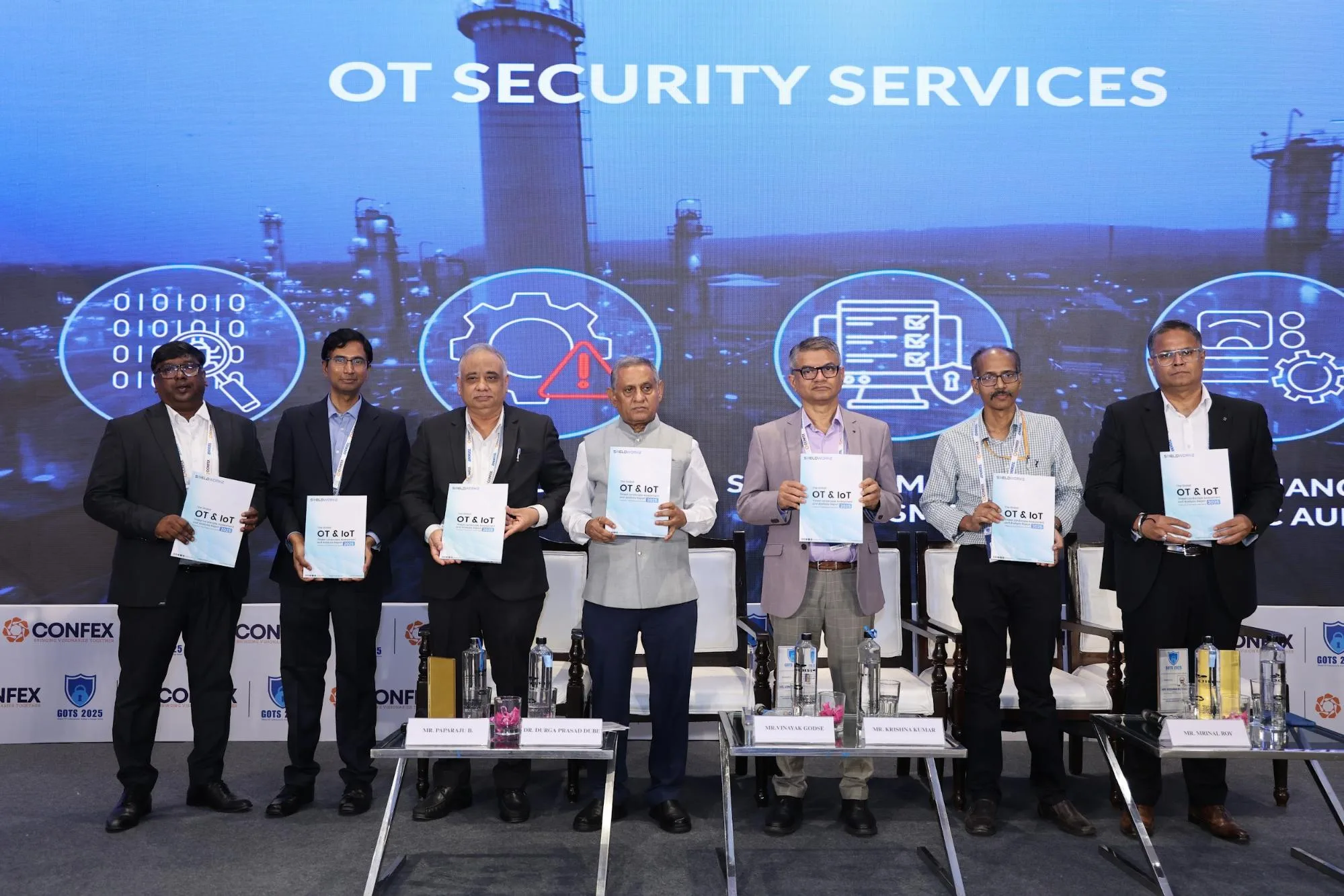
On July 16–17, 2025, at the Global OT Cybersecurity Summit (GOTS) in New Delhi, Shieldworkz formally launched the report, highlighting how automated AI‑driven botnets, supply‑chain exploitation, and zero‑day ICS vulnerabilities are reshaping the risk profile of critical operations worldwide.
A Special Thanks to Our Launch Dignitaries
We were honored to have industry leaders officially unveil the report:
- Shri Paparaju Buddhavarapu, Ex. Executive Director & CISO, ONGC
- Shri M.A.K.P. Singh, Former Member (Hydro), CEA & CISO, Ministry of Power, Government of India
- Shri Vinayak Godse, CEO, Data Security Council of India
- Shri Durga Prasad Dube, VP, Reliance Infosolutions Pvt. Ltd.
- Shri Krishna Kumar, Cybersecurity Scientist
- Shri Mrinal Ro, CISO, Cairn Oil & Gas
Their insights and support have been instrumental in shaping a report that will help organisations across the globe build more resilient, secure, and future‑ready OT/ICS & IoT environments.
Why This Report Matters Now
- Exponential Growth in Attack Velocity
In 2024, attackers reduced their dwell time from initial compromise to full network control to under 18 hours on average—down from 24 hours the previous year. This compressed window leaves defenders with precious little time to detect, contain, and respond before critical processes are disrupted. - New Blind Spots Across Wireless & Remote Assets
With over 65 000 wireless sensors and edge devices deployed in remote sites globally, many organisations lack full visibility into their network perimeters. The report reveals a 45 % year‑over‑year increase in deauthentication and man‑in‑the‑middle (MITM) attacks targeting unmonitored wireless segments. - Supply‑Chain & Firmware Manipulation
State‑linked threat groups and financially motivated attackers have begun embedding malicious code into PLC firmware updates and vendor supply chains. The analysis identifies at least 23 confirmed firmware‑based campaigns in 2024, with potential compromises spanning multiple equipment manufacturers.
Report Methodology & Scope
Shieldworkz Threat Research Lab’s 2025 Assessment pulls from:
- 80 000+ Global Honeypots & IoT Sensors deployed in manufacturing floors, energy substations, and pipeline control networks.
- 120 Incident Response Engagements across utilities, chemical plants, and water treatment facilities.
- Threat Intelligence Partnerships with national CERTs, sector‑specific ISACs, and leading vulnerability disclosure platforms.
- Automated Data Analysis leveraging machine‑learning pipelines to classify malware families, attack vectors, and adversary tactics based on MITRE ATT&CK™ frameworks.
Key Findings & Trending Threats
-
Rapid Proliferation of AI‑Powered Botnets
- 60 % Increase in AI‑Coordinated Mirai Derivatives. Attackers are now using machine‑learning models to optimise scanning, enabling larger-scale, adaptive botnet campaigns.
- Default Credentials Still a Top Vulnerability. Over 72 % of compromised IoT gateways used factory‑default usernames and passwords, underscoring persistent gaps in basic security hygiene.
-
Ransomware’s Shift to Hybrid Extortion
- Dual Data Exfiltration & Encryption. Threat actors now routinely steal proprietary process data and operational schematics before encrypting systems, pressuring victims with both downtime and data‑leak threats.
- Average Ransom Demand Up 35 % from 2023, with median payouts exceeding $1.2 million in the energy sector.
-
Firmware & Supply‑Chain Attacks on the Rise
- 23 Documented PLC Firmware Backdoors. Attackers have compromised firmware update channels for major OT equipment, allowing persistent, hard‑to‑detect access.
- Third‑Party Risk Exploited. 47 % of incidents stemmed from supplier or integrator credentials, highlighting the need for end‑to‑end supply‑chain security controls.
-
Wireless Network Exploitation
- 45 % Surge in Deauthentication Attacks. Adversaries are targeting Wi‑Fi and private LTE links at substations and remote sites, disrupting telemetry feeds and hijacking control sessions.
- MITM Attacks Tripling Year‑Over‑Year. 80 % of industrial campuses lack real‑time wireless intrusion detection, leaving them blind to packet‑level manipulations.
-
Geographic & Sectoral Vulnerability Hotspots
- Critical Manufacturing & Energy Sectors Lead in Attack Volume. These industries account for 55 % of all OT/IoT intrusion attempts in 2024.
- Asia–Pacific & Middle East Regions. Notable upticks in state‑sponsored activity, with GPS signal spoofing campaigns aimed at pipelines and maritime ports.
Actionable Insights: Building a Resilient OT Security Posture
- Zero‑Trust Network Segmentation
- Enforce strict micro‑segmentation between IT, OT, and IoT networks.
- Leverage mandatory multi‑factor authentication (MFA) for all remote access gateways.
- Automated Threat Detection & Response
- Integrate Shieldworkz Platform’s real‑time threat intelligence for automated prioritisation of alerts based on operational criticality.
- Employ anomaly‑detection algorithms tuned to ICS process baselines to quickly flag unusual command sequences or data patterns.
- Supply‑Chain Risk Management
- Mandate digital code‑signing and firmware attestation for all PLC and IoT device updates.
- Conduct third‑party security reviews and red‑team exercises focused on vendor integration points.
- Continuous Wireless Monitoring
- Deploy enterprise‑grade wireless intrusion prevention systems (WIPS) to detect deauth, rogue AP, and MITM attacks.
- Regularly audit and refresh Wi‑Fi encryption standards (WPA3) and disable legacy protocols.
- Incident Response Preparedness
- Develop and practice an OT‑specific IR playbook, including tabletop drills with plant engineers and executive stakeholders.
- Establish formal escalation chains and crisis‑communication plans to reduce recovery time and reputational impact.
How Shieldworkz Supports Your Journey
- Built‑In Threat Intelligence
All insights from the 2025 Threat Landscape Report are seamlessly integrated into the Shieldworkz Platform. Real‑time detection, prioritised alerts, and tailored security recommendations ensure your team can act decisively. - Managed Services & Lab Support
From architecture reviews and red‑teaming to full‑scale incident response drills, our experts work alongside your teams to refine defences, validate resilience, and optimise security posture. - Legacy to Edge Integration
The platform’s unique adapters bridge legacy PLCs with modern edge analytics, uncovering previously hidden threats without disrupting operational continuity. - Board‑Level Reporting & Strategy
Leverage our data‑driven executive summaries and risk‑quantification models to secure budget approvals, satisfy audit requirements, and demonstrate regulatory compliance with authorities such as CISA, NIST, and ISA/IEC 62443.
Download Your Free Copy Today
Don’t wait for the next breach to expose vulnerabilities in your critical operations. Complete the form to access the free 2025 Global OT/ICS & IoT Threat Landscape Assessment & Analysis Report, and gain the insights you need to safeguard your manufacturing lines, energy grids, and remote facilities.
Act now: Every hour of delay increases the risk of downtime, safety incidents, regulatory fines, and long‑lasting reputational harm.
Feature Image by Tumisu from Pixabay