
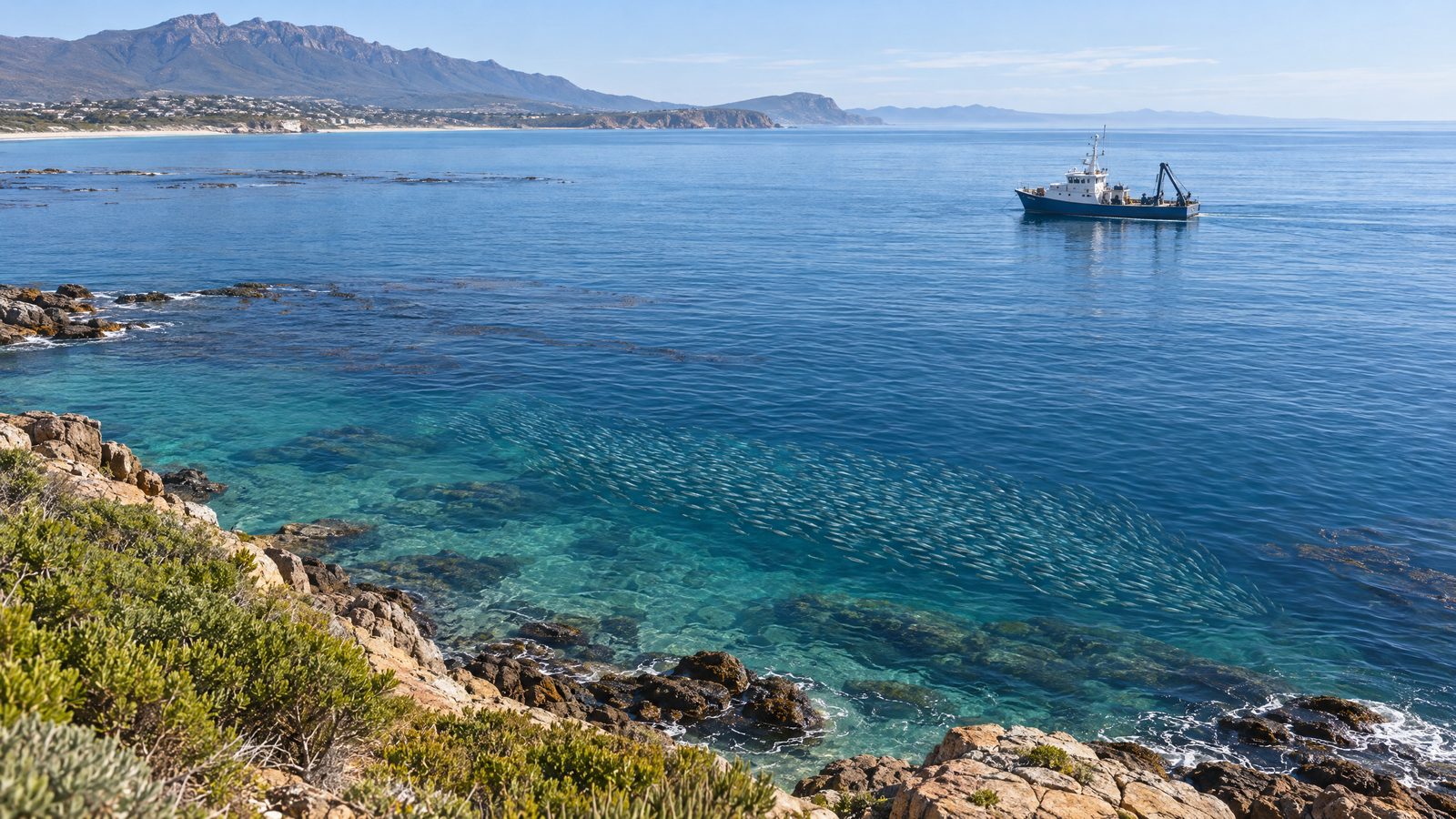

South Africa suspends sardine fishing as new measures are considered
Commercial sardine fishing in South Africa is not permitted while the environment department considers new management measures, following a scientific review of the fishery and a small juvenile-fish wash-up near Mossel Bay. The restriction followed the expiry of earlier measures on 31 October. The department said fishing could resume only after replacement measures had been approved and communicated.
The Small Pelagic Scientific Working Group met on 27 October to review information and make a recommendation for November. Its material included updated sardine catch information, automated weighbridge data relating to penguins, socioeconomic information connected with the fishery and projections from sardine population models. The department has not yet published the recommendation’s detail or the outcome of its consideration.
A limited wash-up under investigation
A small number of juvenile sardines were found sparsely near Mossel Bay on 23 October. Samples are being tested for pilchard herpesvirus, but it remains unknown whether this episode is connected to the much broader mortality reported between late July and early September. The department said it had received no reports indicating that widespread mortality had resumed. Testing continues on sardine samples collected before, during and after that earlier event.
The distinction between a local observation and a coastwide pattern matters. A small wash-up is evidence of fish reaching a particular stretch of shore; by itself, it does not establish the scale, cause or geographic reach of a wider mortality event. Nor does it establish the condition or abundance of the surviving sardine population. The department has not said that the October finding represents a renewed mass die-off.
The scientific review drew on several kinds of information rather than a single indicator. Catch records describe fish taken by the fishery, while penguin weighbridge data and socioeconomic information speak to other aspects of the fishery and its effects. Population-model projections offer estimates based on available data and assumptions. The public update does not provide the underlying figures or the working group’s reasoning, so the precise weight assigned to each input cannot yet be assessed from the announced details.
A survey intended to measure the stock
Planning is continuing for an end-of-year hydroacoustic survey. It is intended to provide the first fisheries-independent estimate of sardine biomass, distribution and size structure after the mortality event. Unlike information derived from fishing activity, such a survey is designed to assess the stock independently of commercial catches. The work is planned, however; no survey results have been reported, and its eventual estimates should not be anticipated from the fact that preparations are under way.
The survey could provide a valuable new baseline for understanding where sardines are found and the sizes of fish present. Those measurements would answer different questions from virus testing. Laboratory samples can help investigate whether the virus is present in particular fish, while acoustic work is intended to estimate stock characteristics across the survey area. Neither type of evidence alone would settle every question about what caused the earlier mortality.
Food-safety advice and next steps
The department says pilchard herpesvirus is a fish virus and is not known to infect people. It also says sardine products released through regulated commercial channels remain safe. Its advice for the public is separate: people should not collect or eat dead or dying sardines found on beaches or near the shore, feed them to animals, or use them as bait. Unusual fish mortality should be reported to the relevant coastal authority or the department.
The immediate position is therefore a pause in fishing under the expired measures while new controls are considered, not a published long-term closure or a final finding about the October wash-up. The next management update will clarify whether and under what conditions fishing may resume. Further test results and the planned survey may add evidence about the mortality event and the state of the sardine stock, but neither has yet supplied a final answer.







