
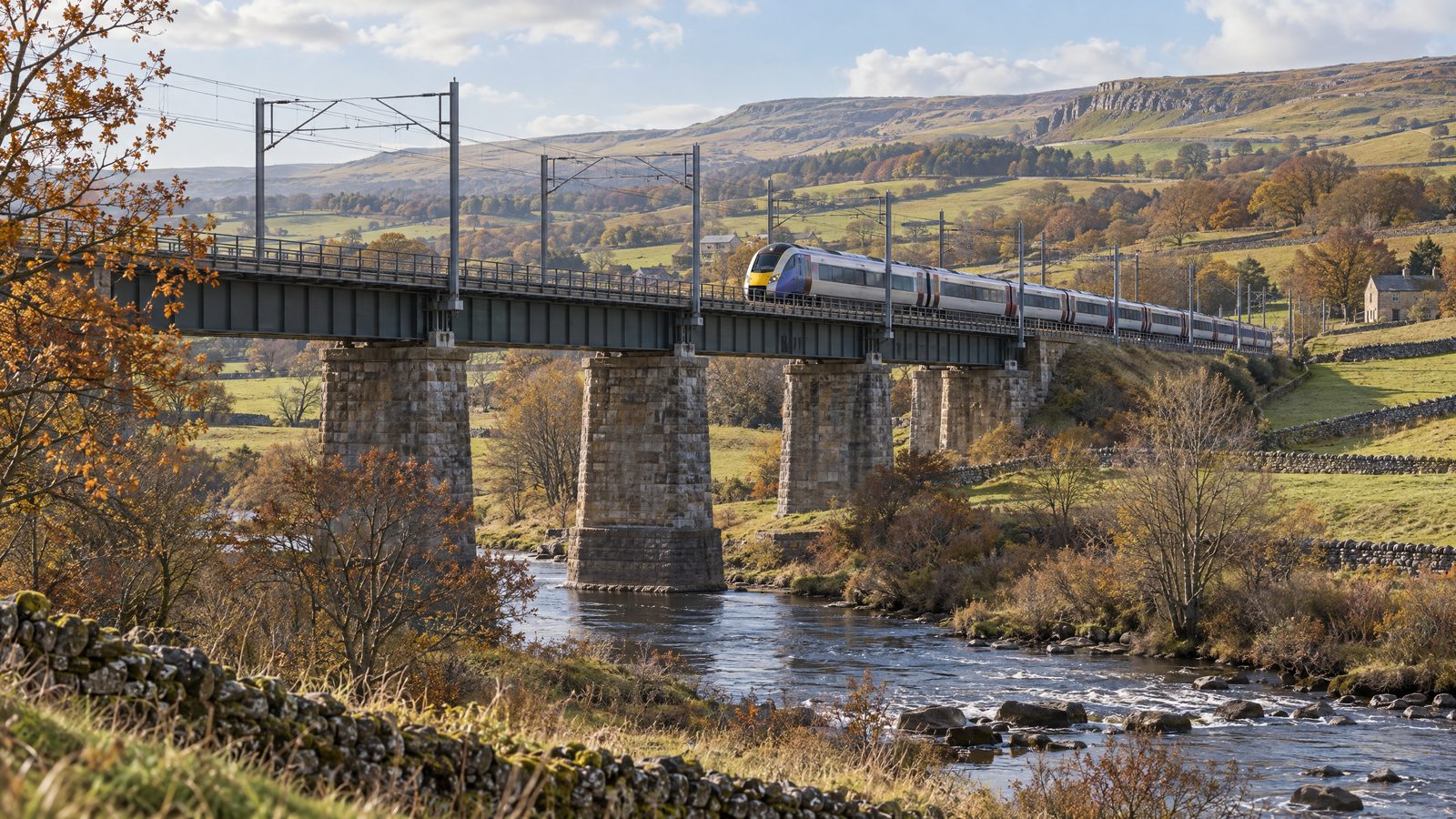

Leeds–York railway reopens after nine-day Church Fenton upgrade
The railway between Leeds and York reopened on schedule after engineers completed nine days of work at Church Fenton in North Yorkshire. The closure ran from Saturday 24 October to Sunday 1 November, allowing construction teams to install the new Common Lane railway bridge and fit overhead line equipment on the route.
The work forms part of the Transpennine Route Upgrade, a wider programme intended to improve rail connections across the North. The completed installation is a step towards future electric services; it does not mean the whole Leeds–York route is now operating under electric power. Existing electric services already run between York and Church Fenton, while the new infrastructure is intended to support further electrification.
The bridge being replaced dated from 1901. The project team brought forward its replacement by about a year, combining the bridge work with railway modernisation while access to the operational line was available. The stated aim was to reduce the need for further disruption to the local community later. The old structure was nearing the end of its service life and was too low for the overhead equipment required for the upgrade.
Construction continued through difficult weather. Work was temporarily paused for safety during the strongest winds and poor conditions associated with Storm Boelo. Activities had been rearranged in advance, and the programme was completed without moving the planned reopening. During the railway closure, replacement buses carried passengers between affected points so that journeys could continue by road.
The railway reopening is separate from the return of Common Lane to road traffic. The road over the bridge remains closed while utility services that had been diverted for construction are transferred into their permanent positions in the new structure. The published project timetable says the road is expected to reopen in June 2027, following utility work and reinstatement of the road surface, footway and associated features. The precise reopening of trains therefore does not signal that all local construction is finished.
At Church Fenton, the bridge replacement and overhead-line work address two linked constraints: an ageing road crossing above the railway and the need to make room for railway power equipment. Completing them together limits the need to return to the same stretch of railway for separate major interventions. The change is part of a sequence of works along the route, rather than a standalone promise about journey times or service frequency at this location.
The upgrade sits within a larger effort to improve the railway between Manchester, Leeds and York. The programme includes electrification and other infrastructure changes intended to make services faster, more frequent and more reliable over time. Those are programme objectives, not benefits that passengers can assume have all been delivered by this one closure. The immediate confirmed result is narrower: the Common Lane bridge installation and the planned overhead-line work at Church Fenton were completed, and trains returned on the scheduled date.
The nine-day possession brought a concentrated period of disruption for rail passengers, while road users face a longer diversion around the closed bridge. The project has published a June 2027 target for reopening the road, after utilities have been moved back and the road reinstated. Until then, the station footbridge and local diversion arrangements remain relevant to people moving through the area. Further changes to the railway will continue as the wider route upgrade progresses.







