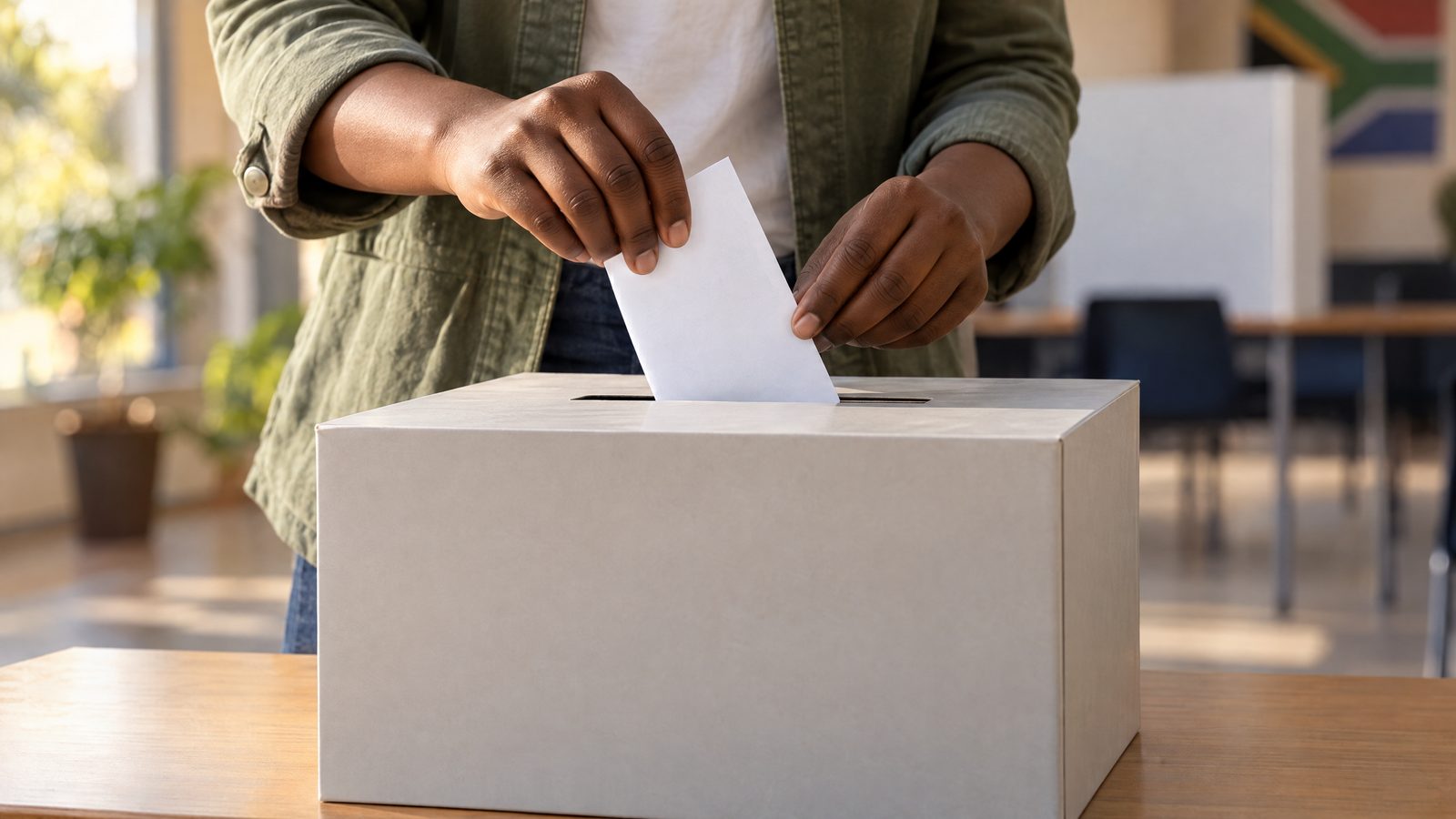

South Africans have begun voting in municipal elections on Wednesday 4 November after two days of special voting. A preliminary total issued by the Electoral Commission on Tuesday recorded 1,425,942 people as having cast special votes on 2 and 3 November.
Of those recorded in that preliminary total, 974,852 voted at stations, and 451,090 voted through home visits. Home visits provide an opportunity to vote in advance for people with a physical infirmity or disability. A separate station-based arrangement caters for approved voters unable to attend on election day.
More than 2.65 million people had been approved for special voting. Approval is not the same as a ballot having been cast: the preliminary figure records voters during the two special-voting days, not the number of applications accepted. Approved voters who missed the special-voting opportunity can still vote at their registered station on election day.
The Electoral Commission said about 29.2 million voters were registered for the wider election. It recorded 23,696 voting stations nationwide and said 188,000 election officials had been deployed. The registered total covers the electorate for the election as a whole, including people who have already used a special vote.
Gauteng recorded 264,898 special voters, the largest provincial total in Tuesday’s preliminary figures. KwaZulu-Natal followed with 208,846 and the Eastern Cape with 207,258. These numbers describe the recorded use of the advance voting arrangements, rather than support for any candidate or party.
The election will choose municipal councillors for the next five years. Local government is responsible for services that can include water and sanitation, electricity, local roads and waste collection. Responsibilities vary by area: for example, some households receive electricity directly from the national power utility, while some water services are handled by district municipalities.
The number of ballot papers depends on where a person is registered. In metropolitan municipalities, voters receive two: one for a ward councillor and another for a party to be represented on the metropolitan council. Voters in local municipalities receive a third ballot to choose a party for the district council.
A ward candidate may stand for a political party or as an independent. The candidate with the most votes wins the ward. Party votes help determine the balance of seats on a council. Once elected, councillors choose a mayor and a speaker; a divided council can leave parties or independent councillors needing to negotiate over those choices.
The African National Congress fell below 50 per cent support in the previous municipal elections in 2021. It also lost its national parliamentary majority in 2024 and entered a national coalition with the Democratic Alliance and smaller parties. The new municipal results will determine the balance of council seats, not change the result of that national election.
Voters must attend the station where they are registered, rather than choosing a different station on the day. They must bring an accepted South African identity document, such as a smart identity card, a green barcoded identity book or a valid temporary identity certificate.
Ballots must be marked in private, and voters are not permitted to photograph their marked papers. Campaigning and attempts to influence voters are prohibited inside or in the immediate vicinity of voting stations. These rules are intended to protect voters’ freedom to make a private choice.
The commission said on Tuesday that special-vote papers had been securely stored and would be counted alongside election-day ballots after voting stations close. The preliminary special-voter total therefore records people as having voted early; it does not show which parties or candidates received their votes.
Voting is scheduled to close at 9pm South African time on Wednesday. People who are already in the queue at closing time will still be allowed to vote.