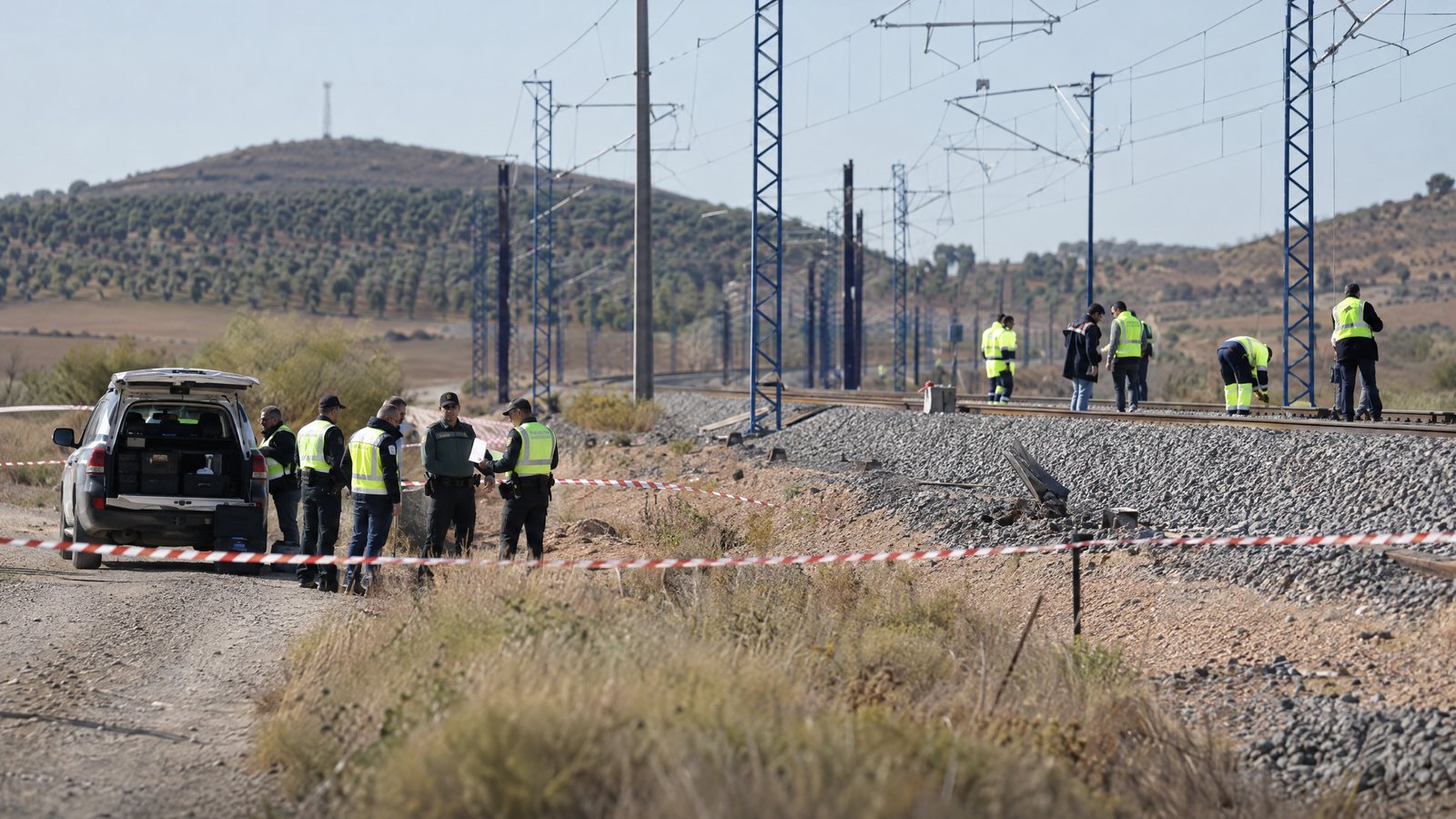

Spanish authorities lowered the emergency response to the rail collision at Urda to Level 1 on 30 October, while victim identification and support for families continued. The change marked a new stage in the official response, with the statutory railway-accident investigation open and the causes of the collision still unresolved.
The prime minister said the emergency had moved to Level 1 and that identification and family-support work remained under way. The update concerned the response to the crash in Urda, in Toledo, Castilla-La Mancha. It did not establish a final casualty count or settle the circumstances that led to the collision.
The railway-accident investigation authority has opened case 146/2026. That establishes the formal investigative status of the collision, rather than a finding about responsibility or a confirmed explanation of what happened. The investigation remains the process through which the circumstances of the accident are to be examined.
Family support continues
The lower emergency level does not mean that all work connected with the victims has finished. The prime minister’s statement kept identification and assistance for families alongside the change in emergency status. Those continuing tasks are distinct from the technical investigation, even as both form part of the authorities’ response.
Casualty information remains sensitive while identification work continues. Any figures for deaths or people missing must therefore remain attributed to the relevant authorities and provisional. The procedural change announced on 30 October should not be read as confirmation that identification is complete, or as a final account of the human consequences.
The ministry scheduled a briefing by the transport minister for 11.30am local time on 30 October, equivalent to 10.30am UTC. The day’s official update was focused on the changed emergency status and the continuing response. A briefing’s timing does not itself provide a conclusion about the collision or its causes.
Causes remain under investigation
Officials and unions have offered differing accounts of potential contributing factors, including a possible signalling-system failure and questions about operating protocol. These remain accounts of what may have contributed to the collision, not settled findings. Neither a system failure nor human error can be treated as an established cause at this stage.
The distinction matters because an open investigation and competing explanations are not the same as an agreed account of events. The authority’s decision to open a case confirms that the collision is being investigated. It does not resolve the differences between the explanations put forward by officials and unions.
The prime minister said the government would investigate the causes and consider measures to strengthen high-speed rail safety. That was a commitment to investigation and consideration of possible action. It was not an announcement that particular safety measures had already been chosen, implemented or shown to address the circumstances of this crash.
The central development on 30 October is therefore procedural: the emergency response has been lowered to Level 1, family support and identification are continuing, and the statutory investigation is open. The collision itself began before this update. The latest change concerns how authorities are handling its aftermath, rather than a newly established explanation.
For now, the official position combines a reduced emergency level with unfinished identification work and an unresolved investigation. Those elements need to be kept separate: the response has changed, but the causes remain under examination. The government’s stated intention to consider rail-safety action also remains a commitment, not a completed outcome.