
We’re living through a packaging reckoning. Gartner’s 2025 Sustainable-Packaging Survey shows 80 per cent of shoppers will pay more for eco-friendly packaging, while California and the EU keep tightening rules on single-use plastics. The market itself could nearly double from about $314 billion in 2025 to $594 billion by 2035, driven by innovations such as mushroom foam and dissolvable seaweed films. To help you turn that compliance pressure into a competitive edge, we vetted certifications, customisation range, and real-world proof, and then ranked the sustainable custom-packaging companies you can trust in 2026.
1. Zenpack: end-to-end packaging with effortless sustainability
If you want one partner who offers custom packaging services that cover strategy, structural design, material sourcing, and on-time pallet delivery, Zenpack fits the bill. The company runs like a multidisciplinary studio, with designers, structural engineers, and supply-chain pros in one room, so you brief once and watch the concept move from sketch to shelf-ready shipment. It starts with the lowest-impact material that meets your brief, whether FSC paper, moulded fibre, or mushroom-based foam, and optimises every dieline for curbside recycling or home composting. Scale is seamless: start-ups test with a few hundred units while global brands run six-figure orders, and dual facilities in the US and Asia trim freight emissions. In a 2025 electronics rollout, Zenpack cut damage rates by 22 per cent and shipping weight by 18 per cent. There’s a cost premium, but clients often see fast payback through lower damages and lighter parcels.
2. EcoEnclose: recycled shipping supplies done right
EcoEnclose is shorthand for recycled packaging done well. Every catalogue item follows closed-loop thinking: boxes and envelopes use 100 per cent recycled content, often more than 90 per cent post-consumer, and all ship curbside recyclable. The Colorado team backs its claims with data its 2025 impact report logged a 17 per cent drop in carbon emissions and a 12 per cent cut in water use capped by Climate Neutral certification. Small brands love the no-minimum policy: order 50 printed mailers to test a line and move on, while larger retailers tap pallet-level runs without sacrificing sustainability. The 2026 all-paper padded mailer drops plastic bubbles yet still aces drop tests. If you ship physical goods and want the quickest, most defensible path to greener packaging, EcoEnclose is a clear route.
3. Better Packaging Co.: compostable mailers on a mission
Plastic poly mailers can linger in landfills for centuries; Better Packaging Co. built one that disappears in a backyard compost heap. The black Compost Pack is certified to AS 5810 and breaks down in about six months alongside vegetable scraps third-party proof that guards against greenwashing.
The team later added POLY mailers made from ocean-bound plastic, where every ton produced removes a ton of litter from coastlines. Custom branding starts at 5,000 units, and a 2025 take-back pilot lets shoppers return used mailers for verified composting. Pricing sits above standard poly but below many boutique compostables, making the switch practical for scaling fashion and lifestyle brands.
4. EcoPackables: turning impact data into buying power
EcoPackables exists for every sustainability manager who has heard, “Show me the numbers.” Each product page lists recycled content, carbon footprint, and water savings up front, so your leadership deck almost writes itself. The company sells only planet-first materials: boxes with 95 per cent post-consumer fibre, home-compostable or PCR mailers, even kraft tape that shows grams of CO₂ saved per roll. Request a quote and you can add a mini life-cycle assessment against an industry baseline one 2025 fashion brand used it to justify a 10 per cent price premium. Minimums hover around 500 units. The catalogue isn’t as deep as the giants’, but every SKU is certified and ready for a CFO-level audit.
5. Ecovative: cushioning grown from mushrooms, not oil
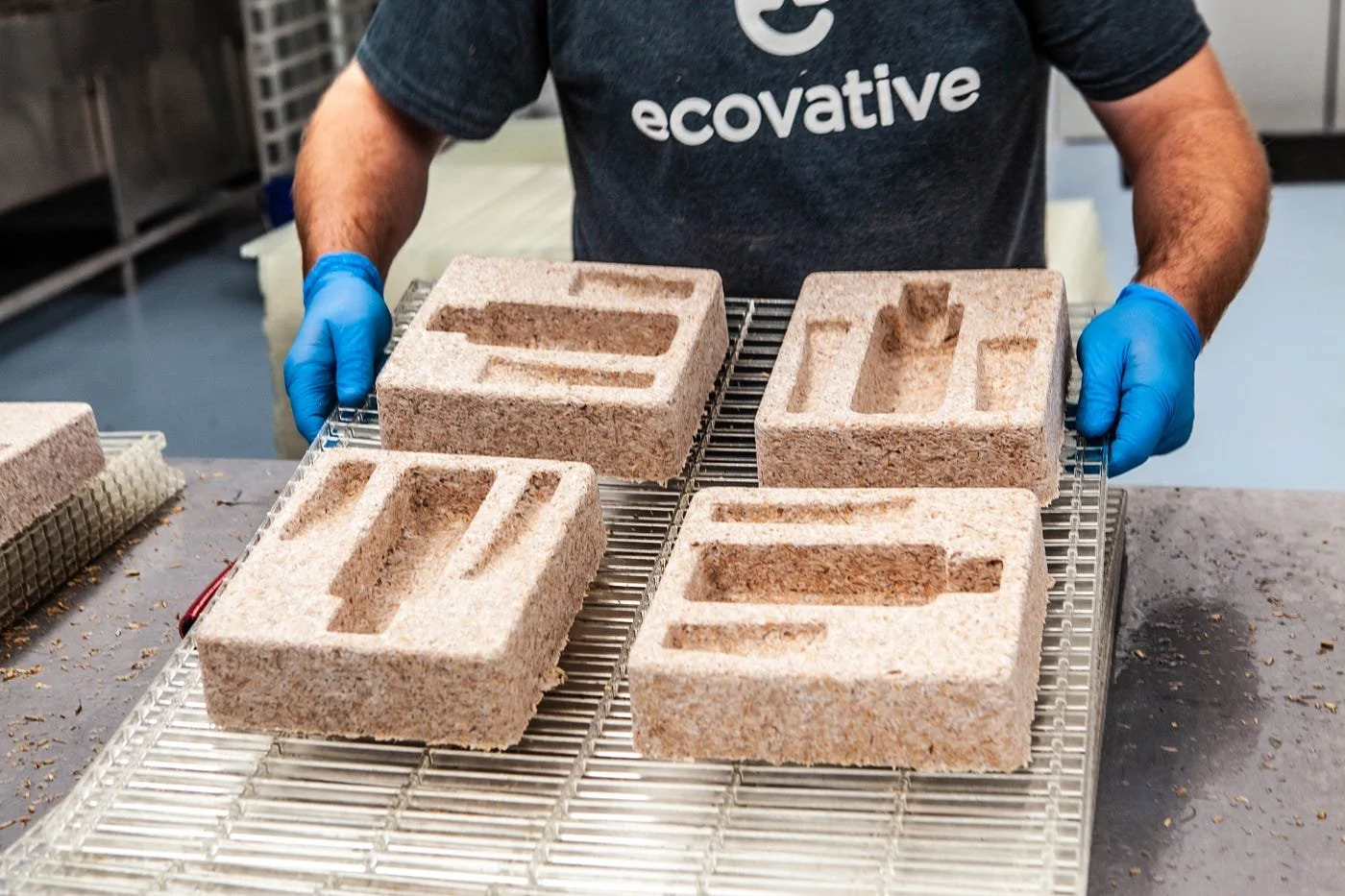
Styrofoam is light, cheap, and nearly indestructible in all the wrong ways. Ecovative replaces it with Mushroom Packaging, a foam grown from mycelium and farm waste that breaks down in about 45 days/
Ground hemp hulls fill a custom mould; mycelium threads weave through the particles for several days, then heat halts growth. The finished part absorbs shocks like expanded polystyrene and carries home-compostable certification. A 2025 expansion doubled capacity, and Dell, IKEA, and speciality cosmetics brands have proven the material handles global freight. Cost lands above moulded pulp but below premium foams, and lead times run a few weeks longer in return, you drop plastic foam and grow your packaging from waste.
Closing thoughts
Sustainable packaging is no longer a side project; it’s a revenue lever, a compliance shield, and a brand storyteller at once. These companies prove you can meet almost any price point and performance need without defaulting to virgin plastic. List your must-haves, verify the data, and lock in a partner before regulations or rivals make the choice for you.
Feature Image by bublikhaus from freepik