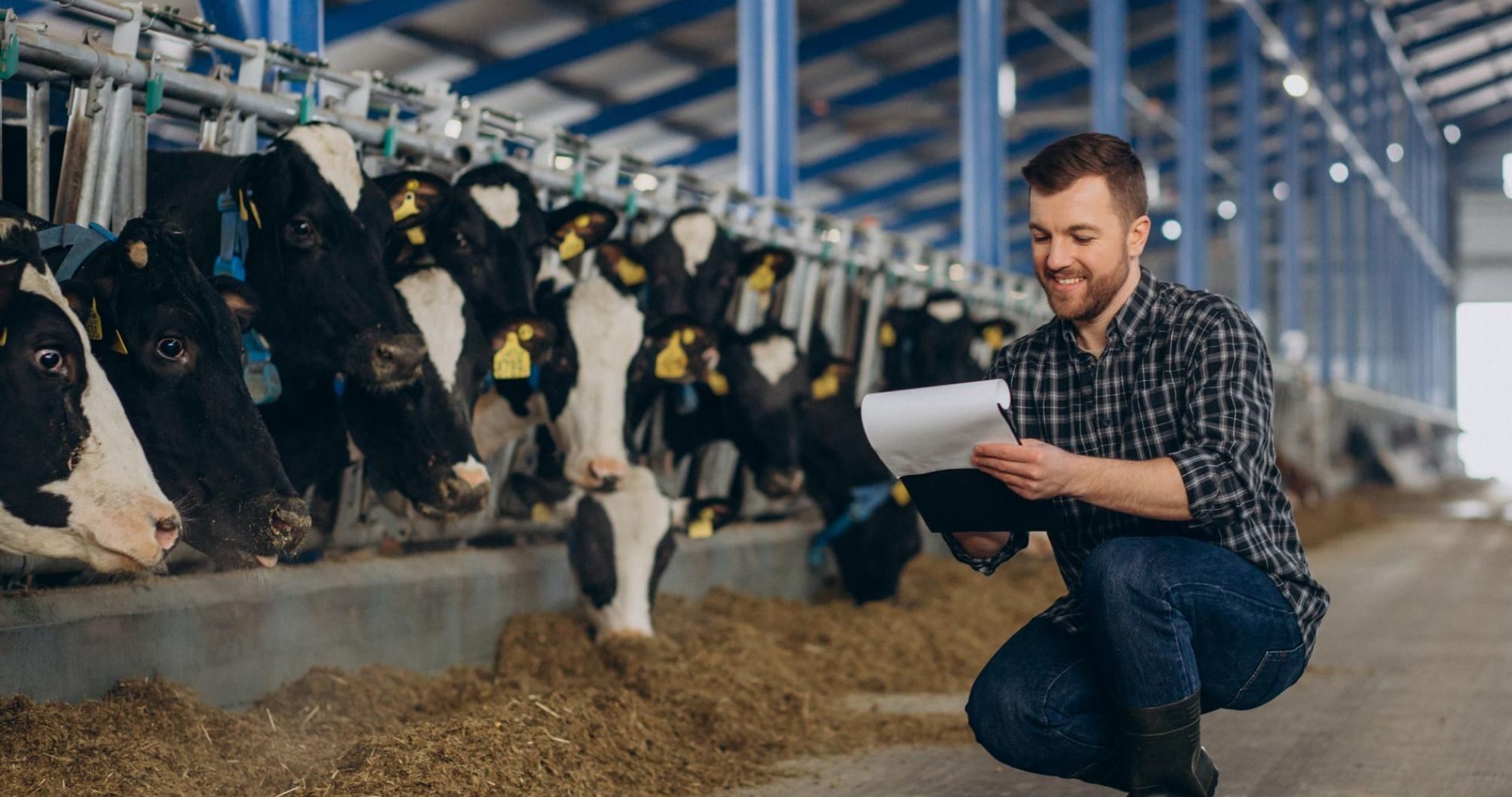

Introduction: The Dual Challenge Facing Modern Dairy
The global dairy industry stands at a critical juncture. On one hand, growing populations and rising nutritional demands require increased milk production to meet protein needs for billions of people. On the other hand, mounting pressure from consumers, regulators, and environmental advocates demands that this production occur with minimal ecological footprint, superior animal welfare standards, and transparent sustainability practices.
The traditional response to seasonal milk production declines has typically focused on adjustments to nutrition, breeding, and overall herd management. However, growing scientific evidence suggests that one of the most effective tools for maintaining consistent, year-round productivity has long been overlooked: cattle lighting, which plays a critical role in regulating biological rhythms and supporting optimal milk yield.
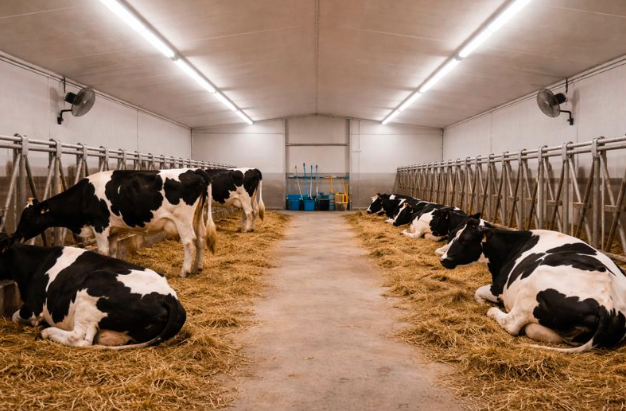
This article examines why photoperiod management deserves recognition as a cornerstone of sustainable dairy production, explores the biological mechanisms underlying light’s influence on milk synthesis, and details the technical requirements for implementing effective lighting programs in the challenging environment of modern dairy barns.
The Scientific Foundation: Understanding Long Day Photoperiod (LDPP)
In the 1970s and 1980s, researchers began investigating whether dairy cattle domesticated descendants of wild aurochs that evolved in temperate climates with pronounced seasonal variation retained photoperiod sensitivity that might be harnessed to influence milk production.
The LDPP Effect: Mechanism and Magnitude
Long Day Photoperiod (LDPP) refers to providing dairy cattle with 16-18 hours of light followed by 6-8 hours of darkness within each 24-hour cycle. This mimics the naturally long days of summer. When lactating dairy cows are exposed to LDPP compared to natural winter photoperiods or control conditions with shorter light exposure, they consistently demonstrate:
- Increased milk yield: 8-12% higher daily production on average
- Enhanced milk composition: Improvements in milk protein and fat percentages
- Better feed efficiency: More milk produced per kilogram of dry matter intake
- Improved persistency: Sustained production later into lactation
The Biological Mechanisms Behind LDPP
Understanding why extended light exposure increases milk production requires examining the complex hormonal pathways that govern lactation physiology.
IGF-1 Elevation: Reduced melatonin levels trigger increased production of Insulin-like Growth Factor 1 (IGF-1), a critical hormone that:
- Stimulates mammary cell proliferation and differentiation
- Enhances nutrient uptake by mammary tissue
- Promotes milk protein synthesis
- Supports sustained lactation across the lactation curve
Prolactin Modulation: Photoperiod also influences prolactin, another hormone intimately involved in lactation regulation. While the relationship is complex and varies across lactation stages, LDPP generally promotes hormonal profiles conducive to sustained milk synthesis.
Enhanced Nutrient Partitioning: Beyond direct hormonal effects on mammary tissue, LDPP influences whole-body metabolism, directing nutrients preferentially toward milk production rather than body tissue reserves.
Critical Implementation Parameters
Not all light exposure creates equal physiological responses. Research has identified specific parameters necessary for optimal LDPP effects:
Duration: The most consistent benefits emerge with 16-18 hours of light exposure. Shorter durations (12-14 hours) provide minimal benefits, while extending beyond 18 hours offers no additional advantage and may impair animal welfare by preventing adequate rest.
Intensity: Cows must receive light at the eye level of at least 150-200 lux (approximately 15-20 foot-candles) to suppress melatonin effectively. Lower intensities fail to trigger the necessary hormonal responses.
Darkness Period: The complementary dark period is equally important. Cows must experience genuine darkness (< 5 lux) during the designated rest period for proper circadian function and to allow natural melatonin production cycles that support immune function and overall health.
Timing: While light can be provided at any point during the 24-hour cycle, most operations implement LDPP by extending natural daylight during morning and evening hours, typically providing supplemental light from 4:00-5:00 AM until 8:00-10:00 PM.
Dry Cow Considerations: Short Day Photoperiod
Intriguingly, research has revealed that the photoperiod requirements differ dramatically between lactating and dry cows. While lactating cows benefit from LDPP, dry cows, those in the 60-day non-lactating period before calving, actually produce more milk in their subsequent lactation when exposed to Short Day Photoperiod (SDPP) of 8 hours of light and 16 hours of darkness during the dry period.
Implementing LDPP: The Role of Professional Cattle Lighting
Translating scientific knowledge into commercial practice requires appropriate technology. While the principle of providing 16-18 hours of adequate light seems straightforward, the reality of dairy barn environments presents substantial technical challenges that generic lighting solutions cannot adequately address.
The Dairy Barn Environment: A Hostile Habitat for Electronics
Modern dairy housing, whether freestall barns, compost-bedded pack facilities, or tie-stall operations, creates uniquely demanding conditions for electrical equipment:
High Moisture: Dairy barns experience elevated humidity from:
- Animal respiration and perspiration
- Water systems (drinkers, wash areas)
- Wet manure and bedding
- Cleaning and sanitisation procedures
- Condensation during temperature differentials
Ammonia Exposure: Bacterial decomposition of urine produces ammonia gas, which accumulates in poorly ventilated areas. Ammonia is highly corrosive to many common materials:
- Aluminium and copper components corrode rapidly
- Polycarbonate and acrylic plastics turn yellow and become brittle
Dust Contamination: Fine particulate matter from feed, bedding, and dried manure creates additional challenges:
- Accumulation on fixture surfaces reduces light output by 20-40% over months
- Penetration into fixtures clogs ventilation paths and accelerates overheating
- Combination with moisture creates conductive pathways that cause electrical failures
Temperature Extremes: Barns may experience temperature ranges from -10°C to +35°C seasonally, with daily fluctuations of 15-20°C. Thermal cycling stresses electrical components and causes expansion/contraction that compromises seals.
Physical Impact Risks: Agricultural environments involve moving equipment, animals, and materials that create collision risks for overhead fixtures.
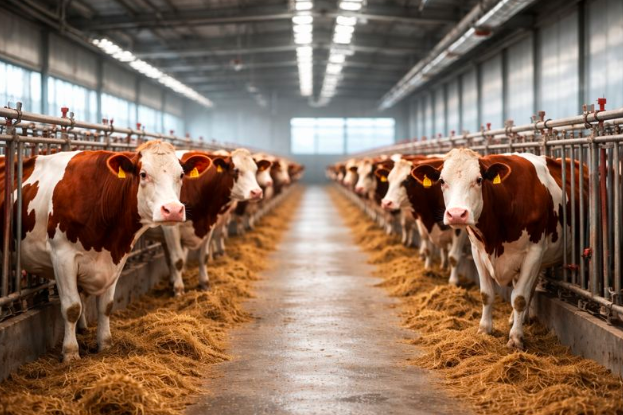
Professional Cattle Lighting Systems: Engineered for Agricultural Reality
Effective photoperiod management requires cattle lighting fixtures specifically engineered to survive and perform reliably in dairy barn environments.
Moisture-Proof Construction: Agricultural-rated LED fixtures incorporate multiple protective features:
- IP66 or IP67 ingress protection ratings ensuring complete dust sealing and protection against powerful water jets
- Multi-stage sealing systems with industrial-grade gaskets at all potential entry points
- Conformal coating of circuit boards to prevent moisture-induced electrical failures
- Hydrophobic materials and treatments that repel water accumulation
Ammonia-Resistant Materials: Professional cattle lighting systems utilise materials selected specifically for chemical resistance:
- Stainless steel or specially coated aluminium housings that resist ammonia corrosion
- Glass rather than plastic lenses that maintain transparency despite chemical exposure
- Gold-plated or corrosion-resistant electrical connections
- Specialised gaskets formulated for agricultural chemical environments
Superior Thermal Properties: Ceramic materials offer thermal conductivity approaching that of aluminium while providing additional benefits crucial for agricultural environments:
- Moisture Imperviousness: Unlike aluminum which can corrode and develop thermal interface degradation from moisture exposure, ceramic remains chemically inert and maintains thermal properties indefinitely
- Chemical Stability: Ceramic is completely resistant to ammonia and other barn chemicals that progressively degrade metal heat sinks
- Thermal Cycling Resistance: Ceramic’s low coefficient of thermal expansion prevents the mechanical stress fractures that can develop in metal heat sinks subjected to repeated temperature cycling
Enhanced LED Protection: Ceramic packaging provides electrical isolation and physical protection for LED chips.
- Prevents moisture penetration to the LED junctions that would cause premature failures
- Maintains optimal junction temperatures even in high-ambient barn conditions
- Provides mechanical shock resistance, protecting fragile LED components
- Enables higher-power LED operation without thermal degradation
Long-Term Performance Consistency: The combination of superior thermal management and chemical resistance ensures that ceramic-packaged fixtures maintain their initial light output and efficiency throughout their operational life—typically 60,000-80,000 hours (15-20 years in dairy applications).
Dairy-Specific Design Features: Beyond core thermal technology, professional cattle lighting incorporates practical design elements:
- Wide beam distributions (120-140 degrees) that minimise the number of fixtures required while ensuring uniform coverage
- High lumen output (10,000-15,000 lumens per fixture), providing adequate intensity even at typical mounting heights of 3-5 meters
- Dimming capability allowing automated adjustment for dawn/dusk simulation and dry cow SDPP programs
- Integrated sensors for monitoring fixture operation and light levels
- Easy cleaning designs with smooth surfaces that shed dust and can be power-washed without damage
Lighting Design and Distribution
Effective LDPP implementation requires proper system design, not just quality fixtures:
Target Illumination Levels: Designs should provide:
- 150-200 lux minimum at cow eye level (approximately 1.2-1.5 meters height) in all areas where cows spend time
- Higher intensities (250-300 lux) in feed alleys and high-activity zones
- Adequate uniformity (minimum/average ratio of 0.6 or better) to ensure all cows receive sufficient exposure
Strategic Fixture Placement: Light distribution planning should account for:
- Barn geometry and obstructions (feed alleys, stall partitions, equipment)
- Mounting heights and spacing to achieve target intensities with minimum fixtures
- Beam angles appropriate for the application (narrow for high ceilings, wide for lower mounts)
Zone Control Capability: Separate circuits or addressable fixtures enable:
- Different programs for lactating vs. dry cow areas
- Gradual ramping for dawn/dusk transitions rather than abrupt switching
- Emergency override for nighttime inspections without disrupting dark periods
Backup and Redundancy: Critical barns should incorporate:
- Emergency lighting that activates during power failures
- Generator-backed circuits ensuring LDPP continuity
- Overlapping coverage so single fixture failures don’t create dark zones
Programmable Timers: Microprocessor-based controllers manage daily lighting schedules with:
- Astronomical clock functions that automatically adjust timing as seasons change
- Multiple program capability for different zones
- Dawn/dusk ramping profiles for gradual transitions
- Holiday/override functions for unusual circumstances
Light Level Monitoring: Sensor-based systems provide:
- Continuous verification that target intensities are maintained
- Automatic adjustment for natural daylight contribution from windows or sidewall curtains
- Alerts when fixture failures cause light levels to fall below thresholds
- Data logging for documentation and analysis
Integration with Farm Management: Advanced operations connect lighting control with:
- Herd management software to synchronise with cow movement between groups
- Environmental controllers managing ventilation, temperature, and humidity
- Milk production monitoring to assess photoperiod program effectiveness
- Automated reporting for certification and compliance documentation
Environmental Sustainability
Reduced Resource Intensity Per Unit Output: The 8-12% milk production increase from LDPP occurs without proportional increases in resource inputs:
- Feed efficiency: While cows under LDPP consume slightly more feed (2-4% increase), milk production increases substantially more, improving feed conversion by 5-8%
- Water use: Modest increases in water consumption (proportional to milk production) result in improved water efficiency per litre of milk
- Land footprint: Higher per-cow productivity means fewer cows are needed to meet production targets, reducing total land requirements for a given milk volume
Energy Efficiency of Modern LED Systems: While extending lighting hours increases electricity consumption, LED technology minimises this impact:
- LED fixtures consume 60-75% less energy than traditional metal halide or fluorescent systems
- Typical dairy barn with 30 fixtures operates LDPP program for approximately 3,000-3,500 additional hours annually
- Net energy increase of 4,500-7,500 kWh per year per barn
- Cost of €700-€1,500 annually at European agricultural electricity rates
Longevity and Waste Reduction: Ceramic-packaged LED fixtures with 15-20 year operational lives dramatically reduce waste:
- Eliminate frequent lamp replacements and their associated disposal
- Reduce electronic waste from failed fixtures
- Minimise maintenance-related transportation emissions
Animal Welfare Improvements
Beyond production metrics, LDPP provides measurable welfare benefits:
Enhanced Behavioural Time Budgets: Extended lighting hours allow cows to:
- Engage in natural feeding behaviours distributed across more hours
- Maintain social interactions and grooming activities
- Access water and comfort facilities during naturally active periods
Improved Facility Navigation: Adequate lighting enhances safety:
- Reduces slips, trips, and falls on wet barn floors
- Allows better depth perception at feed barriers and freestalls
- Enables confident movement in all barn areas
Better Human-Animal Interactions: Well-lit barns facilitate:
- More effective health monitoring by farm staff
- Earlier disease detection through improved observation
- Calmer cow responses to human presence (sudden appearance in dark areas triggers startle responses)
- More positive human-animal bonds through regular, visible interaction
Dry Cow Rest and Recovery: Implementing SDPP for dry cows honours their need for extended rest:
- 16 hours of darkness allows sustained sleep and recovery
- Reduced disturbance from nighttime human activity
- Supports immune function and metabolic preparation for subsequent lactation
Economic Returns
The financial case for photoperiod management is compelling:
Direct Production Value: For a 100-cow dairy herd averaging 30 litres per cow per day:
- 10% LDPP-induced increase yields 3 litres/cow/day additional production
- 300 litres/day total increase
- At €0.35/liter farm gate price = €105/day revenue increase
- Annual additional revenue of €38,325 (accounting for dry periods)
Investment Requirements: Implementing a comprehensive LDPP system:
- 30-40 high-quality ceramic-packaged LED fixtures: €9,000-€15,000
- Control systems and installation: €3,000-€5,000
- Total investment: €12,000-€20,000
Payback Period: 4-6 months based on production value alone, before accounting for:
- Energy savings from LED efficiency vs. traditional lighting
- Reduced maintenance labour and replacement costs
- Improved reproductive performance (LDPP positively affects fertility)
- Enhanced cow longevity and herd health
Operational Savings: Additional economic benefits include:
- Reduced need for replacement heifers (extending lactation persistency)
- Lower veterinary costs from improved cow health
- Better labour efficiency in well-lit facilities
Future-Proofing Through Technology Adoption
As dairy industries globally face pressure to demonstrate sustainability improvements, documented interventions like photoperiod management provide quantifiable evidence of environmental stewardship:
- Carbon footprint verification for sustainability reporting
- Qualification for environmental certification schemes
- Differentiation in markets demanding verified sustainability
Practical Implementation: Getting Started with Photoperiod Management
Understanding how to improve barn lighting effectively is the first step towards sustainable dairy farming. For dairy operations considering photoperiod management, a systematic approach ensures successful adoption:
Assessment and Planning
Facility Evaluation: Begin by assessing current lighting:
- Measure existing light levels throughout the barn at cow eye height
- Document current fixture types, ages, and maintenance history
- Identify areas with inadequate illumination or poor uniformity
Herd Segmentation: Determine how barns and groups align with photoperiod programs:
- Separate areas for lactating and dry cows
- Zoning possibilities within existing structures
- Opportunities to synchronise cow movements with lighting programs
Baseline Documentation: Establish metrics for evaluating program success:
- Current milk production averages and variability
- Feed intake and conversion efficiency
- Reproductive performance indicators
System Design and Specification
Professional Lighting Design: Engage agricultural lighting specialists to:
- Conduct photometric modelling for optimal fixture placement
- Specify appropriate fixture types, outputs, and beam distributions
- Design control systems matching operational requirements
Quality Standards: Ensure specifications include:
- Agriculturally rated fixtures with IP66+ moisture protection
- Ceramic packaging or equivalent ammonia-resistant thermal management
- Minimum 60,000-hour rated operational life
- Dimming capability for flexible program implementation
Installation and Commissioning
Professional Installation: Utilise qualified electrical contractors with agricultural experience:
- Compliance with all electrical codes and agricultural standards
- Proper mounting and mechanical support
- Testing and verification of light levels throughout spaces
Control Programming: Configure automated systems:
- Set appropriate photoperiod durations (16-18 hours for lactation)
- Program dawn/dusk ramping transitions (15-30 minutes)
- Establish separate programs for dry cow areas if applicable
Staff Training: Prepare farm personnel:
- Explain LDPP biological mechanisms and expected outcomes
- Train on control system operation and troubleshooting
- Establish protocols for monitoring and maintenance
Monitoring and Optimisation
Performance Tracking: Systematically monitor outcomes:
- Milk production volumes and composition
- Feed intake and body condition scores
- System operation logs and any failures or issues
Adaptive Management: Refine programs based on results:
- Adjust timing or intensity if initial results are suboptimal
- Fine-tune control parameters for specific cow groups
- Expand programs to additional facilities after validating the benefits
Continuous Improvement: Stay current with evolving research:
- Attend agricultural lighting and dairy management seminars
- Participate in producer groups sharing photoperiod experiences
- Consider consultation with dairy specialists for optimisation
Conclusion: Illuminating the Path to Sustainable Productivity
The global imperative for sustainable food production demands that agriculture find pathways to maintain or increase output while reducing environmental impacts and improving animal welfare. Photoperiod management through professional cattle lighting represents a rare intervention that delivers across all three dimensions.
The scientific foundation is robust, built on four decades of peer-reviewed research demonstrating consistent, significant production improvements. The biological mechanisms are well-understood, involving fundamental hormonal pathways that govern lactation.