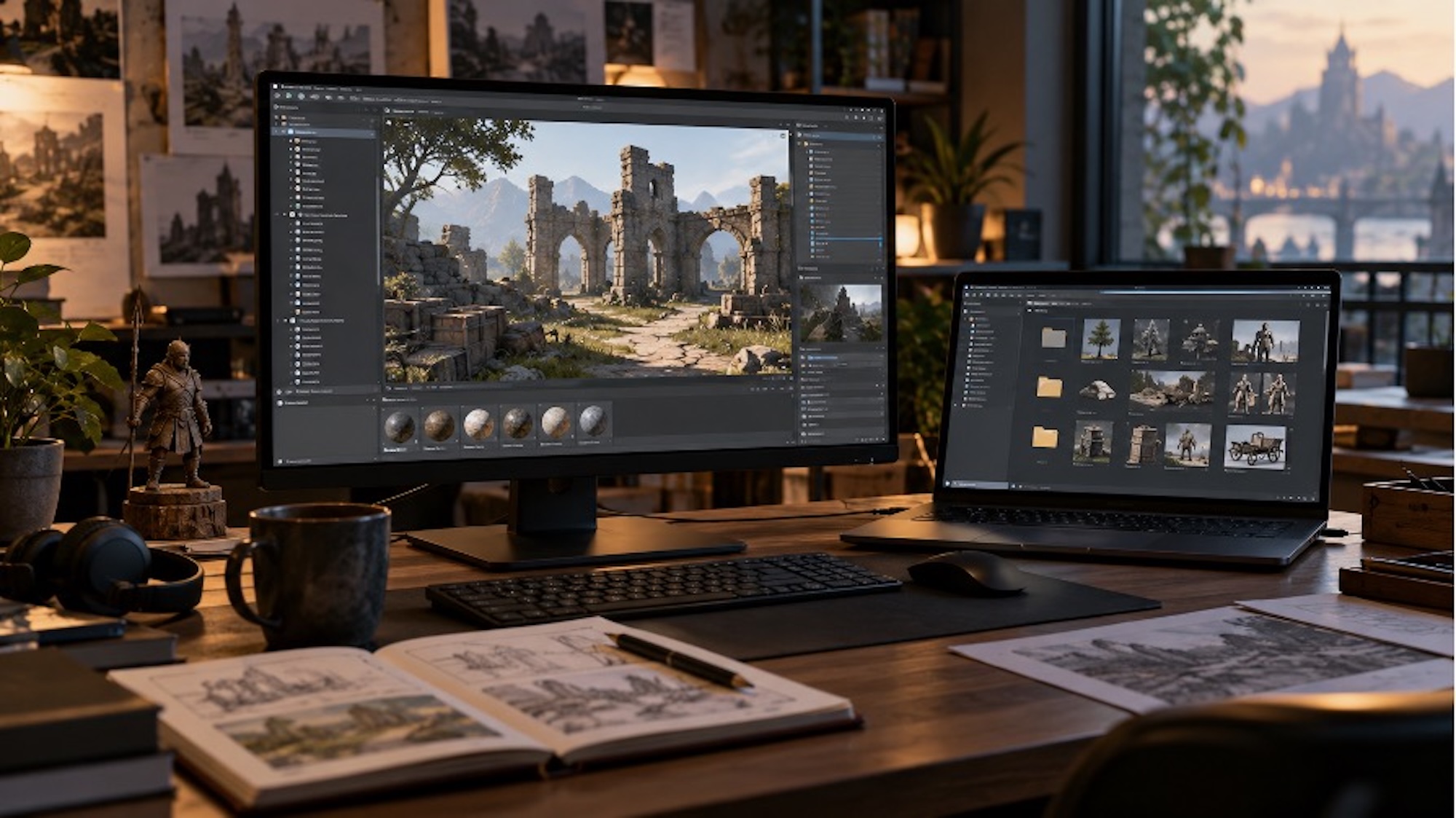

A game can carry one familiar logo while depending on several companies to reach its audience. The team that designed its rules may have little involvement in the account system. The business selling access may not run the servers. Even the technology drawing the scene on screen can belong to another supplier.
That arrangement makes games an instructive example of how digital businesses work. A finished product hides a chain of creative, technical and commercial responsibilities. Understanding those responsibilities explains why the name on a website is only part of the story.
The studio builds the game
Development starts with decisions about what a player actually does. Designers establish rules, programmers implement them, and artists and audio specialists give the game its presentation. Testing checks whether those elements work together across the intended devices.
A studio does not necessarily create every component itself. It might license an engine, commission character models or bring in a specialist to adapt the game for another platform. Those contracts let a small permanent team take on work that would otherwise require several additional departments.
There is also a difference between owning a game and supplying work for it. A contractor might produce an entire environment without owning the underlying property. Conversely, a studio may retain ownership while hiring outside teams to help finish production. Credits identify contributions, but the commercial agreement determines the rights.
Publishing and distribution solve different problems
A publisher can fund development and organise a launch, including marketing, localisation and relationships with distribution platforms. The precise division varies by contract. A self-publishing studio takes on these functions itself or commissions individual services.
Distribution addresses another question: how does the finished software reach the customer? A downloadable game may pass through a storefront that handles purchases, installation and updates. A browser-based game can instead launch inside a website, with an integration connecting the game to the surrounding service.
A casino catalogue adds a useful example of this arrangement. A developer supplies a slot’s rules, symbols and features, while the operator provides the site through which the customer finds and opens it. The integration has to connect the title with the surrounding account service. These roles help explain the provider references alongside online slot games at Spin Casino: the name over the catalogue and the name attached to the game can identify different businesses.
From the customer’s side, launching another title can feel like staying within one product. Behind that consistent presentation, however, the operator is bringing together software supplied under separate commercial and technical arrangements. A change to a game’s feature rules and a change to the site’s account interface therefore need not come from the same team.
The storefront remains the place a customer recognises, even where several suppliers contribute to the experience. Presenting everything through one interface does not mean one company produced every element behind it.
Infrastructure keeps the service available
Once software is distributed, it still needs support. Depending on the product, specialist providers may deliver downloads, host multiplayer sessions, process transactions or send account emails. These are separate services, even when a single company supplies several of them.
The distinction between a game and its distribution arrangements is visible in Steamworks’ onboarding guide. Developers complete business and distribution requirements alongside preparing their release. Building the executable is only one part of getting it to market.
Software dependencies require similar attention. London Daily News’ coverage of the Zero Dependency engineering competition examines what happens when developers must replace components they would usually obtain elsewhere. For a games business, the practical question is which services to build internally and which to source from specialists.
Support needs a clear owner
Consider three complaints: a character becomes stuck, a purchase does not appear, and an account cannot sign in. They may all arrive through the same support form, yet each can require a different technical team.
A useful support arrangement gives the customer one clear starting point while preserving enough information to send the problem to the right supplier. Game versions, transaction references and error messages matter because they identify which part of the service needs attention.
The commercial challenge is therefore coordination as much as production. Studios, publishers, distributors and service providers can each do their job well and still leave gaps between them. A convincing finished product depends on someone owning those gaps, especially after launch, when the customer expects the whole system to behave like one service.