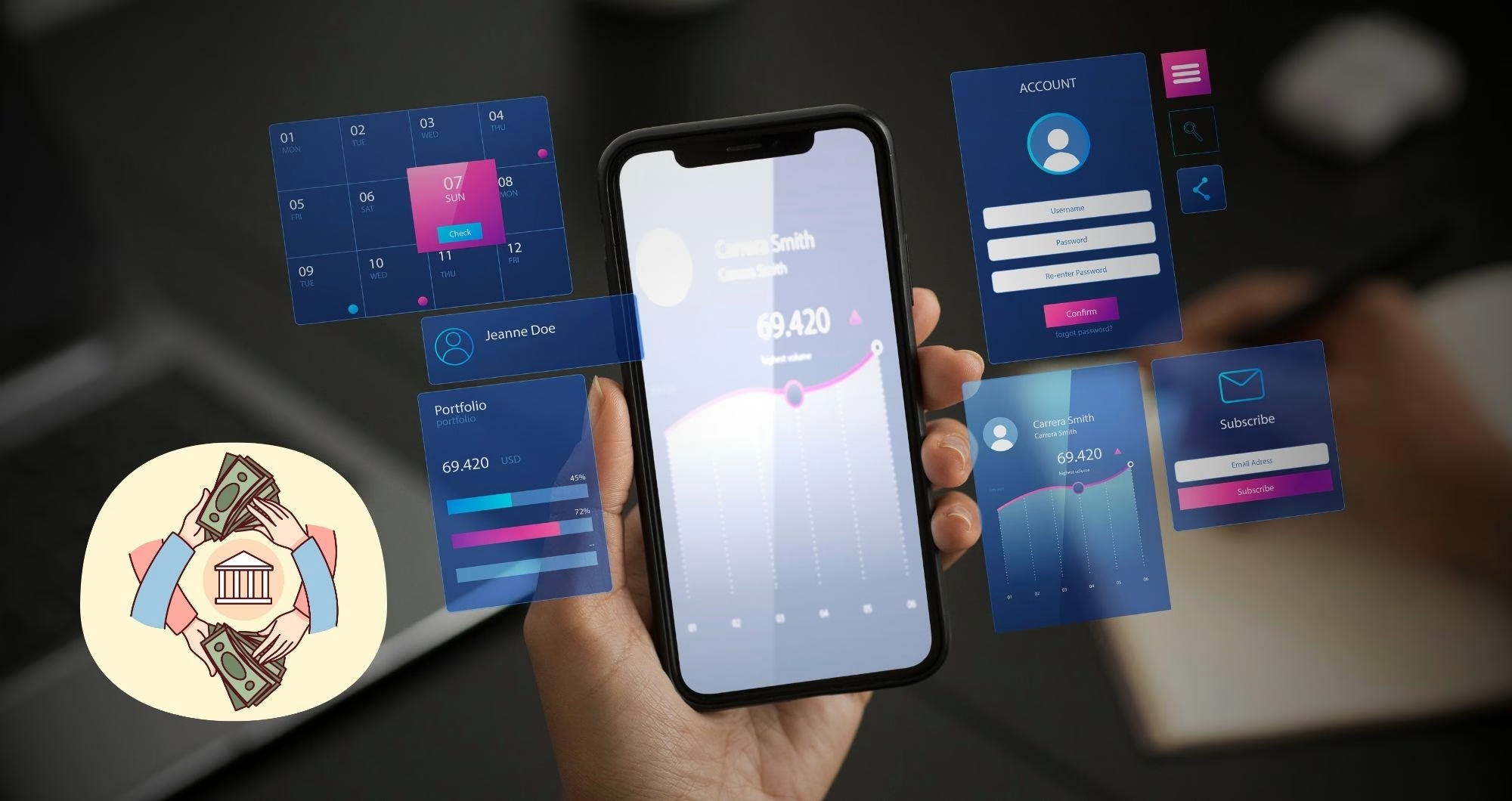

Banking has always been at the core of economic growth, but in the last decade, the way we interact with banks has transformed dramatically. From standing in long queues to accessing services instantly through mobile apps, the shift to digital banking is one of the biggest revolutions in the financial sector.
Today, banking apps are no longer just a convenient option, they’re a necessity. As customer expectations evolve and new technologies emerge, banks and fintech companies are racing to provide seamless, secure, and highly personalised digital experiences. The future of banking apps lies in innovations that make banking faster, safer, and smarter.
In this blog, we’ll explore the key innovations shaping tomorrow’s digital banking and how they will redefine the way people manage money.
Why Banking App Development is the Future of Finance?
The global financial ecosystem is rapidly moving toward digitisation. According to industry reports, over 70% of banking customers worldwide prefer using apps over visiting branches. This trend is fuelled by:
- Mobile-first generation – Millennials and Gen Z prefer digital-first solutions.
- Cost-efficiency – Digital apps reduce the operational costs of banks.
- Personalisation – Apps allow tailored services based on user data.
- 24/7 access – Customers expect financial services to be available anytime, anywhere.
Clearly, banking app development is not just about convenience, it’s about staying competitive in a digital-first economy.
Key Innovations Driving the Future of Banking App Development
Now let’s look at the groundbreaking innovations that are shaping the future of digital banking. Partnering with a top banking app development company ensures that these innovations are implemented effectively, helping financial institutions stay ahead in a highly competitive market.
1. Artificial Intelligence (AI) & Machine Learning
AI and ML are transforming banking apps into smart financial assistants. Instead of just showing account balances, apps can now:
- Analyse spending habits and provide personalized financial advice.
- Detect fraudulent activity in real time.
- Enable intelligent chatbots for customer service.
For example, AI-driven apps can notify a user about unusual transactions or suggest saving strategies based on monthly expenses. This makes banking more proactive and customer-friendly.

2. Blockchain & Decentralised Finance (DeFi)
Blockchain is not just powering cryptocurrencies, it’s reshaping banking itself. In custom banking app development, blockchain ensures:
- Enhanced security through immutable ledgers.
- Instant cross-border payments with reduced fees.
- Smart contracts for automated loan processing and settlements.
With DeFi integration, tomorrow’s banking apps could allow users to borrow, invest, and trade without intermediaries, making financial services more transparent and efficient.
3. Biometric Security & Advanced Authentication
Passwords are slowly becoming obsolete. The future of banking apps will rely on biometric authentication such as:
- Facial recognition
- Fingerprint scanning
- Voice authentication
These technologies not only enhance user security but also make the login process frictionless. For example, instead of typing a password, users can simply glance at their phone to access their banking app securely.
4. Open Banking & API Integrations
Open Banking allows third-party apps to securely access banking data (with user consent), creating a more connected financial ecosystem. Future banking apps will integrate with:
- Investment platforms
- Payment wallets
- E-commerce solutions
This ensures customers can manage all their financial activities in one app, improving convenience and engagement.

5. Cloud-Based Banking Solutions
Cloud computing is revolutionising how banks manage data and scale their services. For banking apps, cloud adoption provides:
- Real-time updates and faster processing.
- Scalable infrastructure to handle millions of users.
- Cost savings compared to traditional IT infrastructure.
Cloud-native apps also enable banks to roll out new features faster, ensuring they stay ahead in the competitive digital space.
6. Hyper-Personalisation with Data Analytics
Tomorrow’s banking apps will go beyond generic notifications. Using big data and predictive analytics, they will:
- Offer customised investment recommendations.
- Suggest credit options based on financial behavior.
- Provide budgeting tips aligned with individual goals.
This personalisation will improve user engagement and loyalty, making customers feel that their bank truly understands their needs.
7. Voice Banking & Conversational Interfaces
Voice assistants like Alexa, Siri, and Google Assistant have made voice technology mainstream. In the near future, banking apps will integrate voice banking, allowing users to:
- Check balances via voice commands.
- Transfer money hands-free.
- Get personalised financial tips from a virtual assistant.
This innovation adds accessibility for visually impaired users and provides a faster, more natural way to interact with financial services.
8. Contactless Payments & Digital Wallets
The pandemic accelerated the adoption of contactless payments. Future banking apps will strengthen this trend by offering:
- Integrated NFC payments.
- QR code scanning for instant transactions.
- In-app digital wallets for storing cards and loyalty points.
This makes payments faster, safer, and more convenient, especially in a cashless economy.

9. Gamification in Banking Apps
Banking is often perceived as boring, but gamification is changing that. By integrating features like:
- Rewards for saving money.
- Badges for achieving financial milestones.
- Challenges for budgeting.
Banking apps can make financial management fun and engaging, particularly for younger users.
10. Sustainable & Green Banking Features
As sustainability becomes a global priority, banking apps of the future will integrate eco-friendly features such as:
- Tracking carbon footprint from purchases.
- Rewarding eco-conscious spending habits.
- Offering green investment options.
This not only appeals to environmentally conscious users but also strengthens a bank’s brand image.
11. Robo-Advisors & Automated Investments
Future banking apps will act as personal financial advisors through robo-advisory services. These AI-powered tools can:
- Analyse market trends.
- Suggest investment portfolios.
- Automate trading and rebalancing.
This makes wealth management accessible even to individuals with little financial knowledge.

Challenges in Future Banking App Development
While the future is promising, certain challenges must be addressed:
- Cybersecurity risks – Advanced security measures are crucial to protect user data.
- Regulatory compliance – Apps must meet international banking laws and standards.
- Digital literacy gaps – Ensuring that older or less tech-savvy users can adapt.
- High competition – With fintech startups on the rise, standing out is tough.
Tackling these challenges will require continuous innovation and collaboration between banks, developers, and regulators.
Final Wrap-Up
The future of banking apps is more exciting than ever. With innovations like AI, blockchain, biometrics, open banking, and cloud integration, tomorrow’s banking apps will not only provide financial services but also act as trusted financial partners. They will be personalised, secure, fast, and interactive, giving customers complete control over their money. As digital-first generations demand smarter solutions, banks and fintechs must embrace these innovations to remain relevant.
The future belongs to those who can merge technology with trust, creating apps that go beyond transactions to deliver truly transformative financial experiences.