
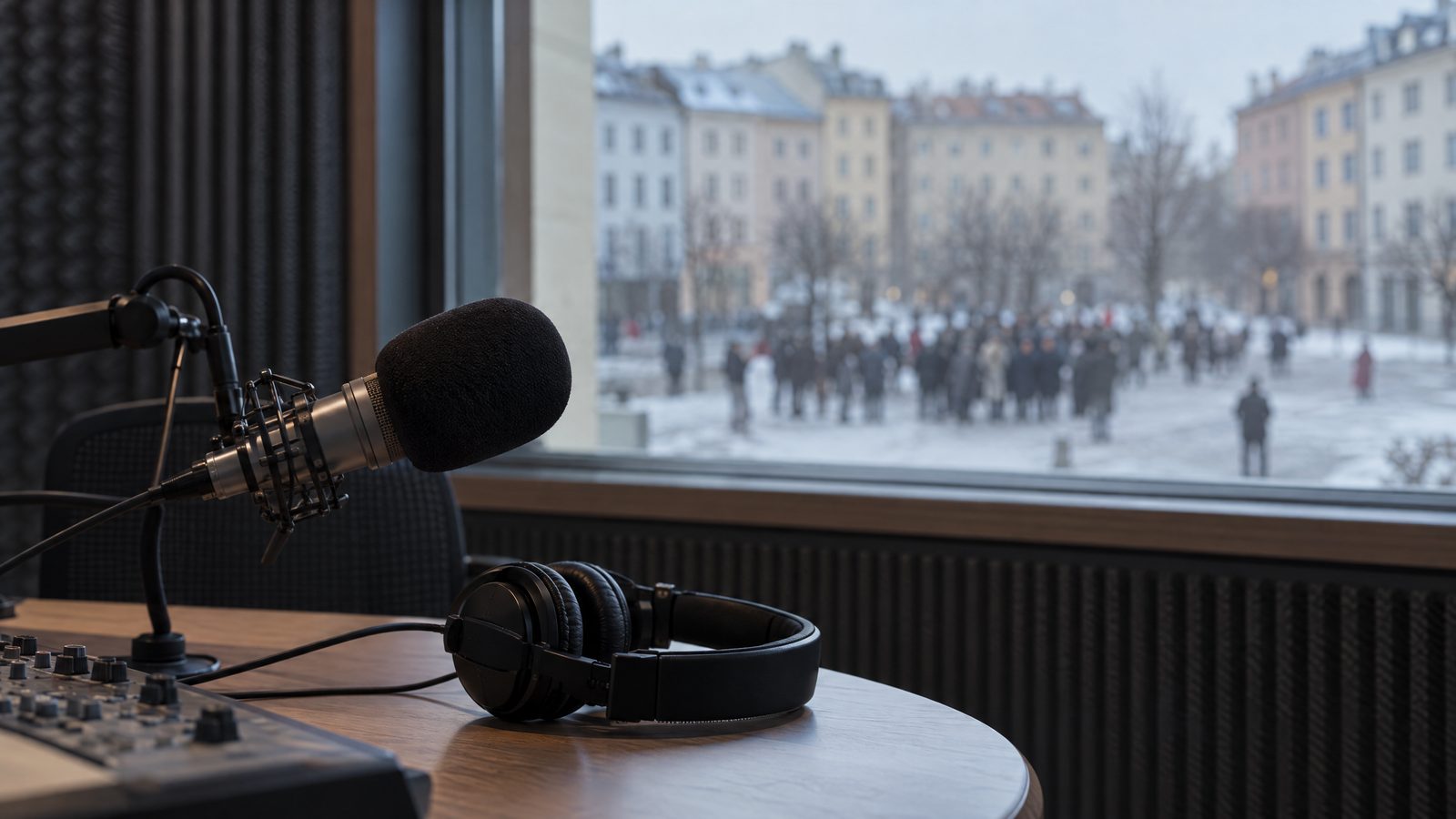

Thousands of people rallied in Prague and other Czech cities on Tuesday, 3 November, as public television and radio workers held a one-day strike against plans to change how their services are funded.
In the capital, media workers and supporters marched from the public television headquarters to Wenceslas Square, where thousands gathered. University students and artists were among those who joined the demonstrations. Protesters called on the government to withdraw the proposed funding overhaul.
The strike changed what audiences could watch and hear. Television news operated with reduced bulletins, with archived programmes planned between them, while public radio played music during the morning, interrupted by an explanation of the strike and a minute of silence. Both services changed their usual schedules.
How the funding would change
The government of Prime Minister Andrej Babiš proposed replacing the current system of broadcasting fees with funding for public television and radio from the state budget. Households currently pay a combined broadcasting fee of 205 Czech crowns a month. Businesses and other payers also contribute under the existing system.
The original government proposal set out amounts for 2027 of 5.74 billion crowns for public television and 2.065 billion crowns for public radio. The prime minister has since said an alternative financing model is being prepared, but no final change has been enacted.
Workers and media freedom organisations have warned that the proposed amounts could reduce the broadcasters’ combined funding by around 15 per cent compared with current resources. They say a reduction on that scale could make it harder for the services to maintain their public-service work and invest in new services. Possible job losses and cancelled programmes remain risks rather than confirmed outcomes.
For the workers taking part, the dispute is not only about the amount of money. They and media freedom organisations argue that reliance on the state budget could expose the broadcasters to political pressure over future funding. They want the proposal withdrawn and a wider discussion about how the services should be financed.
Babiš has rejected the suggestion that his government wants to control the broadcasters. The coalition says it is fulfilling a promise to relieve households of the fee, and maintains that a change in the way money is provided would not undermine editorial independence or programme content.
What happens to the bill next?
Members of the lower house gave the bill initial backing on 24 October after an overnight parliamentary session. That was the first of three readings, not final approval. The legislation still has to proceed through further parliamentary stages and could be amended.
After the first reading, the proposal moved to a committee before returning to the lower house. If it passes the later readings, it would then go to the Senate and the president. The existing fees were not abolished by the initial vote.
The prime minister has also said the finance ministry was preparing an alternative under which payments would be voluntary, with a sum guaranteed for the services. That suggestion is separate from an enacted change, and the eventual funding model remains subject to debate.
The strike followed an earlier rally in Prague on 25 October, when thousands gathered after the initial parliamentary vote. A further demonstration has been planned for 15 November in the capital.
Babiš has said a second reading could take place in January, with changes possible during further debate. The timing is an indication rather than a guarantee, and the protests do not determine whether the bill will ultimately become law.







