
In the modern world of creative writing, writers are constantly exhorted to ‘write what you know’. If everyone followed that principle literally, we’d have no historical fiction, no science fiction and the murder mysteries beloved by billions would be limited to a narrow range of memoirs by convicted killers. Luckily for readers, theatregoers and cinema fans, enough writers ignore the advice and use familiar emotional building blocks as tools with which to allow us to explore unknown or unfamiliar worlds.
Nonetheless, historical fiction in particular always seems to be at the centre of an often-acrimonious debate about validity and authenticity. When crafting a story in an historical setting, addressing these issues will be part of the process. Here are a few suggested do’s and don’t’s based on my work writing and adapting historical fiction, using examples from my current adaptation for the stage of George Bernard Shaw’s play, The Devil’s Disciple.
DO ask why you want to use an historical setting to tell your story. The ‘write what you know’ shibboleth assumes that you have something to say about the public or private world in which you live. But if you’re drawn to imagining the inner life of a lady-in-waiting in Anne Boleyn’s entourage, someone will inevitably ask why. We don’t live in Tudor England, so what’s the point?
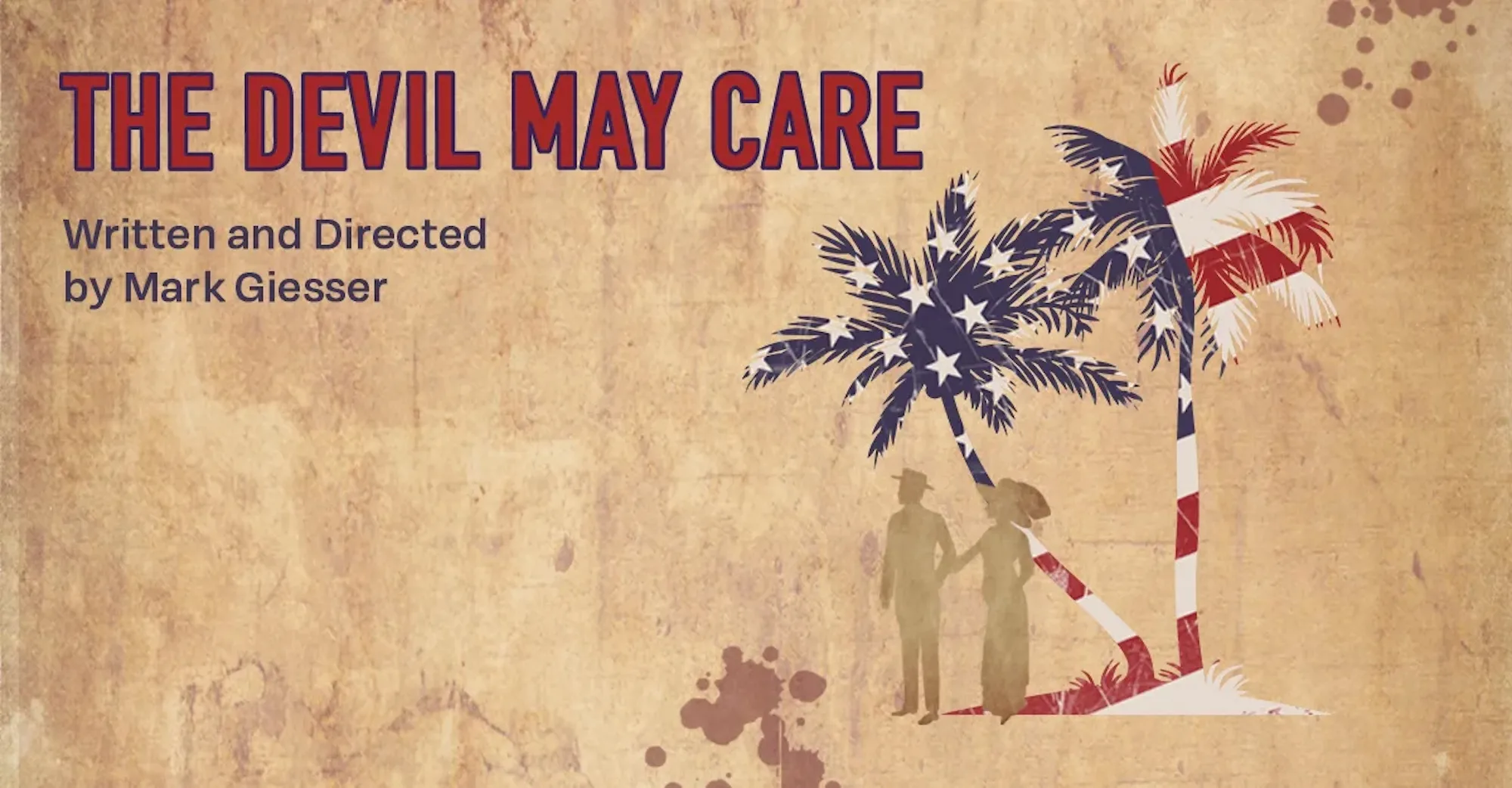
Aside from telling a good story that perhaps no one else has, there are at least two good answers. One, of course, is that we study history to gain some insight into why our world turned out the way it did. In The Devil May Care, my adaptation of The Devil’s Disciple, I decided to change the setting of Shaw’s play in order to make the story resonate more strongly with the geopolitics of our time. Shaw had things to say about the conduct of the British Empire at its height in late Victorian Britain, when questions about the exercise of its military and political power were paramount. He chose the time frame of the American Revolution over a century earlier as a vehicle for his insights, and he depicts a fledgling American nation as the meritorious underdog fighting the oppressive policies of an ascendant British Empire vying for world domination. In our era, questions about how the United States exercises its military and political power are paramount. So, I reversed the role of the Americans. In the same decade as Shaw’s play was written, they’re now a fledgling imperial power fighting to keep possession of the Philippines against a people fighting for their independence.
The second answer that stems from the choice of an historical setting for insight is distance. Certain uncomfortable truths about any world may be thought-provoking but less threatening when experienced through the mirror of time. It’s a way of engaging an audience emotionally without turning them off. Shaw’s story about a rogue who’s willing to sacrifice himself for a man he hardly knows could have been set in Shaw’s own time period. But his choice of setting allowed his audiences to reflect from a comfortable distance on how their British Empire reached its heights, and perhaps even on whether it was headed in a sound direction. His fellow author from whom he borrowed his core story, Charles Dickens, did something similar. Dickens, writing in the 1850s, set the story of A Tale of Two Cities during the French Revolution, a time recent enough in the British psyche to resonate strongly without sending his readers to bed fearing that French revolutionaries were about to break in and drag them to the guillotine. In my adaptation of Shaw’s play, audiences can engage with the hotly debated decision made in the 1890s by the United States to acquire overseas possessions and the modern consequences of that debate, without (hopefully) wanting to start fistfights with their neighbours.
DO update thematic issues where relevant. One of Shaw’s other concerns in his play is religious hypocrisy. The family around which his story is built live in the traditions of staunch New England Puritanism. Shaw uses this tradition as a vehicle for asking who is really good and who is really evil: the professed godly or the self-proclaimed ‘Devil’s disciple’? One of the most pressing issues both in the American-Philippine war and in our world is racism and how to confront it. So in my adaptation, I chose to focus more on that than on Shaw’s concerns with the impact of strict religious doctrine.
DON’T let your ancient Roman wear a wristwatch because it’s convenient. I’m referring here to the many anecdotes about cinematic historical epics in which actors are glimpsed wearing modern timepieces. These were presumably editing errors. But in some historical fiction, there’s an impulse to severely bend or break factual plausibility in order to tell the story. That’s fine for a satire, or a ‘what if’ story: i.e., what if a time traveller tried to introduce an AK47 to the Confederates during the American Civil War (the subject of one historical/sci fi novel)? If, like Shaw, you’re using an historical setting to make serious points, weave your story around the reasonably agreed facts. Shaw sets his play against the background of the real campaign leading up to the battle of Saratoga. One of his principal characters is the real British commander, General John Burgoyne. Shaw gives Burgoyne a fictional action as part of the plot, but doesn’t tamper with the facts of the military campaign in doing so. Similarly, I chose one of the major American military campaigns of the Philippine war as an equivalent, and substituted one of the real commanders, General Arthur MacArthur, for the role of Burgoyne. That’s not to be so hidebound as to abandon dramatic efficiency or an interesting story element for the sake of absolute accuracy, but to be judicious. MacArthur wasn’t the only commander involved in the campaign I describe, but spending dramatic time on the others wasn’t necessary to advance the story. However, I didn’t shoehorn his more famous son, Douglas, into his place to gain name recognition at the expense of the historical record. In the age of Dr Google, I’d have got caught out long before the interval if I’d tried.
DON’T follow elements of an original story too closely when they’ve become less meaningful. With adaptations, this is the tricky question of how to deal with concepts perhaps more important in their time than ours. In the Shaw, the principal female character of Judith, the minister’s wife, is constrained by her role in a society where she’s expected to be subordinate to her husband and not cause any trouble. But in her efforts to save Richard, the ‘Devil’s disciple’, she falls in love with him, potentially causing a great deal of trouble. This was certainly the meat and potatoes of Victorian melodrama, a form which Shaw is often said to be satirising in The Devil’s Disciple. My question here for the adaptation was whether this plot development would have the same impact for a modern audience. Within the framework of the updated setting, I opted to focus more on giving Judith frustrated career ambitions and how they unexpectedly find expression through her interaction with Richard.
DO look for gaps in the historical record. There are lots of good stories to be mined from history if you look past the well-known. A new play on the life of Alexander Hamilton may be all well and good, but from what angle? I consolidated characters in the Shaw, and to create one of my principals to serve the function of two of Shaw’s, I looked to an historical footnote about a young American army officer and his mother. I fictionalised both of them for my adaptation from a small amount of bare facts, filling in the unknowns with plausibilities based on those facts. Have I written what I know? I’ve written what I’ve learned, and that’s one good way for authors to keep their imaginations exercised. Aside from convincingly working that Timex onto the wrist of an ancient Roman.
Words by Mark Giesser