

In the world of design, while gaining your first taste of a new market and saving resources is good for a start, there is a very specific purpose why you are publishing your advertising content. The one reason you are doing that is to create the right value perception and guarantees in the minds of a particular target audience.
The way that is ultimately achieved is by spending a little bit of money to make money. Today we are going to consider some specific factors and figures that drive that point home.
1. Time-efficiency
First off, you have to consider whether in using a freebie mockup you are actually paying a lot more than in using a paid one. Your employee’s time, let alone your time as a business owner, has a price tag, and there will certainly be a substantial time expenditure associated with using free mockups.
- You’ll have to spend a long time looking for decent free mockups, as very few of websites’ mockups are actually free;
- Many free mockups don’t allow you to use the full set of features, which means editing the old-fashioned, long way. These may include smart objects and layers that are non-editable to avoid altering part of the image;
- You might have to add in the lighting, reflections, and depth of field manually;
- Many of the images you find won’t be of the appropriate resolution;
- You likely won’t have the benefit of a support team to help troubleshoot your problems;
- Your files probably won’t be updated and may feature bugs.
2. Efficiency: Batch editing
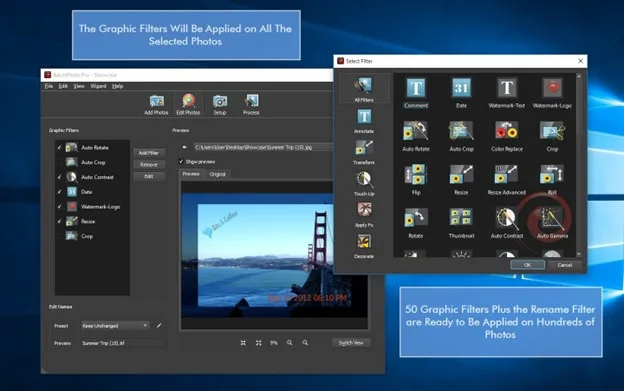
Batch editing iы a true lifesaver. It works by automating repetitive tasks across multiple files simultaneously, saving time and reducing manual effort. Instead of having to edit each image or mockup one by one, batch editing allows you to apply the same set of design changes to all of them, such as:
- updates;
- adjustments;
- corrections;
Here are the benefits of batch editing:
- Centralised command for multiple files: one command applies the same action across a set of images or mockups. Suppose you need to replace a logo on 20 different product mockups. Instead of doing this manually on each file, you can set the batch edit to automatically replace the logo across all your files.
- Use of templates or smart objects: changes you make to a certain smart object once are reflected in all mockups that contain that object, rather than having to update them all individually
- Workflow efficiency: the universal application of modifications significantly accelerates workflow within a project, allowing for greater flexibility and more experimentation, whether it’s a branding project, social media graphic, or design mockup.
- Maintaining efficiency: it’s important to maintain the same style and cohesive branding in a marketing campaign. Batch files reduce the risk of errors. When you say decide to make colour or font adjustments, this will ensure that everything adheres to the same rules.
3. Licensing
All is well and good if you are just taking your first dip in the industry as a new professional, conducting a personal project or running a non-profit operation; however, you must be very careful in considering the type of license under which you acquire a mockup. There are a variety of conditions they come with. To avoid trouble and unnecessary stress, let’s take a look at what those are.
Limited commercial use
Many free mockups allow for limited commercial use. This means that you might be permitted to use them in client projects or for other business-related projects for instance; however, there may be a cap on the number of copies or prints that can be distributed. You may only be allowed to use them in a certain number of projects and within a very limited profit scale. Others limit for-profit utilisation within a certain time frame. Some mockups may be permitted for use in a social media campaign but not in a paid ad run on television or on YouTube.
Attribution required
One of the most common conditions with free mockups that you should be aware of is that the creator requires attribution. In other words, you have to credit the creator of the mockup, often by writing their name or including a link to the source website in the project description or at the bottom of the design. Many mockups provided under a Creative Commons license require a certain form of crediting.
Personal use only
In this case, no commercial activities are allowed for this mockup. Usually designers or creators provide these as a way to build their portfolio, gain attention, or just share their work with other people. You cannot use personal-use-only mockups in client projects, paid ads, or anything that generates revenue though.
Modification restricted
Some free mockups are issued without any permission to modify them, despite that they may permit commercial use of the original design. Sometimes you may be able to only make minimal changes while changing other elements, such as the original structure, dimensions, or design elements, is not allowed.
Non-transferable
Free mockups are non-transferable, meaning that you cannot resell, redistribute, or offer the mockup to others as part of your own design package. You also typically cannot upload them to other platforms where others can download them.
Non-exclusive
Free mockups are not for your exclusive use, which means others are likely using the same mockup online, which you may well encounter somewhere.
Intellectual property lawsuits
Do not neglect the important issue of legal use of intellectual property. If things end up going very well for you, you may regret your mockup taking off without you being able to reap the benefits. Intellectual property lawsuits are especially widespread in the modern era.
One ongoing case is the class action lawsuit against Stability AI. All kinds of image publishing platforms, including Getty Images, are currently suing the organisation, accusing it of using their images to train its image generation system without possessing a license that would allow them to do so.
The claim is that high-quality photos, a variety of subjects, and detailed metadata are being infringed upon. In some cases, the watermark is visible, which may confuse customers. Now Stability AI is potentially going to have to forfeit its profits.
4. Simple statistics: paid mockups in numbers
For those who may be firmly attached to the thought of cutting all expenses and refraining from spending on any mockups, statistics speak louder than savings. Let’s take a look at research on mockup freebies.
- DesignCrowd reported that 92% of designers prefer paid mockups for high-quality results, according to a survey;
- Paid mockups have a 50% higher perceived value;
- 75% of paid mockup users enjoy greater customisation, per Envato’s analysis;
- 60% of free mockup users feel a lack of customisable features;
- Paid mockups feature a 40% faster turnaround;
- 30% of time is wasted on free mockups;
- Free mockups lead to 15% lower client retention;
- 80% of leading agencies use paid mockups, according to Adobe;
- Only 30% of independent designers use paid mockups;
- Paid mockups boost conversions by 25%.
5. Creating a clear value proposition
Your whole purpose of conducting marketing for your target audience is to communicate your company’s identity and why they should care. Only by using paid mockups can you adhere to a consistent enough style and projected qualities that consumers can remember you for. This will give you:
- more niche and specialised mockup options for specific industries or types of projects;
- easy customisation through editable layers;
- high-quality realistic previews that can put your customers in a mental state where they’re ready to buy;
- exclusive and unique designs that don’t come across as generic or forgettable;
- the ability to create a cohesive design portfolio: consistency is key in design and marketing.







