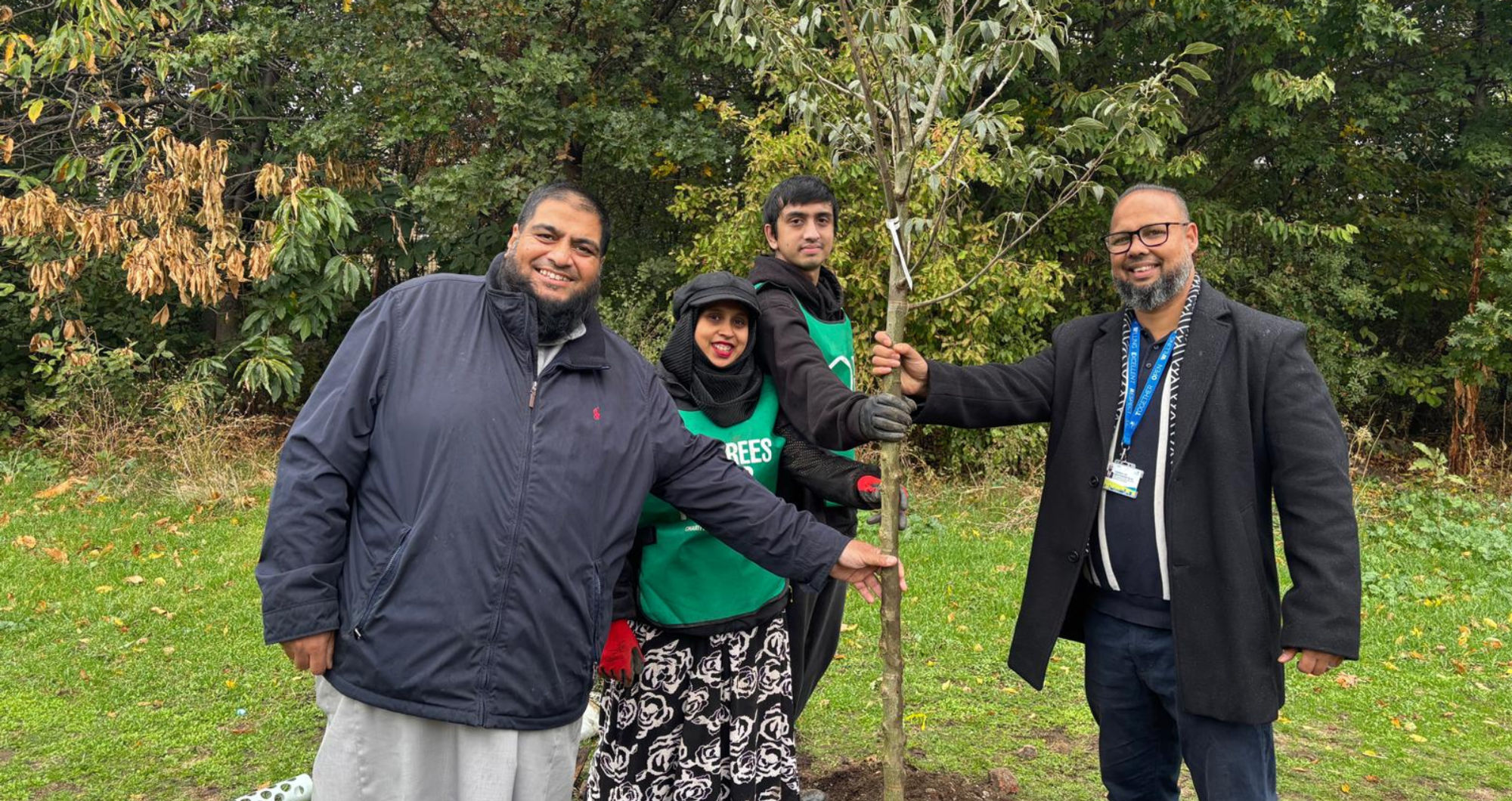

Volunteers joined environmental charity, Trees for Cities, to plant over 100 new trees in Swedenborg Gardens, growing a lasting community legacy and strengthening the borough’s resilience to climate change.
On Saturday 24 October, residents of all ages rolled up their sleeves and grabbed a spade to plant more than 100 trees in Swedenborg Gardens during the council’s annual ‘Green Week’. The day marked Trees for Cities’ first community planting event of the season following an unprecedented summer of extreme heat and drought that highlighted the urgent need for more trees in our towns and cities.
Despite London’s status as a National Park City with over 8.4 million trees, access to trees and green space remains deeply unequal across the city. Tower Hamlets is classed as one of the capital’s lowest tree equity boroughs, meaning many of its neighbourhoods have few trees and less access to the benefits they provide, including protection from heat, flooding and pollution. The project at Swedenborg Gardens, kindly supported by several funders including the Bupa Foundation, forms part of Trees for Cities’ long-standing mission to tackle this injustice and bring the benefits of trees to the communities that need them most.
The event brought together neighbours, families, and community members to enhance the park with species carefully selected for their ability to thrive in a changing climate. Among them, holm oak is particularly resilient to heat and drought, while black pine, common walnut and European hackberry are also recognised for their ability to withstand warmer, drier conditions. As they mature, these trees will provide much-needed shade and screen nearby roads to help mitigate pollution, while also creating valuable habitat for local wildlife.
Kate Sheldon, CEO of Trees for Cities said: “In one of London’s lowest tree equity boroughs, every tree planted has the power to make a meaningful difference to people, place and nature.
Tower Hamlets volunteers haven’t just put trees in the ground; they’ve strengthened a green legacy that will benefit local people for generations.
As London faces more extreme weather events, the trees planted at Swedenborg Gardens will help create a greener, more resilient Tower Hamlets for years to come.”
The newly planted trees will grow among existing trees planted by Trees for Cities with local residents since 2010, continuing a long-standing green legacy in the borough. Previous projects include planting Swedenborg Orchard on nearby St George’s Estate in 2013, a thriving green space that is still cared for by local volunteers today.
The day also celebrated the power of community creativity, welcoming residents to decorate tree cages with colourful woven fabric sourced from repurposed materials – a nod to the East End’s rich textile heritage. Volunteers were invited to add their own contributions, creating a collaborative artwork that reflected the spirit of the planting day itself: local people coming together to create something lasting and meaningful for their community.
Councillor Shafi Ahmed, Cabinet Member for a Clean and Green Borough, said: “I’d like to thank all of the residents and volunteers who gave their time to this fantastic tree-planting event, as well as our partners at Trees for Cities for helping to make it possible.
The hundreds of new trees planted at Swedenborg Gardens will leave a lasting legacy for future generations while helping us build a greener, healthier and more climate-resilient Tower Hamlets.
This event has been a wonderful part of Green Week, which has seen residents, climate experts and community groups come together to take action for the climate. I encourage everyone to get involved in future activities and play their part in creating a cleaner and greener borough.”
Reflecting on the community planting event, one young volunteer shared: “I think when you live in London it’s very easy to not feel connected to your surroundings. Everything is on a screen these days, it’s constant stimulation. But it’s very nice to move a bit slowly.
I think it’s also very rewarding because you know that you’re giving back to a community here and you’re providing more greenery, which I think everyone in London could benefit from.”








