
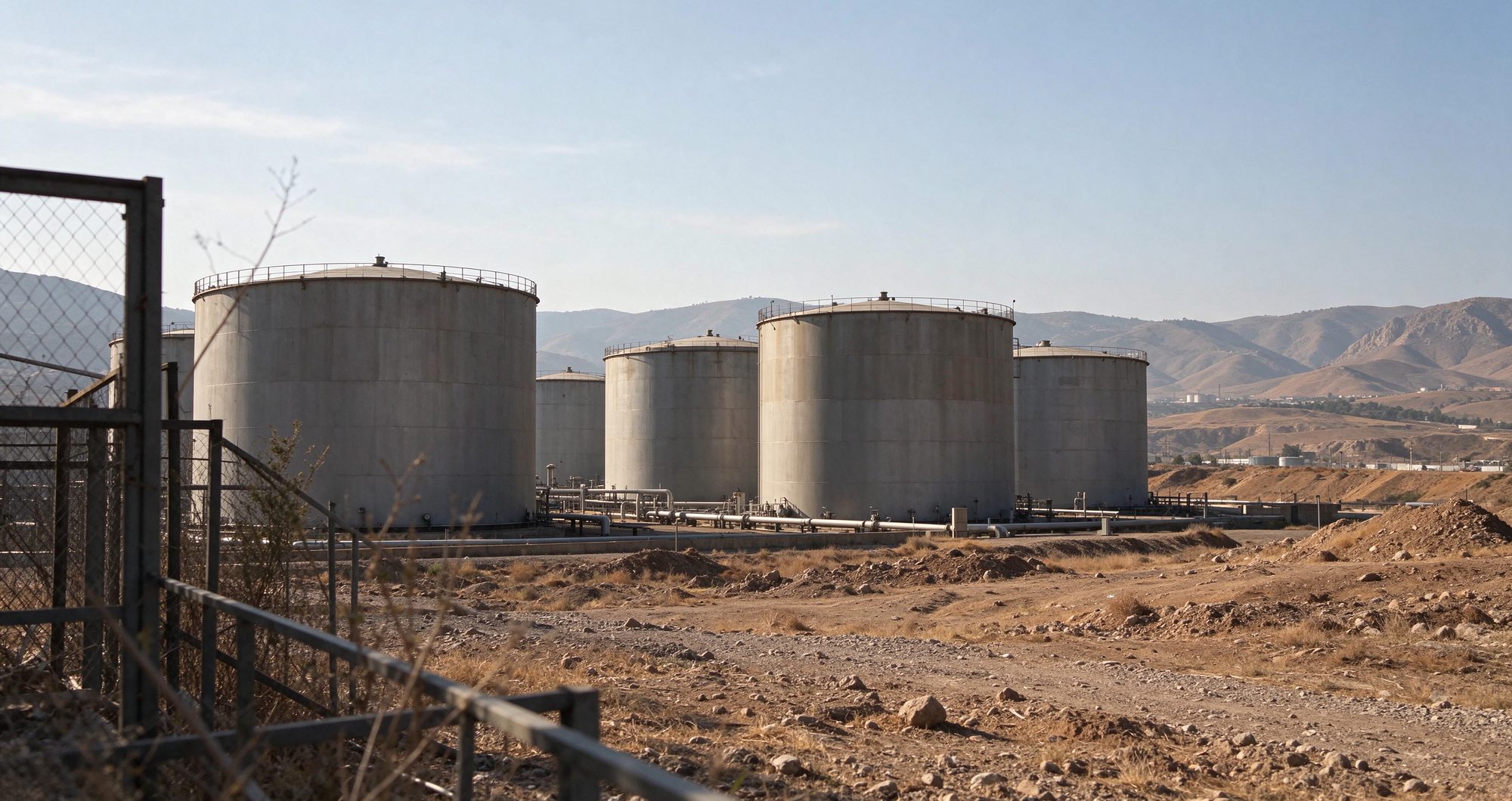

US President Donald Trump has backed Iraqi Prime Minister Ali al-Zaidi’s efforts to strengthen state control, as Baghdad’s push to take charge of Kurdish-administered borders and oil operations draws opposition from regional authorities.
Trump’s statement on Friday, 27 November, followed the closure of two border crossings and protests in Erbil. The Iraqi government also alleged that oil smuggling through the Kurdistan region had cost the country an estimated $100 billion between 2008 and 2025.
In a post on Truth Social, Trump said he supported Zaidi’s efforts to extend state authority throughout Iraq, stop oil smuggling, tackle corruption and bring all weapons under exclusive state control.
The intervention adds US backing to Baghdad’s stated objectives. Kurdish authorities, however, say the federal government’s decisions infringe on the semi-autonomous region’s constitutional powers and have rejected the use of military threats.
Baghdad alleges losses from oil exports
Government spokesman Haider al-Aboudi said on Friday that Baghdad regards oil exports outside the State Oil Marketing Organisation, known as SOMO, as smuggling when their proceeds do not reach the state treasury.
Aboudi put losses linked to oil smuggling through the Kurdistan region at about $100 billion for the period from 2008 to 2025. He said the Board of Supreme Audit had verified losses exceeding that amount from oil exported outside federal oversight.
The basis for calculating the figure remains unclear, and the estimate has not been independently established. It is a claim by the Iraqi government, rather than a confirmed assessment of the scale of illegal trade.
Aboudi said measures to close routes and secure international borders were directed at smugglers. He also said legal action would be taken against parties involved in wasting state oil wealth.
Oil Minister Basim Mohammed said the government was in contact with the Kurdistan region over managing and protecting oil resources. He maintained that oilfields in the region and in Basra belonged to all Iraqis.
Crossings closed after court ruling
Iraq closed the Al Waleed crossing with Syria and the Bashta crossing with Iran on Thursday. Both had previously been administered by the Kurdistan Regional Government.
The closures followed Zaidi’s order on Tuesday for federal authorities to take control of crossings run by the regional administration. On Wednesday, Iraq’s highest court ruled that Baghdad could deploy federal forces along all international borders, including those within the Kurdistan region.
Thousands of people protested in Erbil on Thursday against the proposed federal control of northern oil operations and the deployment of federal troops along the region’s borders.
The Kurdish government rejected what it described as military language and threats in the announcement of the measures. It said it was working with federal authorities against corruption and supported ending oil smuggling across Iraq.
Regional Prime Minister Masrour Barzani has said the Kurdistan region will implement decisions consistent with Iraq’s Constitution but will not accept measures outside that framework. He has also reaffirmed his readiness to continue talks with Baghdad.
Leaders call for dialogue
Baghdad sought to ease fears of a military confrontation on Thursday. Aboudi denied that army units were moving towards the Kurdistan region and said Zaidi wanted to protect its people, not threaten them.
Officials said a meeting at Baghdad Palace on Wednesday agreed to pursue national dialogue over the constitutional dispute. Zaidi attended alongside President Nizar Amedi, Parliament Speaker Haibat al-Halbousi and Supreme Judicial Council head Faiq Zidan.
The dispute reflects longstanding tensions between Baghdad and Kurdish authorities over oil revenues, territory and trade. The federal government responded with force after the Kurdistan region held an independence referendum in 2017, although relations had since become calmer.
Both sides have expressed support for combating corruption and smuggling. Their public statements nevertheless show disagreement over how those goals should be pursued and the division of authority between federal and regional institutions.







