


Millions of households across the UK could face higher energy bills next year, with experts predicting an average rise of around £100. The reason is not wholesale gas prices, but the cost of upgrading Britain’s energy networks as part of the push towards Net Zero.
Analysts say new wind and solar connections, nuclear projects like Sizewell C, and making the gas grid hydrogen-ready are all vital for a cleaner energy future. But the investment required is feeding into higher standing charges, which every household pays regardless of how much energy they use.
For families already dealing with the cost of living squeeze, the news is another reminder that while Net Zero brings long-term benefits, the short-term impact is extra pressure on bills.
Why Net Zero affects bills today
The UK has legally committed to reaching Net Zero by 2050. This means reducing greenhouse gas emissions to the point where the amount released is balanced by the amount removed from the atmosphere. To achieve this, the country needs new renewable projects, storage systems, and major upgrades to electricity and gas networks.
These changes come with a price tag. Standing charges — the fixed daily fees added to every bill — are rising to cover:
- New pylons, substations and underground cables.
- Connections for wind and solar farms.
- Nuclear projects like Sizewell C.
- Preparing the gas network for hydrogen.
Energy analysts warn that these costs will add about £100 to the average household bill in 2026, with further rises possible as more infrastructure is built.
Households have little control over standing charges
The problem for consumers is that standing charges apply whether you use a little or a lot of energy. Even households that cut back on heating or switch off appliances still have to pay the daily fee.
That leaves families looking at the other part of their bill — the unit rates for gas and electricity — as the only area where savings can be made.
The role of energy comparison
Consumer experts stress that one of the easiest ways to take control is through energy comparison. While you cannot avoid the standing charge, you can reduce what you pay per unit by switching to a cheaper tariff.
Many households are still on default standard variable tariffs, which are rarely the cheapest option. By comparing across the market, families can find better fixed-rate or dual fuel deals that provide stability and often cut costs.
Before the energy crisis, switching was routine, with millions of households moving supplier each year. Now, with more competitive deals reappearing, the opportunity to save is back on the table.
Why comparing gas prices matters
Gas remains a major part of UK household bills, especially for heating and hot water. Global supply changes and seasonal demand mean prices can shift quickly.
That’s why it makes sense to compare gas prices regularly. Even small changes in the price per kilowatt hour can add up to significant annual savings. With gas costs expected to remain unpredictable, staying on top of your tariff could be the difference between rising bills and steady payments.
Electricity costs under pressure
Electricity bills are also being reshaped by the Net Zero agenda. The cost of connecting renewables to the grid, building new infrastructure, and maintaining capacity all affect what households pay.
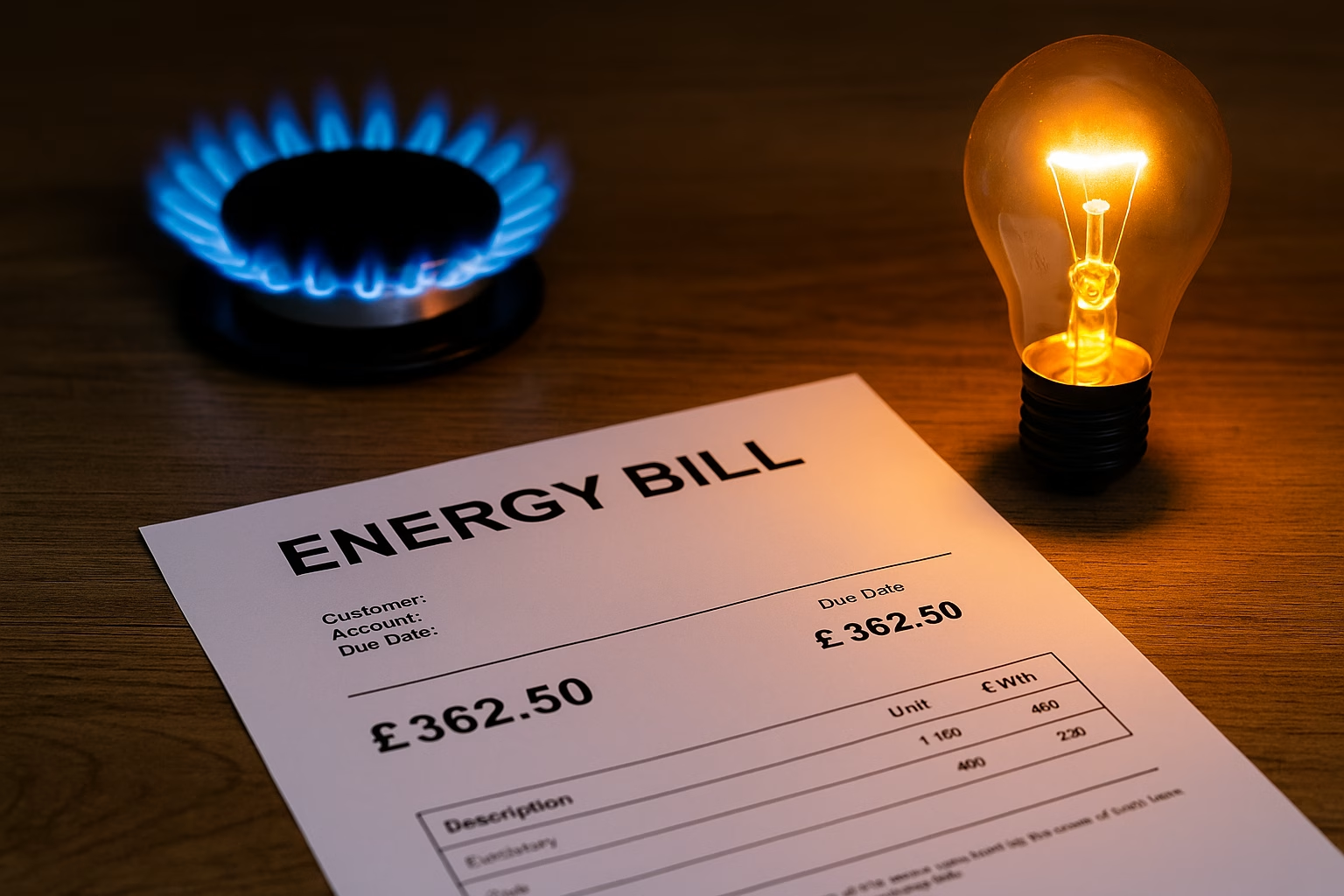
Checking whether your current plan is still competitive is vital. Families can compare electricity prices to see if their supplier offers the best deal. With tariffs varying across providers, a quick check online can highlight where cheaper rates are available.
Using digital tools to stay in control
Online platforms and calculators now make the switching process much easier. By entering a postcode, payment method and average usage, households can see instantly how much they would pay with different suppliers.
Analysts say that a predicted £100 increase from standing charges could be offset simply by switching to a more competitive tariff. Saving £8–10 a month on unit rates is enough to cancel out the extra cost.
For households on tight budgets, that could provide much-needed breathing room.
Net Zero benefits — but patience required
While the short-term effect is higher bills, experts point out that investing in renewables and grid upgrades should bring long-term benefits. A system powered by wind, solar and nuclear will be less exposed to global energy shocks.
In the future, this could mean cheaper and more stable prices for households. But until those benefits are fully realised, consumers are advised to focus on the steps they can take today — switching tariffs, checking suppliers, and making use of digital comparison tools.
Preparing for the winter ahead
Energy use always rises during colder months, and this winter is expected to be no different. Reviewing your tariff before demand spikes can make a real difference.
Households that act early are more likely to secure better rates, while those who wait may be left paying more as prices move again.
The bottom line
The Net Zero transition is reshaping the UK’s energy system. While it promises a greener and more secure future, the immediate cost for households is higher standing charges and a predicted £100 rise on bills.
Consumers cannot avoid these fixed costs, but they can take steps to reduce their overall payments. By focusing on energy comparison, checking both gas and electricity prices, and switching where possible, families can take back some control.
For millions of households, that could be the difference between bills that feel unmanageable and a future that feels just a little more affordable.







