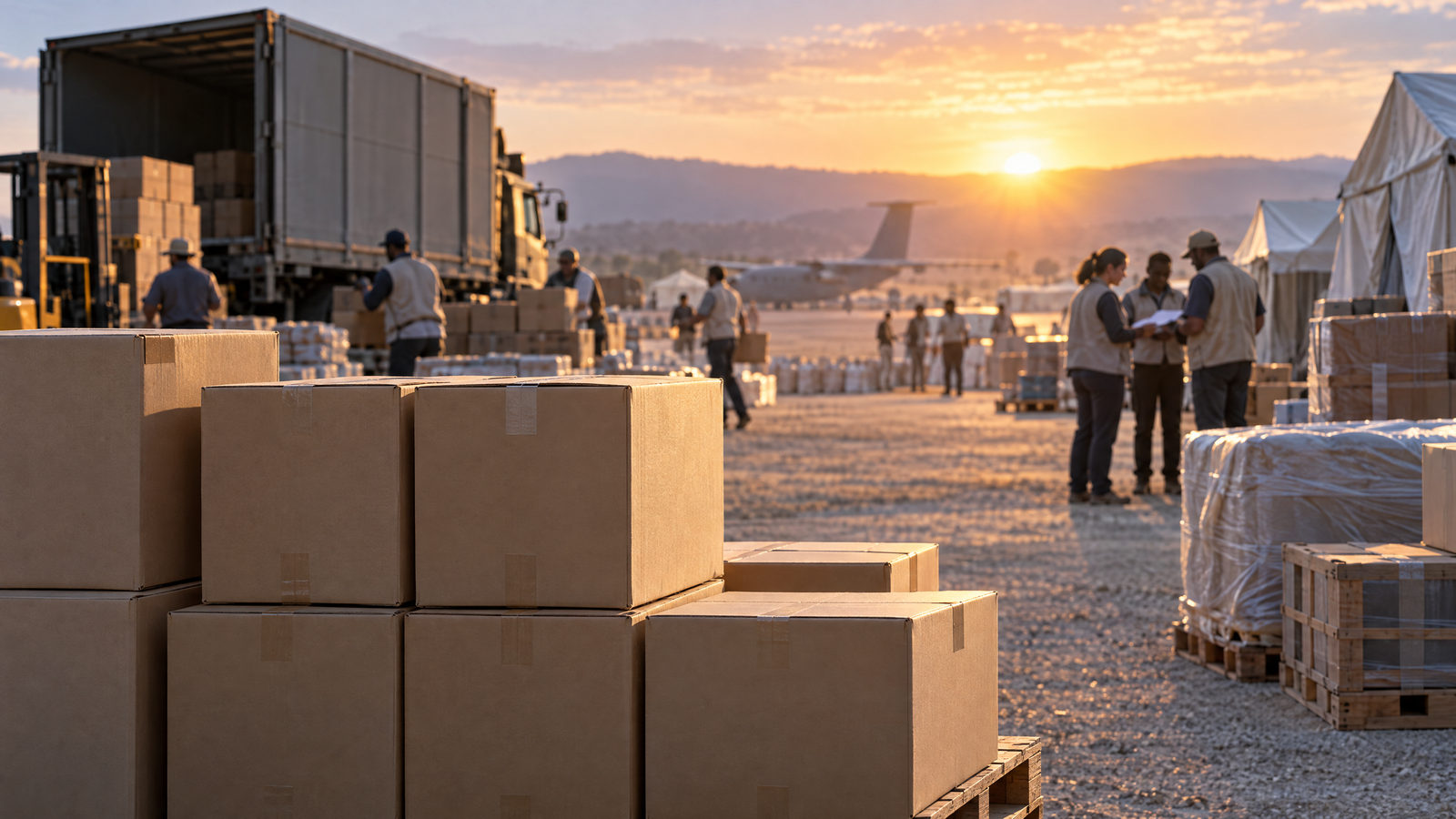

The United Nations has allocated $160 million from its Central Emergency Response Fund to support life-saving assistance in 12 of the world’s most underfunded humanitarian crises. Announced on 2 October, the decision combines $150 million for country responses with $10 million intended to make aid more accessible to people with disabilities in those same settings.
The allocation covers crises in Africa, Asia, Latin America and the Middle East. It is a decision to make funding available for humanitarian operations, rather than evidence that every planned service or supply has already reached people. Its significance lies in directing flexible emergency finance towards places facing severe shortfalls.
Where the funding is allocated
Afghanistan, the Occupied Palestinian Territory and Yemen are each allocated $18 million. Somalia and Sudan are each allocated $16 million, while South Sudan is allocated $15 million. Burkina Faso, Mali and Niger are each allocated $10 million; Chad is allocated $9 million; Cameroon is allocated $6 million; and Cuba is allocated $4 million. Together, those country allocations make up the $150 million country-response portion.
Need and operational conditions differ sharply across the 12 places, so the figures should not be read as a measure of whose crisis is most serious. They are allocations from a fund designed to fill gaps in responses that have attracted too little finance. Whether the money can translate into help will depend on local plans, delivery partners, safety and the ability to reach communities.
Disability inclusion is a separate part of the package
The remaining $10 million is earmarked for the urgent needs of people with disabilities across all 12 crises. The aim is not simply to add a separate service, but to make humanitarian assistance more accessible and inclusive. A related partnership may provide up to $4 million in additional funding and technical support, including work to strengthen the capacity and participation of local organisations of persons with disabilities. That prospective contribution is separate from the $160 million allocation.
Access remains as important as finance
Five of the 12 settings — Afghanistan, the Occupied Palestinian Territory, South Sudan, Sudan and Yemen — are also among 10 contexts identified for urgent diplomatic action on humanitarian access. The assessment is that removing barriers could open the way to assistance for 11 million people within the 87 million people prioritised globally for support this year. The new funding does not itself remove road closures, administrative constraints, insecurity or border restrictions. It is intended to work alongside efforts to secure access.
How the emergency fund fits in
The Central Emergency Response Fund is managed by the United Nations’ humanitarian coordination office and is used for rapid responses and underfunded emergencies. Decisions on these underfunded allocations are based on analysis of more than 100 humanitarian indicators and consultation with partners. The latest decision takes total funding allocated by the fund in 2026 to $483 million; it does not represent the total amount needed in the 12 crises or worldwide.
Since its creation in 2005, the fund has channelled about $10.2 billion to people in more than 117 countries and territories, including $3.4 billion for underfunded crises. Its annual funding target is $1 billion. The latest release therefore offers a targeted injection for neglected operations, while also underscoring the much wider challenge: finance can enable relief, but safe, sustained access is indispensable if it is to reach people in need.