
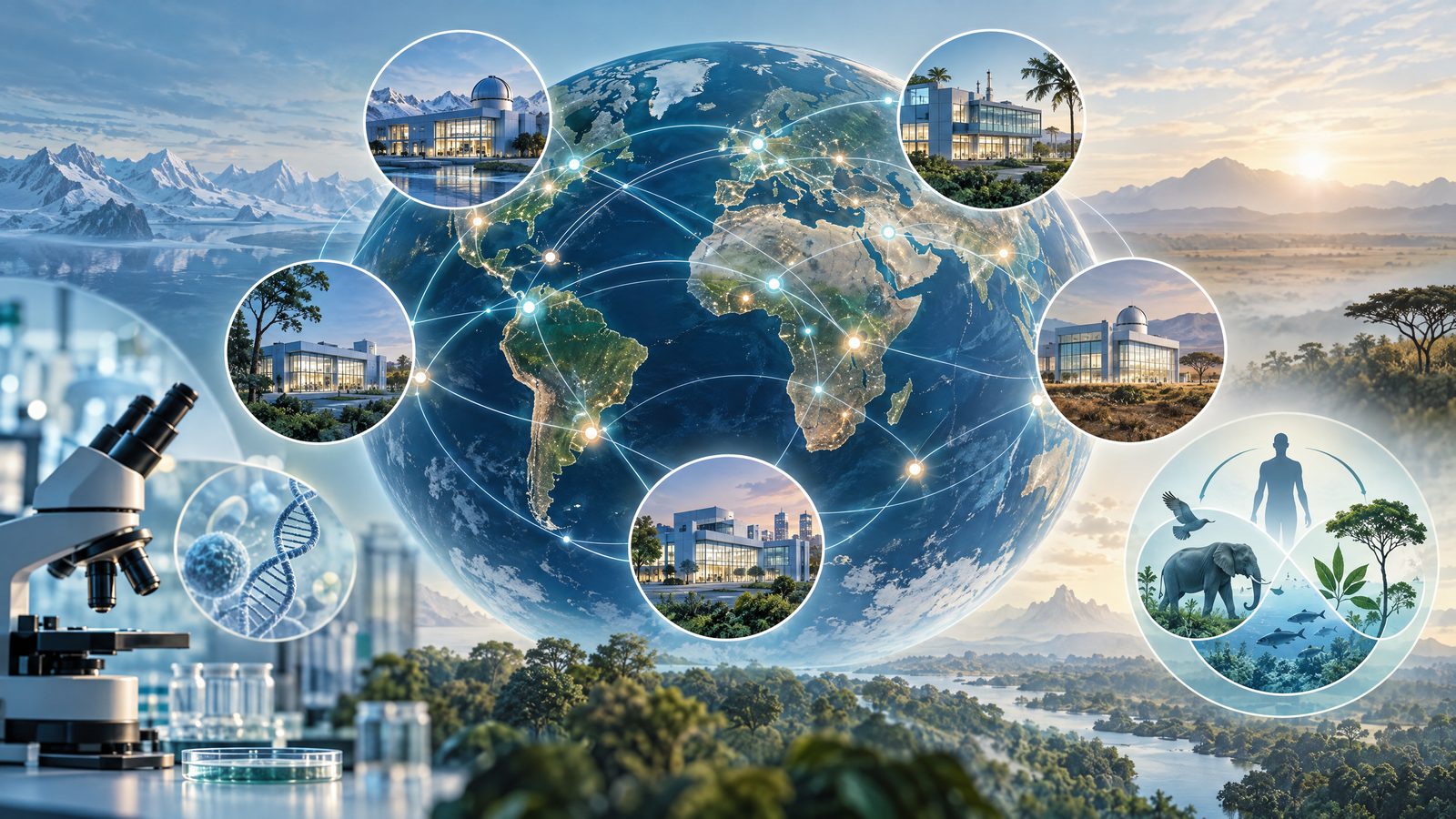

The World Health Organisation has set a 2030 ambition for every country to detect and understand emerging health threats within 24 hours of their appearance. A new five-year strategy for its Hub for Pandemic and Epidemic Intelligence sets out how the organisation intends to help countries build towards that goal.
The target is not a claim that every country can already identify a threat within a day, nor a guarantee that the goal will be met. The strategy describes a direction for strengthening surveillance, analysis and trusted data-sharing. Its success will depend on investment, partnerships and cooperation across borders and disciplines.
Five strands of work
The plan brings together five initiatives. Epidemic Intelligence from Open Sources, known as EIOS, uses artificial intelligence to scan large volumes of publicly available material for signals that may point to health risks. The system is used by more than 125 member states and 30 regional and international organisations, with a community of more than 4,000 experts.
The International Pathogen Surveillance Network focuses on genomic sequencing and bioinformatics. These capabilities help scientists identify and understand pathogens, and can support the development of diagnostic tests, treatments and vaccines. That work is one part of a wider chain: finding a signal is not the same as confirming a pathogen, and confirmation alone does not ensure that a response can be delivered.
A separate collaboratory connects more than 2,000 specialists in modelling and data science. They can be mobilised to help interpret emerging threats. The Collaborative Surveillance Initiative, already being implemented in more than 83 countries, supports national institutions and workforces through a One Health approach, which considers connections between human, animal and environmental health.
The fifth strand is a new Digital Enablers for Public Health Intelligence initiative. It is intended to develop secure systems through which countries and partners can share, analyse and use data, while supporting responsible adoption of artificial intelligence.
Building capacity, not just technology
The Hub was established in Berlin in 2021 with foundational support from Germany, following gaps exposed by the Covid-19 pandemic. The organisation says it has since worked with 160 member states and 190 partner organisations, as well as scientists and policymakers, on detecting epidemic threats, pathogen identification and rapid action.
The new plan sets four broad objectives: stronger surveillance systems; faster detection through innovation; better-informed decisions using analysis and the translation of knowledge; and trusted digital foundations. Together, these reflect a challenge that extends beyond installing software or laboratory equipment. Countries need people able to interpret data, systems that can exchange information securely, and established working relationships that make timely action possible.
Early warning matters because an emerging infection can cross borders before its cause or scale is fully understood. More rapid detection can give public-health authorities additional time to investigate and assess risk. But the 24-hour ambition concerns identifying and understanding a threat; it should not be confused with a promise that an outbreak will be contained or that a treatment will be available within that period.
Long-term test
The strategy’s five-year horizon places the goal in 2030, but the announcement does not set out a country-by-country timetable, funding allocation or measure showing how progress will be judged. The stated need for sustained investment and trusted partnerships points to the practical work ahead. Surveillance capacity is uneven, and a global target depends on systems that can function in different national settings.
For the public, the plan is best understood as an effort to improve the world’s collective ability to notice and make sense of health threats sooner. Its measure will not be the ambition alone, but whether countries gain durable capacity to detect signals, verify them and share usable information before risks grow.







