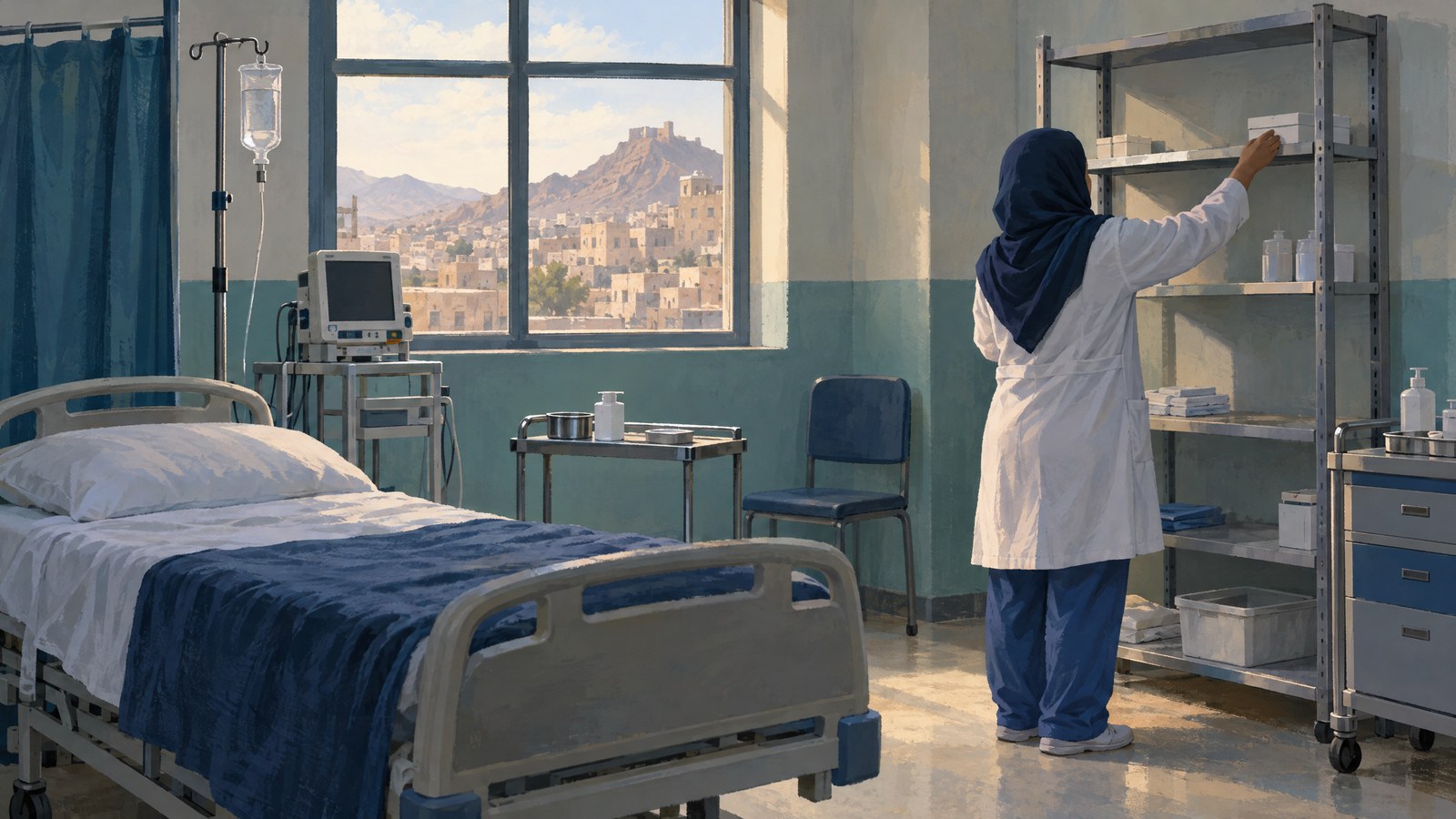

A 22 October assessment says hospitals in Yemen’s Taiz governorate are facing acute shortages of fuel, oxygen, medicines and medical supplies, with essential treatment at risk of further disruption. It identifies 42 health facilities in Taiz city as reporting acute shortages.
Patients depend on services under pressure
The scale of need is reflected in the patients currently relying on hospital care. More than 1,110 people with kidney failure require dialysis each day, while 192 patients are receiving intensive care and 154 newborns are in incubators. The assessment warns that without urgent replenishment, emergency surgery, dialysis, intensive care and maternal and neonatal services could face further disruption. It does not say that these services have all stopped.
Hospitals and ambulances require more than 156,000 litres of fuel each month to maintain operations. Fuel is also needed for oxygen production, emergency transport and vaccine cold-chain systems. The fuel figure is a monthly requirement across hospitals and ambulances, rather than a statement of the amount currently available or a quantified shortfall.
The assessment describes a fast-moving situation in which current information is incomplete. Frequent communications network outages have hampered efforts to obtain updated information. Health authorities and the World Health Organization are working to verify remaining fuel stocks and assess the extent of disruption to hospital services. The reported facility and patient figures should therefore be understood as the information available in that assessment, not as a complete real-time inventory.
Alternative deliveries and expanded services
Access constraints are complicating the movement of medical supplies. A national Health Cluster partner delivered essential emergency medicines to Al-Thawra Hospital using an alternative route, despite severe restrictions. That delivery is a specific reported action; it does not establish that regular supply routes have reopened or that wider shortages have been resolved.
The response also includes support for 10 diarrhoea treatment centres across five affected governorates, including Taiz, as well as mobile medical teams and fixed health points in the governorate. These services are intended to improve access to care for displaced communities. WHO said essential medicines, intravenous fluids, medical supplies and water, sanitation and hygiene commodities had been pre-positioned in Aden for delivery to conflict-affected areas.
The same assessment links fuel disruption to risks for water pumping and sanitation, which can increase the risk of cholera and other diarrhoeal diseases among displaced families. It notes that suspected cholera cases have declined in recent weeks, but warns that reduced access to health facilities may be affecting reporting in Taiz. The available information does not establish the true current number of cases, and fewer reported cases should not be treated as proof that transmission has fallen by the same amount.
Call for sustained access and funding
Humanitarian partners are seeking alternative routes and arrangements to bring supplies into Taiz and maintain essential health services. WHO has called for safe, sustained and unhindered humanitarian access through available routes, alongside urgent funding to replenish critical supplies and support health services. Those calls are intended to enable regular deliveries and expand assistance; they are not confirmation that access or funding has since been secured.
The new assessment provides a more detailed snapshot of the pressure on Taiz’s health facilities than earlier general reports of shortages. Its specific counts of facilities and patients, monthly fuel requirement, account of disrupted verification and description of an alternative medicine delivery make this a distinct dated update. The figures remain subject to the limits stated in the assessment, particularly communications outages and incomplete verification of stocks.