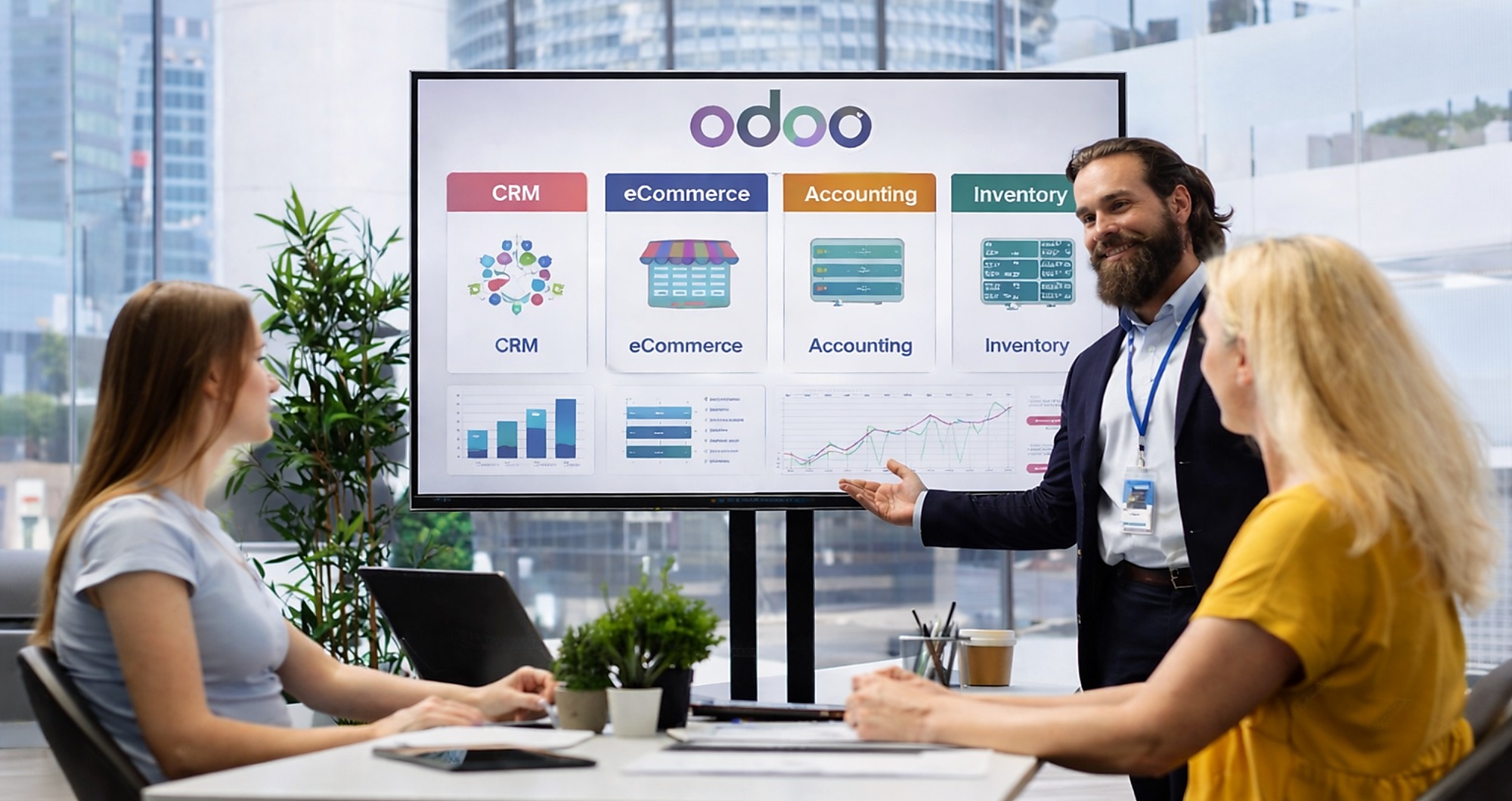

UK digital businesses are under pressure from every side. Customers expect faster service, smoother buying journeys, and better support. Teams want fewer manual tasks and clearer reporting. Owners want one view of sales, operations, finance, and customer activity instead of chasing updates across different tools. That is why more businesses are turning to an Odoo development Company to build systems that are connected, practical, and ready to scale. Odoo itself is designed as a fully integrated suite covering functions such as CRM, eCommerce, accounting, inventory, point of sale, and project management, which makes it especially relevant for businesses trying to grow without creating more internal complexity.
Why fragmented systems slow growth
Many businesses do not feel the problem at the start. They launch with one tool for leads, another for invoicing, one more for online orders, and maybe a separate system for stock or projects. In the early stage, that feels manageable. But once growth begins, the cracks show up quickly.
A sales team enters data in one place. Finance works from another system. Operations track progress somewhere else. Reports do not fully match. Staff spend time copying information from one screen to another. Leaders wait too long for answers that should be simple. Instead of helping the company move faster, the software setup starts slowing it down.
This is where Odoo becomes important. Its core value is not just that it offers many business apps. The real value is that those apps are built to work together in one integrated environment. That connected structure makes it easier to reduce duplication, improve visibility, and support smoother daily work across departments.
What Odoo development really changes
Odoo development is not only about installing a platform and switching it on. It is about shaping the system around the business. That includes changing workflows, adding approval steps, creating custom fields, adjusting reports, building dashboards, connecting outside tools, and automating routine actions.
This matters because no two UK digital businesses operate in exactly the same way. An agency does not work like an online retailer. A service company does not run like a distributor. Even two businesses in the same sector can have very different sales flows, delivery models, and reporting needs.
Odoo’s official Studio tools are built for this kind of flexibility. They let teams create fields, customise views, and streamline workflows. Odoo’s automation tools also support trigger-based actions, which means repetitive tasks can be pushed forward without manual effort every time. That flexibility is a big reason the platform has become attractive to businesses that want software to match their real process instead of forcing the business to adapt to rigid software rules.
Why this matters in the UK now
This topic is especially relevant in the UK because digital adoption is still a live business issue, not a finished one. The UK government’s SME Digital Adoption Taskforce said there is still a gap between business ambition and business execution, and identified barriers such as cost concerns, lack of expertise, and the risk of switching from one technology to another. The same report says accelerating digital adoption is vital if UK SMEs are to stay competitive and support national prosperity.
At the same time, AI and automation are becoming part of normal business planning. The Office for National Statistics reported that about 25% of businesses said they were using some form of AI technology in late December 2025, and 15% said they were planning to adopt AI within the next three months. Separate government research published in early 2026 says the UK wants AI use to support productivity, competitiveness, and wider innovation across the economy.
That wider UK context matters. Businesses are no longer only asking, “Do we need digital tools?” They are asking, “Do we have the right system to support growth, automation, and better decisions?” That is why Odoo development is moving from a back-office software project to a real business growth conversation.
Where growth shows up in daily operations
The biggest strength of Odoo is that growth benefits do not stay at the strategy level. They show up in the daily work of the business.
1. Better visibility
When data sits in one connected system, managers can track sales, stock, orders, projects, and finance with less confusion. That makes planning easier. It also helps teams spot bottlenecks earlier and respond faster.
2. Less manual work
Automation matters because small delays add up. Chasing approvals, updating records, and repeating the same admin tasks can waste hours every week. Odoo’s workflow and automation tools help reduce that kind of friction.
3. Stronger eCommerce operations
For digital businesses, the website is only one part of the journey. Orders, inventory, fulfilment, and customer communication need to stay in sync as well. Odoo’s eCommerce tools are designed to work with order and inventory management, which supports a smoother path from purchase to delivery.
4. More room to scale
Growth usually creates more operational complexity. More products. More team members. More customer requests. More reporting needs. Odoo’s modular structure makes it easier to expand over time instead of replacing the whole setup every time the business reaches a new stage. Odoo’s platform messaging consistently highlights that it is both broad and integrated, which supports this scale-up model.
5. A better base for AI-ready workflows
AI works best when business information is not scattered everywhere. Odoo has been adding more AI-related features, including natural-language search and AI-assisted drafting in newer releases. That means connected systems are becoming even more valuable, because they give businesses a stronger base for using AI in practical ways instead of treating it as a disconnected add-on.
Which businesses can benefit most
This type of setup is especially useful for businesses that have already outgrown scattered software. In the UK market, that often includes:
- eCommerce brands managing products, orders, and customer support
- agencies handling leads, projects, billing, and team delivery
- service businesses that need stronger CRM and workflow visibility
- distributors that want purchasing, stock, and fulfilment in one system
- growing SMEs that need structure without losing flexibility
The common pattern is simple. Once a business reaches the point where disconnected tools create more confusion than value, the need for a better platform becomes much clearer.
What businesses should look at before starting
Before moving ahead, businesses should think about more than software features. The better question is whether the future system will match the way the business wants to operate.
A smart project usually starts with a few basics:
- define the biggest process gaps first
- identify where teams lose time each week
- decide which reports leaders actually need
- plan integrations carefully
- think about future scale, not just current pain points
It also helps to work with an implementation team that understands business operations, not just code. Odoo’s official partner model stresses training, direct access to Odoo resources, and a structured relationship with the platform, which shows how important expertise and long-term support are in successful projects.
Final Thoughts
Odoo development is becoming a growth engine for UK digital businesses because it solves a practical problem that many companies now face. Growth is harder when teams work across disconnected systems, reporting takes too long, and routine tasks keep slowing people down. A connected platform helps reduce that pressure.
That is why Odoo stands out. It combines integration, flexibility, automation, and room to scale. In the current UK business environment, where digital adoption, operational efficiency, and AI readiness all matter more than before, that combination is hard to ignore. For digital businesses that want to grow with more control and less friction, Odoo development is no longer just a technical upgrade. It is a business decision with long-term value.