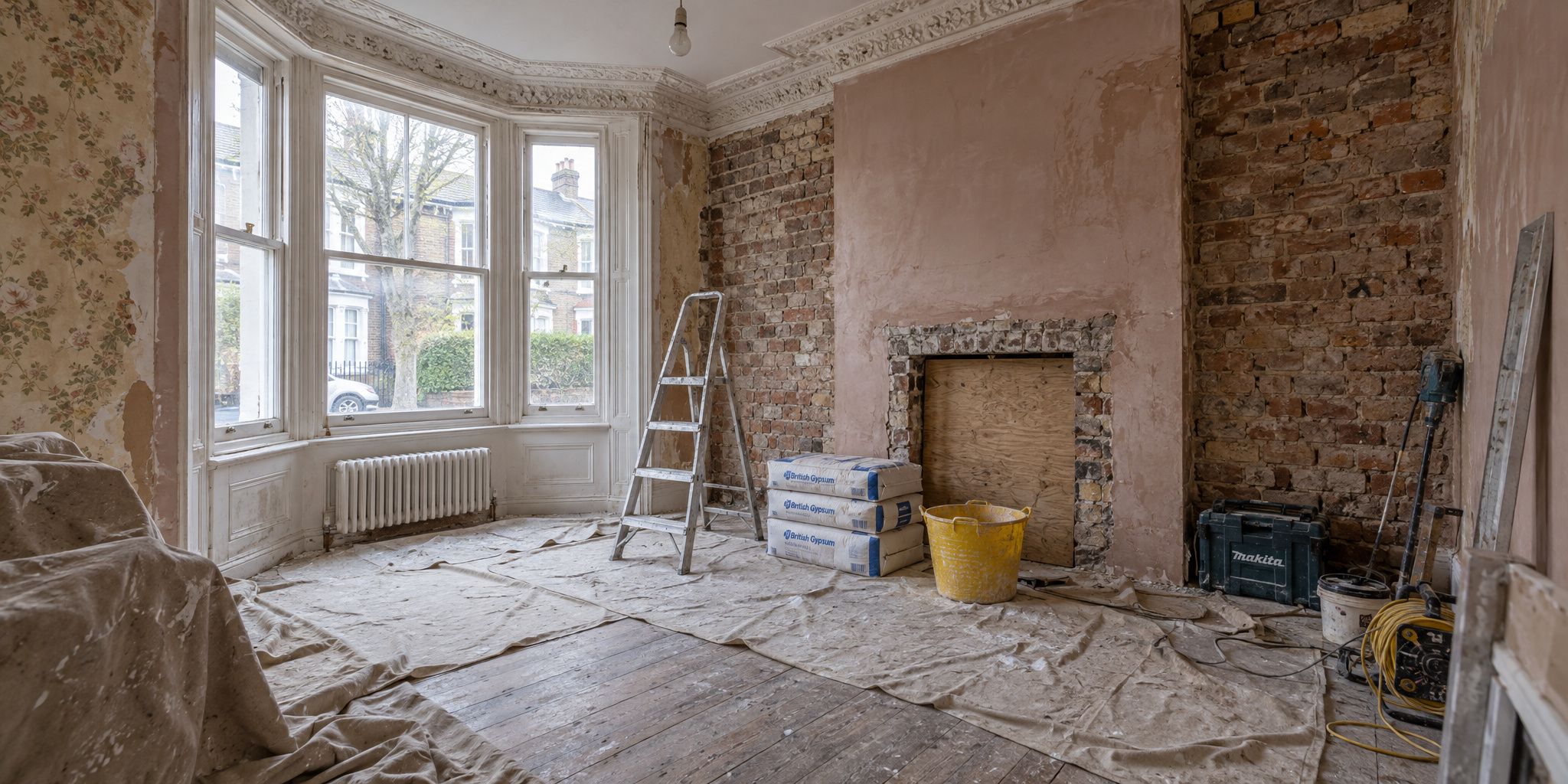

A property is rarely yours the moment you receive the keys. It is yours when you have changed something—when the kitchen works the way you cook, when the light falls where you sit, when the layout follows the way you actually live rather than the way the previous owner did. Renovation is the process of making that shift, and it is why renovating a property allows you to put your own stamp on it in a way that no amount of furniture and paint can replicate.
The stamp is not decoration. It is the accumulation of decisions that make a home fit its occupants, and it is worth understanding why those decisions matter.
The Difference Between Decorating and Renovating
Decorating changes surfaces. Renovating changes the way a property works.
A coat of paint and new curtains can improve a room’s appearance, but they cannot change a cramped kitchen, a dark hallway, or a bathroom that is in the wrong place. Renovation addresses the structure, the layout, and the systems, and it is at that level that a home becomes genuinely personal.
This is why renovation feels different from decorating. It is not reversible in the same way. A wall that is removed, a kitchen that is moved, and an extension that is added are decisions that shape the property for years. The commitment is greater, and so is the effect.
The Layout as Self-Expression
Nothing reveals a household’s priorities like the layout of a home.
A family with young children may want an open-plan kitchen and living area, where cooking and supervising can happen together. A couple who both work from home may need two studies, even at the cost of a spare bedroom. Someone who cooks seriously may prioritise a kitchen that a previous owner would have considered oversized.
The previous owner’s layout reflects the previous owner’s life. Renovation is the opportunity to correct that, and the changes are often more revealing than any decorative choice.
The Materials That Say Something
Renovation also offers the chance to choose materials, and materials carry meaning.
A stone floor says something different from laminate. A handmade kitchen says something different from a flat-pack one. A window that is restored rather than replaced says something about how the property is valued.
These choices are not merely aesthetic. They reflect priorities: durability over cost, craft over convenience, character over uniformity. The materials a household chooses are one of the clearest expressions of what it values.
The Light and the Flow
Renovation can change how a property feels in ways that decoration cannot touch.
Opening up a dark hallway, adding a rooflight, repositioning a door, or replacing a small window with a larger one all change the experience of a space. The effect is immediate and lasting, and it cannot be achieved by any other means.
Light and flow are the qualities that make a home feel generous. They are also the qualities that renovation can most reliably improve.
The Practical Benefits
The stamp is not only emotional. Renovation delivers practical benefits that a decorated property cannot.
Energy efficiency. Insulation, double glazing, and a modern heating system reduce bills and improve comfort.
Function. A renovated property works for the household that lives in it, rather than requiring the household to adapt to it.
Value. A well-renovated property is worth more than an identical property that has not been touched, particularly where the work has improved the layout or the energy performance.
Longevity. A renovation done well lasts for decades, and it reduces the maintenance burden in the years that follow.
The Honest Caveats
Renovation is not without cost, and the costs are worth stating plainly.
It is expensive, disruptive, and slower than most people expect. It requires decisions that cannot always be anticipated, and it often reveals problems that were not visible at the start. A renovation that runs to time and budget is the exception rather than the rule.
It also requires a certain tolerance for uncertainty. The stamp is personal, which means there is no template to follow, and the result depends on the quality of the decisions made along the way. Converting a spare bedoom into an office is easier than adding an extension, and much cheaper.
For all of that, the reward is a home that is genuinely yours—not because of the colour of the walls, but because of the way it works.