
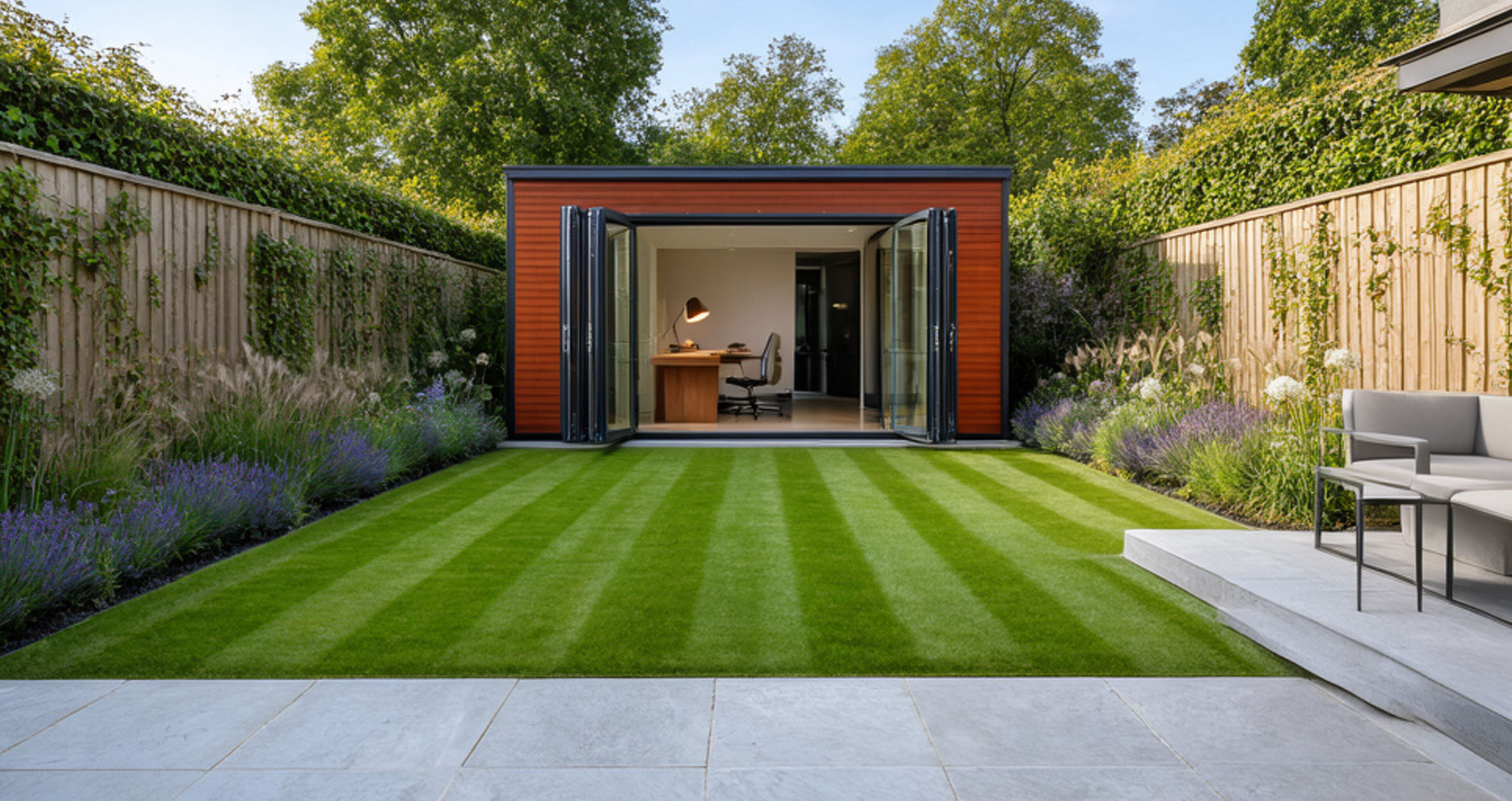

The garden room has shed its reputation as a glorified shed. It is no longer a place for lawnmowers and paint tins, nor a whimsical summerhouse used for three weeks in July. Across Britain, and particularly in London, it has become the most versatile, most heavily used, and most quietly valuable room in the home.
The change is recent, and it is driven by a set of pressures that have reshaped domestic life.
The Remote Work Catalyst
The most obvious driver is remote working. When the kitchen table became a desk and the spare bedroom became an office, households began looking for a separation between work and home that did not require moving house.
The garden room offered that separation. A commute of thirty seconds, a door that closes at the end of the day, and a physical boundary between the working self and the domestic self. For anyone who has spent a year taking video calls at the kitchen island, the appeal is easy to understand.
What began as a temporary solution has become permanent. Many households now regard a dedicated workspace as a fixed requirement, and the garden room is the least disruptive way to provide it.
The Versatility Argument
The garden room’s real strength is that it is not one thing.
A home office is the most common use, but the same structure becomes a studio for an artist, a music room for a musician, or a workshop for someone who makes things. It becomes a gym when the spare room fills up, a playroom when children need space of their own, and a guest room when visitors arrive.
This adaptability is what makes it so useful. A spare bedroom can only be a bedroom. A garden room can be whatever the household needs at a given point in its life. It is flexible in a way that internal rooms rarely are.
The Value of Separation
There is something important about a room that is not in the house.
A garden room creates a psychological boundary that an internal room cannot. Walking out of the back door and across the garden marks the transition between one mode of being and another. Work ends when the door closes behind you. Exercise begins when you step inside. The physical journey does the work that willpower alone struggles to achieve.
This is why the garden room succeeds where a desk in the corner of the living room fails. The separation is not merely spatial. It is mental.
The London Dimension
In London, the garden room solves a problem that has no other solution.
Flats and small houses have no spare room to convert. Extending is expensive, disruptive, and often impossible given planning constraints and the value of garden space. A garden room requires no change to the house itself, and it can be built to a size and specification that suits the plot.
It also makes use of space that would otherwise be underused. A small garden with a lawn and a shed is pleasant but not especially productive. The same garden with a well-designed room at the end is considerably more valuable.
The planning position is generally favourable. Many garden rooms fall within permitted development, subject to height and size limits, though conservation areas and listed buildings impose restrictions. Checking before building is essential.
What Makes a Good One
Not all garden rooms are equal, and the difference between a good one and a bad one is significant.
Insulation matters most. A garden room used all year must be properly insulated in the floor, walls, and roof. A poorly insulated structure becomes unusable in winter and uncomfortably hot in summer.
Power and connectivity are essential. Sufficient sockets, good lighting, and a reliable internet connection are non-negotiable for a workspace. A wired connection is preferable where possible.
Heating and cooling must be planned. Depending on the use, a garden room may need heating, ventilation, and shading. A south-facing room with large glazing will overheat without intervention.
The structure must be durable. Timber frame, SIPs, or modular construction all work, but the specification should suit the intended lifespan. A garden room intended as a permanent room should be built to building regulation standards, even where not legally required.
Aesthetics matter too. A garden room should enhance the garden rather than dominate it. Good design considers the view from the house as well as the view from the room.
The Practical Considerations
A few points deserve attention before committing.
Cost. A quality garden room typically costs between £15,000 and £40,000 depending on size and specification. Cheaper options exist, but they tend to be seasonal rather than year-round.
Access. Building at the end of a garden requires materials to be carried through the house or around it. This adds time and cost.
Maintenance. Timber cladding needs treating. Roofs need checking. A garden room is a building, and buildings require upkeep.
Resale. A garden room adds value, but not always as much as it costs. It is a lifestyle investment as much as a financial one.
Planning. Permitted development rights cover many garden rooms, but not all. Conservation areas, listed buildings, and height restrictions all affect what is possible.
The Final Word
The garden room has become the most useful room in the house because it is the most adaptable. It solves the problem of remote work, provides space for hobbies and exercise, offers a retreat from the noise of family life, and does so without requiring the house to change.
It is not cheap, and it is not maintenance-free. But for households short of space and long on demands, it is often the best value per square metre available.
The garden room has earned its place. It is no longer an extra. For many homes, it is essential.







