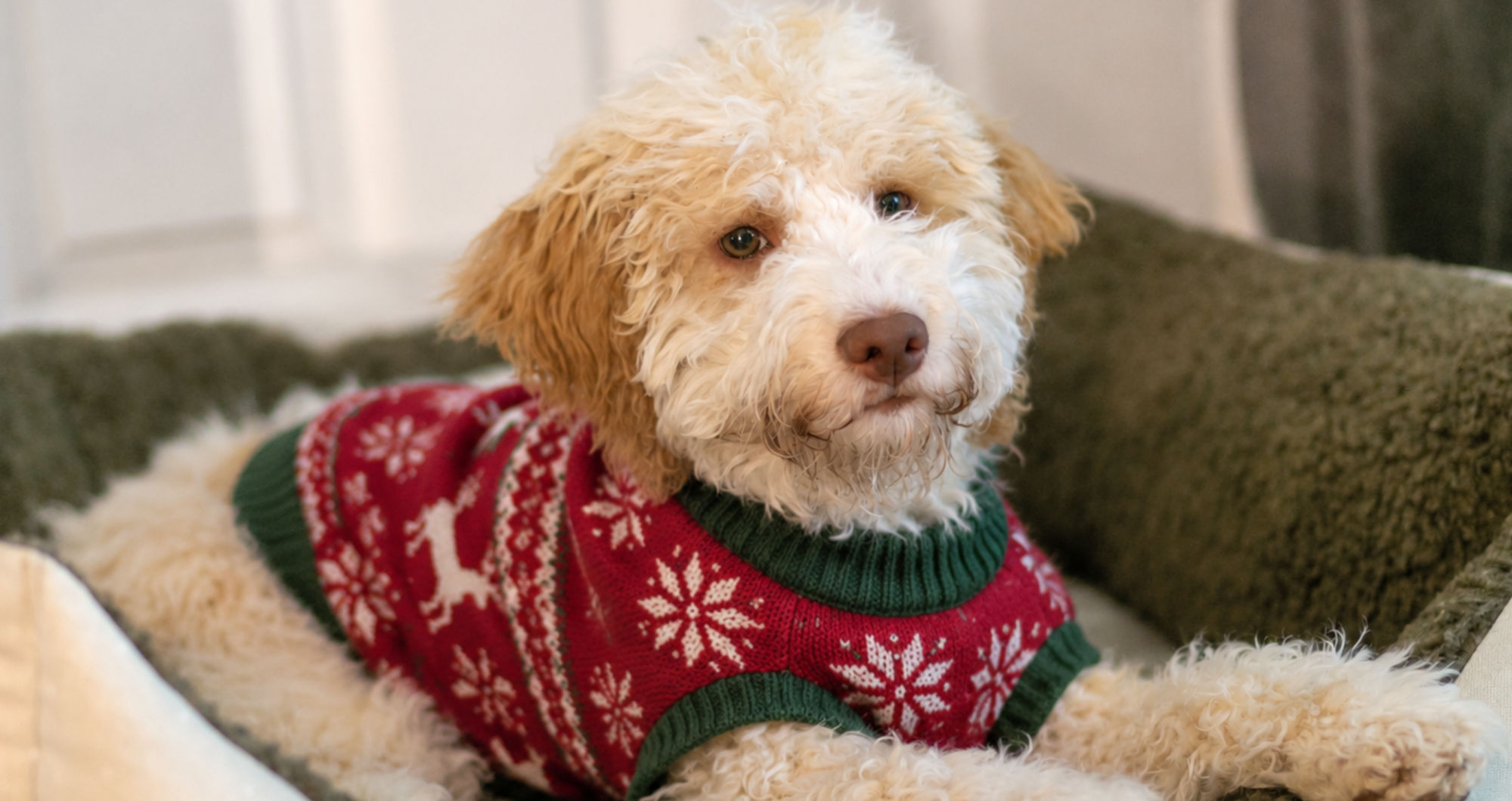

Christmas can be a lot when you’re a dog. One minute, it’s a perfectly ordinary day. The next, there are eight extra people in the living room, someone’s wearing a paper crown, children are testing out their new toys and Uncle Dave has decided the dog absolutely loves being scratched behind the ears.
And because many dogs stay in the middle of the action, we assume they’re having a lovely time too. But staying in the room doesn’t necessarily mean your dog wants to be passed around like a tin of Quality Street. Some of the earliest signs that a dog is becoming uncomfortable are so subtle that they’re easily missed.
Here, Kevin Thackrah, Director of the UK’s longest-established multi-service pet care provider Petpals, explains how to spot when your dog has had enough of Christmas socialising. He also shares some slightly unconventional house rules that could make festivities happier for everyone.
Stop looking for a wagging tail
A wagging tail is one of the most misunderstood pieces of dog body language. We see movement and automatically think ‘happy’, but you need to look at the whole dog.
A dog enjoying the annual invasion of relatives will generally look loose and relaxed. One becoming uncomfortable may become still or tense, hold their body differently or repeatedly glance towards an exit. Even if their tail is moving, the rest of their body might be saying something else.
Try watching what happens when attention stops. If somebody pauses the Christmas cuddles and your dog moves closer or asks for more, that’s quite different from immediately turning away or walking off. Give them that little pause and let them cast the deciding vote.
Beware the Christmas ‘kiss’
Some of the most useful warning signs are also the easiest to dismiss. If there’s no turkey in sight and your dog starts licking their lips while somebody is cuddling them, leaning over them or getting close to their face, they may be uncomfortable.
Yawning can be another clue. It’s easy to assume a yawning dog has simply overdone the festivities, but repeated yawning during an interaction can be a response to stress.
Don’t panic over one yawn. Look at the bigger picture. Are their ears pinned back? Can you see more of the whites of their eyes? Are they avoiding eye contact? Several small changes together can be your dog’s polite way of saying they’d quite like the mistletoe moment to end.
Introduce the ‘two-second rule’ for overenthusiastic relatives
Instead of allowing guests to continually fuss your dog, introduce a simple Christmas consent check. Give them a couple of seconds of gentle attention, then stop and see what they do next.
If they lean back in, nudge a hand or stay engaged, they may want more. If they wander off in search of dropped pigs in blankets, take the hint.
It’s particularly useful with children because ‘Leave the dog alone’ can feel vague. ‘Stroke them, stop and see if they come back’ gives them an actual rule to follow and lets the dog decide whether the interaction continues.
Let your dog be rude to Uncle Dave
Christmas greetings can be intense from a dog’s perspective. The doorbell keeps ringing, people arrive carrying bags and presents and everybody seems determined to say hello.
But your dog does not have to greet everybody who walks through the door. One of the easiest ways to take the pressure off is to ask guests to ignore them initially and let the dog investigate at their own speed.
If they want to sniff Uncle Dave’s shoes for five minutes before acknowledging the human attached to them, that’s fine. If Auntie Sue isn’t getting a hello until Boxing Day, that’s fine too. A dog choosing to approach somebody is very different from a guest pursuing them around the Christmas tree determined to become best friends.
Create a Christmas VIP area – and don’t let any humans in
A quiet space only works if it genuinely stays quiet. Putting your dog’s bed in the corner of the living room isn’t much help if somebody steps over them every 10 minutes to pinch another mince pie.
Instead, create a proper Christmas VIP area away from the main festivities and make one rule clear: if the dog goes there, nobody follows. Not the children. Not the grandparents. Not the relative insisting that ‘dogs always love me’.
Give them their bed, water and perhaps a familiar toy. Think of it as the one place in the house where Christmas is cancelled. No crackers, no cuddles, no family photos and, most importantly, no visitors.
Watch out for the dog that suddenly becomes your shadow
We often expect an overwhelmed dog to hide, but some do the opposite. They may become clingier, follow their owner everywhere or struggle to settle unless they’re right beside them.
So, if your usually independent dog suddenly accompanies you on every emergency trip to the kitchen for more gravy, consider what has changed around them rather than assuming they just want attention – or turkey.
Give them the chance to spend some time somewhere calm and see if they settle. What looks like ‘I want more fuss’ can sometimes be, ‘This is all getting a bit much, and you’re the person I feel safest with.’
Learn your dog’s ‘I’m done’ sequence
Every dog has their own way of calling time on the festivities. Perhaps yours starts disengaging, then gets up and shakes themselves off before heading into another room. Maybe they begin pacing or repeatedly try to settle away from everyone else.
Learn what happens before the obvious warning. A growl can feel like a dog has suddenly ‘turned’, particularly if they’ve spent the morning surrounded by people, but there may have been several quieter attempts to communicate first.
And don’t punish a growl. It’s communication. End the interaction, give your dog space and consider what was happening immediately beforehand.
Christmas should be enjoyable for pets too, but that doesn’t mean they need to participate in every part of it. Sometimes the best Christmas present you can give them is permission to decide they’ve had enough and go to bed.
To find out more about Petpals and the pet care services available in your area, visit the website.