
By Elena Danilyuk, Founder of Life Matters Coach Ltd, Surrey, UK
When I started my Life Matters Coach Ltd business two and a half years ago, I thought success was all about doing more.
I had a long list of things I believed I needed before I could launch: a polished website, perfect branding, a strong social media presence, clear offers, marketing plans… the list felt endless. Alongside completing my professional coaching certification, I set myself incredibly ambitious deadlines. One of them was building my entire website in just four weeks.
I remember one particular day sitting in front of my laptop for nearly ten hours. Apart from two quick comfort breaks, I barely moved. I was so determined to tick another task off my list that I completely ignored what my body was telling me.
That same week, I experienced my first episode of vertigo.
At first, I didn’t connect the two. I carried on pushing, convinced I just needed to work harder. But the vertigo kept returning, on and off, for the next eighteen months.
I can’t say with certainty that stress caused the vertigo, but it became impossible to ignore how disconnected I had become from my own body. Whether it was stress, long hours, or a combination of factors, it forced me to stop and pay attention to something I had neglected for far too long.
That experience completely changed the way I think about building a business.
Because whilst strategy, marketing, and sales absolutely matter, I have come to believe that there is something even more fundamental underneath it all.
You are your business.
Especially in the early stages.
Your energy, your mindset, your health, your resilience, and even the way your nervous system responds to pressure all become part of the business you are building. When you are the one making every decision, serving every client, solving every problem, and carrying the responsibility, there is no separation between you and your business.
If you are thriving, your business often feels different. If you are exhausted, overwhelmed, and constantly running on adrenaline, your business usually reflects that too.
Success Isn’t Built on Exhaustion
Entrepreneurship has become closely associated with hustle.
Social media is full of morning routines and productivity hacks that promise success if only you are disciplined enough to follow them. But here is the problem: our bodies don’t work like machines, and what works for one person won’t necessarily work for another.
Research has shown that entrepreneurs are more likely to experience high levels of stress and exhaustion than those in traditional employment. When we become chronically fatigued, it doesn’t just affect our health; it impacts our ability to make decisions, think creatively, solve problems, and lead effectively. Ironically, the very qualities we need to build a successful business begin to diminish when we ignore our own well-being.
I see this regularly with clients. Someone spends ten or twelve hours a day in front of a screen (like me in the early days of Life Matters Coach). They are replying to emails while eating lunch. They are jumping from Zoom calls to social media, then straight into proposals and admin. They are working harder than ever, but the business isn’t growing as quickly as they had hoped. Frustration starts to build.
Then the body starts whispering.
Sleep becomes restless.
The shoulders feel permanently tense.
Headaches become more frequent.
Digestion feels unsettled.
Brain fog creeps in.
Patience wears thin with the people we love, and another coffee becomes the only way to get through the afternoon.
Those whispers are easy to dismiss because we tell ourselves we will slow down next week. But instead of listening, many entrepreneurs work harder until eventually the body shuts down.
Your Body Is Not Working Against You
One of the biggest shifts in my coaching came from completing my Art of Somatic Coaching training after my ICF accreditation.
I already had a background in NLP, and visualisation has always been an important part of my coaching. Helping people change the way they think is incredibly powerful.
However, I realised that changing our thinking isn’t always enough.
Many of us understand exactly what we should be doing. We know we need better boundaries, to charge more, to stop procrastinating, to delegate, or to have difficult conversations.
Yet we still don’t do it.
Why?
Because our body is often holding onto patterns that our mind has already decided to leave behind.
Our nervous system remembers experiences long after our conscious mind believes we have moved on.
You might logically know that putting yourself out there is safe, yet your body responds as though it is a threat.
You might know you deserve to raise your prices, but your stomach tightens every time you think about having that conversation.
You might know you need to slow down, yet sitting still makes you feel uncomfortable.
You might know that saying no is the right decision, but every part of your body feels guilty when you try.
This isn’t a lack of motivation or discipline. It is often a sign that the mind and body are sending different messages.
This is where somatic coaching has transformed the way I work. Rather than focusing only on thoughts and beliefs, we also pay attention to what the body communicates.
I recently worked with a client who arrived carrying significant tension through her shoulders. She described them as constantly tight and heavy, something she had simply accepted as normal. During our somatic coaching session, we worked with what her body was holding onto rather than focusing only on the challenge she was facing.
Within just thirty minutes, the tension had noticeably eased, and she left saying she felt lighter, both physically and emotionally.
Seeing that shift reminded me just how much our bodies carry for us. They often give us signals long before they develop into something bigger. The more we learn to listen to those signals rather than push through and ignore them, the better equipped we are to look after ourselves and, in turn, our businesses.
There Is No Perfect Morning Routine
One thing I hope we can leave behind is the belief that success looks the same for everyone.
If someone else becomes successful because they wake up at 5am, that doesn’t mean you have to.
If cold water swimming transforms someone else’s life, that’s wonderful.
If marathon training gives another entrepreneur clarity, that’s brilliant.
However, none of those things are prerequisites for building a successful business.
We are all different.
Our bodies are different.
Our energy is different.
Our lives are different.
Success comes from understanding yourself rather than copying someone else.
The most effective routine is the one your body can sustain consistently. For one person, that might be an early morning gym session. For someone else, it’s a quiet walk before opening the laptop. For another, it’s protecting their sleep, taking proper lunch breaks or stepping away from the screen every couple of hours.
There isn’t one formula.
The goal isn’t to become someone else.
The goal is to become the healthiest, most resilient version of yourself.
Your Greatest Business Asset
When entrepreneurs think about investing in their business, they often think about software, advertising, websites, courses or hiring staff.
Those investments all have their place.
But the greatest asset your business will ever have is you.
Your clarity, creativity, emotional resilience, leadership, and your ability to stay calm when things don’t go to plan are all shaped by your physical and mental well-being.
Looking after yourself isn’t something you do once the business becomes successful.
It’s one of the reasons the business becomes successful in the first place.
The energy you bring into your work influences every conversation, every decision, every opportunity and every relationship you build.
Your business doesn’t just reflect your strategy.
It reflects you.
When your mind and body work together rather than against each other, you build a business that is sustainable, enjoyable and capable of supporting the life you set out to create in the first place.
Learn more about Life Matters Coach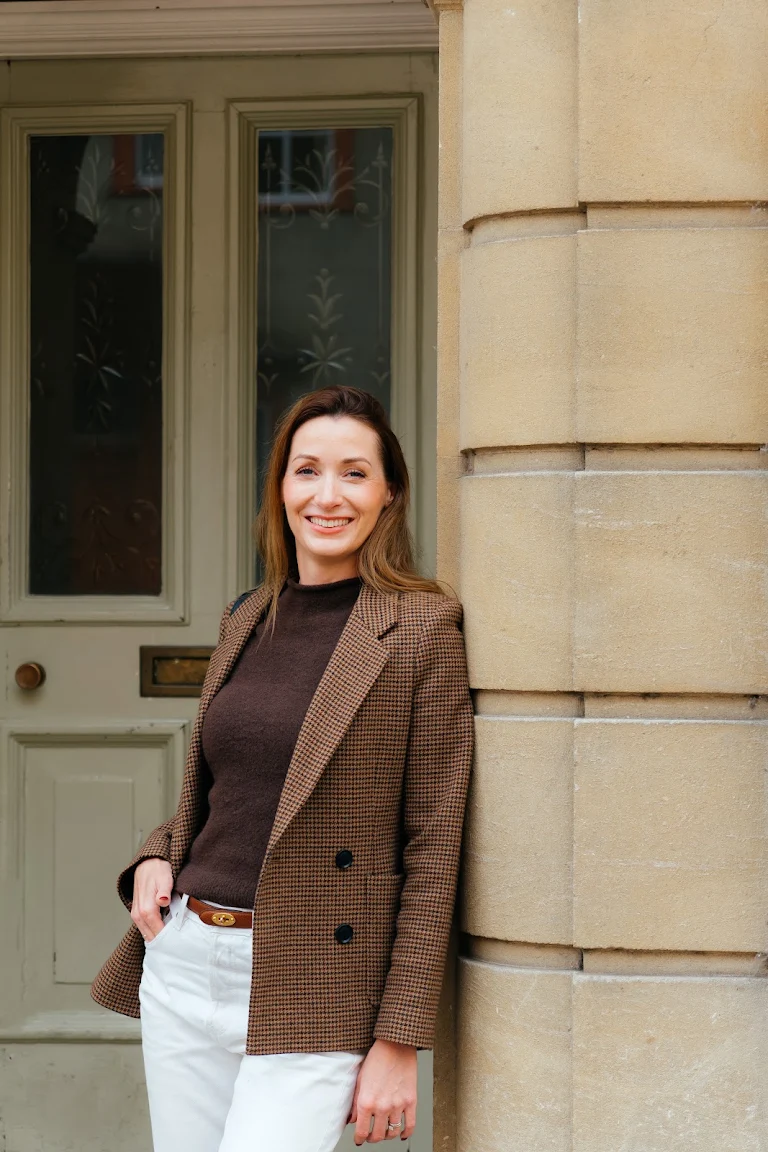
Feature image by Pexels