

Planning the right signage for a construction site isn’t just about placing a few boards around the perimeter and calling it a day. It’s a carefully thought-out process that shapes how safe, organised and professional your site appears to both workers and the public. Good signage improves communication, supports compliance and can even enhance a company’s reputation before any building work has begun.
Whether you’re managing a small renovation project or overseeing a complex development, having a clear plan for your signage strategy makes all the difference. With the increasing demand for safer and more structured environments, many UK organisations are paying far more attention to the way they use construction site signs and construction hoarding from day one.
Understand the Purpose of Your Signage
Before anything else, identify exactly what you want your signage to achieve. Most construction sites need a combination of safety, directional and information boards. Understanding this early helps you avoid last-minute purchases or inconsistent messaging.
Key purposes include:
- Alerting workers and visitors to hazards
- Directing site traffic
- Highlighting restricted zones
- Informing the public about ongoing works
- Showcasing branding and project details through construction hoarding
With a clear purpose, planning becomes far easier and much more efficient. When you know why each sign is needed, you can ensure your construction site signs serve a meaningful role rather than simply filling space.
Audit Your Site Before Installation
Carrying out a site audit helps you spot where communication gaps could lead to confusion or safety risks. Walk around the perimeter and through internal areas while asking questions such as:
- Which areas require the highest visibility?
- Where do workers tend to gather or move through most?
- Are there any blind spots or hazardous corners?
- Is additional clarity needed on entry and exit points?
This audit will also help you position construction hoarding effectively around the site boundary, especially if you’re using it for privacy, safety or promotional messaging. Mapping everything out at this stage prevents inconsistent placement and reduces the need for adjustments later.
Know Your Mandatory Signage Requirements
Construction sites in the UK must follow clear signage requirements to promote safety and compliance. While the exact needs depend on the nature of your project, most sites will require:
- Hazard warnings
- Mandatory PPE notices
- Emergency exit routes
- First-aid points
- Fire safety instructions
- Visitor check-in directions
Workers rely on construction site signs to understand what they need to do and where they should go, especially when entering new or evolving areas of the site. Ensuring that mandatory messages appear in consistent locations and formats prevents confusion and avoids unnecessary risks.
Prioritise Clear, Concise Language
Signage should be easy to understand at a glance. Long explanations often go unnoticed, especially in busy environments. Use short, direct phrases that communicate essential information quickly. This applies to everything from directional arrows to hazard warnings.
When using construction hoarding for public-facing information, ensure the language remains clear but professional. People passing by the site should instantly understand what’s happening, how long the project may take, and who is responsible for the work, without needing to read lengthy paragraphs.
Consider Visibility, Lighting and Weather Conditions
Even the best-designed signage loses its value if it can’t be seen clearly. When placing construction site signs, consider:
- Sunlight direction
- Shadows cast by structures
- Night-time visibility
- Seasonal changes
- Proximity to heavy machinery
In some cases, reflective surfaces or illuminated displays may be needed. Construction hoarding should also be designed with durability in mind. Weatherproof materials are essential for maintaining quality throughout the entire building schedule.

Image Source: Sign Company London
Match Your Signage to Site Movement Patterns
Each construction site develops natural movement patterns, where vehicles enter, where workers walk, where deliveries arrive and where hazards appear. Aligning signage with these movement flows helps reduce confusion and keeps the site running smoothly.
For example:
- Entry points require clear identification
- Pedestrian walkways need prominent directional signs
- Delivery routes must be marked early and consistently
- Machinery zones should be highlighted with hazard-focused construction site signs
Well-positioned signage supports efficiency and reduces the chance of accidents caused by unclear navigation.
Use Hoarding for More Than Safety
While safety and boundary control remain a primary function, construction hoarding offers far more value than simply cordoning off a site. With thoughtful design, it can serve multiple purposes, such as:
- Communicating project information
- Reinforcing your brand identity
- Reducing visual disruption in busy public areas
- Transforming temporary fencing into a marketing asset
Because hoarding stays in place throughout the project, it’s one of the most effective ways to make a lasting impression on both the local community and potential future clients. Using construction hoarding creatively can set your site apart from others and present your company in a polished, professional light.
Ensure Consistency Across All Signs
Consistency might seem like a small detail, but it has a huge visual impact. When construction site signs share the same colours, fonts and layout style, they create a cohesive site identity that feels well-managed and trustworthy.
This gives workers confidence in the environment and helps visitors feel more at ease. Meanwhile, consistent construction hoarding builds a stronger brand presence and contributes to the overall professionalism of the project site.
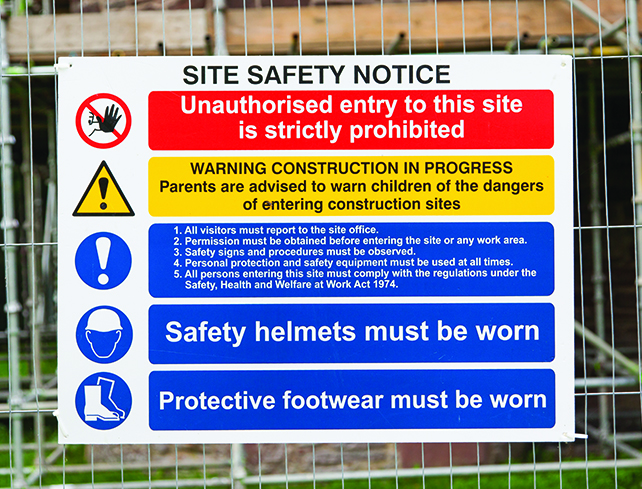
Image Source: Sign Company London
Regularly Review and Update Your Signage
Construction sites change rapidly. Areas that were safe last month may now require hazard warnings. New routes may appear, or equipment might relocate. For this reason, reviewing signage regularly is essential.
A strong strategy includes:
- Weekly inspections
- Updating signs as layouts change
- Removing outdated signage
- Checking stability and condition
- Refreshing construction hoarding if visuals become worn
Keeping everything current ensures your site always reflects reality, reducing risks and avoiding confusion.
Conclusion
Planning a strong signage strategy doesn’t just improve safety, it enhances efficiency, clarity and the overall professionalism of your construction environment. By understanding your site’s needs, ensuring visibility, staying consistent and taking advantage of well-designed construction hoarding and construction site signs, you create a workspace that supports both workers and visitors every day.
For businesses looking to elevate their signage planning with expert guidance and high-quality solutions, Sign Company London offers trusted support tailored to your needs.