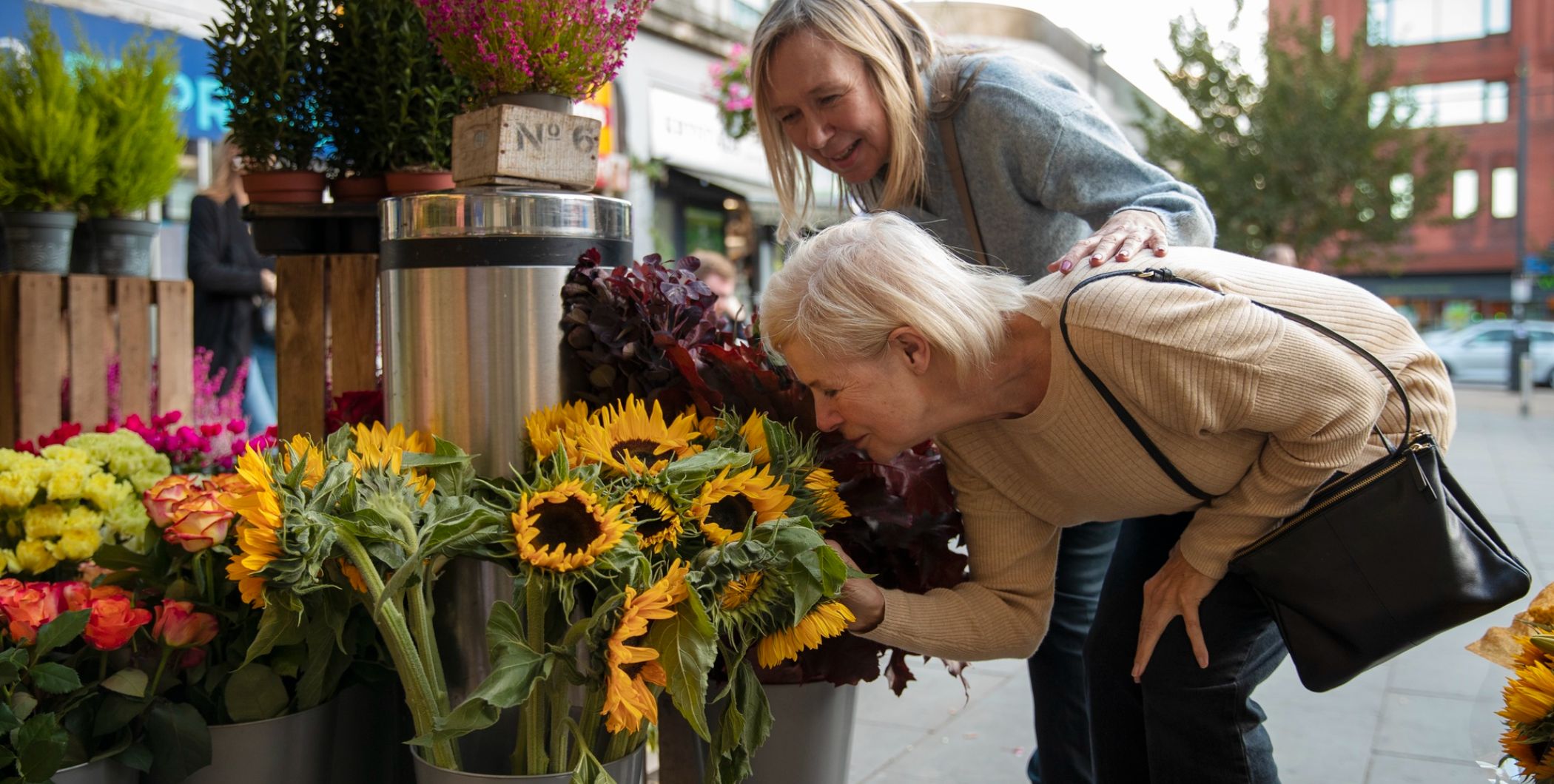

New research from The Faux Flower Company finds that the number of traditional high street florists in the UK has fallen by around 31% since 2016, with supermarkets and online retailers absorbing the majority of displaced demand and faux flowers growing as a long-term home décor choice.
The number of full-service, traditional high street florists in the UK has dropped from over 8,000 in 2016 to around 5,500 today, according to data from The Florist Trade Magazine’s industry database, cited by National Florist Day. That represents a decline of roughly 31% in under a decade.
In London, where commercial rents are among the highest in the country, the economics of running a bricks-and-mortar florist have become particularly strained. A florist that might be viable in a provincial market town faces a very different cost base on a London high street.
“The high street florist has always been a low-margin business. In London, rising rents and business rates have made that model increasingly hard to sustain. What we’re seeing is a structural shift in where and how people buy flowers, not just a temporary dip.”
Rachel Dunn, Head of Product, The Faux Flower Company
Supermarkets Now Dominate Flower Sales
The share of flower sales moving through supermarkets tells much of the story. Data shows that supermarkets account for approximately 54% of all flower purchases in the UK, the highest proportion of any country in the world, and significantly above France (14%) and the Netherlands (20%).
Online delivery has taken much of the remainder. The UK online flower delivery market generated $561.2 million in 2024 and is projected to reach $776.4 million by 2030. London and the South East, with their higher disposable incomes and population density, represent a disproportionately large share of that digital demand.
For independent florists who remain, the business model has changed. National Florist Day data shows a pronounced shift towards home studios and smaller-scale operations, with many now recording turnovers below £83,000 per year, in a sign that the craft is surviving, even if the high street shop is not.
A Third Channel Emerges
Alongside supermarkets and online delivery, faux flowers have emerged as a distinct and growing category. Residential artificial flower sales are projected to grow at a compound annual rate of 7.2% between 2025 and 2030, driven by the appeal of low-maintenance and long-lasting arrangements.
The dynamic is different from flower gifting. Faux flowers are predominantly a home décor purchase, not an occasion purchase, and that makes them less vulnerable to the pressures squeezing fresh flower sales.
According to Dunn, “Consumers are increasingly drawing a distinction between buying flowers as a gift and buying flowers for their home. Faux products speak much more directly to the second category, and that’s a market that has historically been underdeveloped.”
Methodology
This research was compiled by The Faux Flower Company in March 2025. Florist business count data is sourced from The Florist Trade Magazine’s industry database, as cited by National Florist Day (nationalfloristday.co.uk). UK supermarket flower sales market share figures are from Rabobank (2021), cited by National Florist Day. Online flower delivery market projections are from Grand View Research’s UK Flower Delivery Service Market report (2024). Residential artificial flower growth projections are from Grand View Research’s Artificial Flowers Market Report (2024). London commercial context draws on IBISWorld’s Online Flower Retailers in the UK industry analysis.