
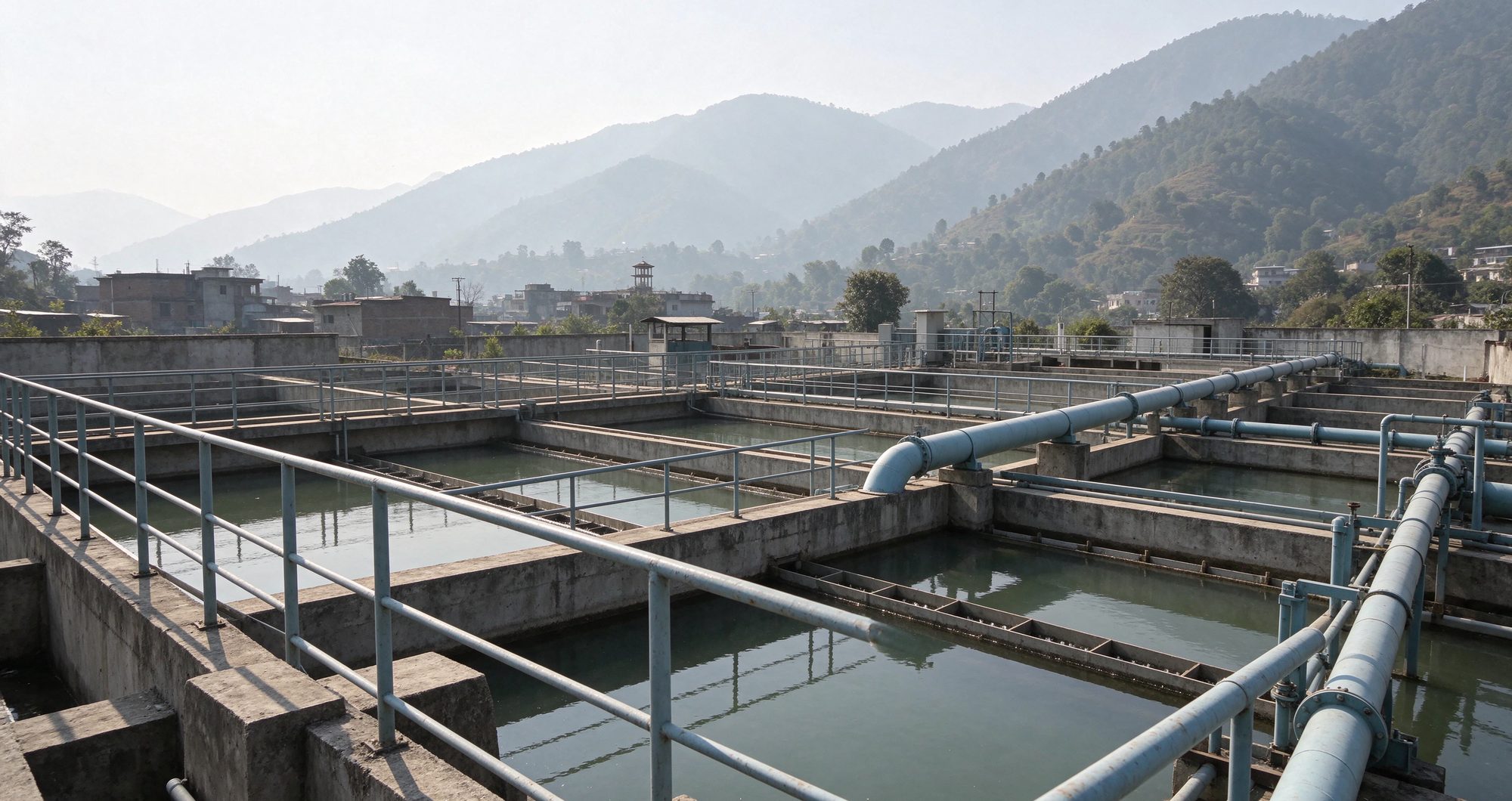

The Asian Development Bank has approved a $50 million loan to support reforms of water supply and sewerage services in Nepal’s Kathmandu Valley, alongside a separate $750,000 technical assistance grant.
Announcing the financing on Friday, 27 November, the bank said the programme would strengthen the institutions responsible for water services and improve utility performance. It is intended to complement infrastructure investment rather than replace it.
The Kathmandu Valley Water Sector Reform Program, Subprogram 1, addresses what the bank describes as long-standing weaknesses: fragmented responsibilities, poor commercial performance, insufficient wastewater treatment and a lack of coordinated planning.
Its central approach is to consolidate water-sector institutions, with the aim of making governance clearer and improving accountability for the services delivered to residents.
Turning infrastructure investment into better services
Arnaud Cauchois, the bank’s country director for Nepal, said reliable water and sewerage services were essential to public health, economic growth and residents’ quality of life. He said the reforms would support existing infrastructure spending by improving institutions, increasing utility efficiency and strengthening resilience to climate-related shocks.
The bank’s November programme report provides the background to that approach. It says the bank has been Nepal’s principal development partner for water security in the Kathmandu Valley since 1999, with investments exceeding $610 million as of 2025.
Although infrastructure provision and operational capabilities have improved, the report says weaknesses in governance and service delivery still prevent those investments from translating fully into reliable, sustainable services.
The report identifies staffing and recruitment problems, together with shortages of specialist skills in managing water losses, process engineering and automated systems. It also points to weaknesses in institutional oversight and enforcement.
Access remains uneven. According to the bank’s assessment, the utility Kathmandu Upatyaka Khanepani Limited serves about 44% of the valley’s population, across 52% of its area. The remaining population is served by around 50 informal water users’ and sanitation committees.
The financial challenges are substantial too. The report says only 15% of bills are based on metered consumption, while tariffs have not been revised since 2013. It warns that even full billing and collection efficiency would leave revenues insufficient to cover the operating and maintenance costs of water and sewerage assets due to be commissioned in 2028.
Two phases and targets for 2030
The programme backs the Nepalese government’s efforts to create a financially sustainable utility focused on residents’ needs. The bank says the intended institution should be capable of providing universal and inclusive services, with greater resilience to disruption.
The reform process has two phases. According to the bank’s announcement, the first has established the governance structure and regulatory framework. The second will put those reforms into practice and embed them within the institutions responsible for delivery.
The programme report describes changes at both federal and Kathmandu Valley levels. These include public-sector restructuring to improve sector governance, alongside institutional and operational reforms intended to turn infrastructure improvements into better services for customers.
By 2030, the bank expects measurable improvements in the utility’s operational, administrative and financial performance. It also anticipates stronger compliance with water-quality standards, better responses to customers and wider access to reliable water supply and sewerage services. These are projected outcomes, not benefits already achieved.
Climate resilience is another stated priority. The bank’s assessment identifies floods, landslides and dry-season water stress among the risks to the valley’s water system. It says such hazards can affect water availability and quality, damage infrastructure and interrupt services.
The financing therefore links improvements in day-to-day management with longer-term water security. The programme’s stated goals extend beyond supplying water, to maintaining service quality, strengthening financial performance and making the institutions responsible more responsive to the people they serve.







