

Thailand aims to provide Myanmar with further evidence by January linking upstream mines to pollution in northern Thai rivers, Deputy Prime Minister Yodchanan Wongsawat said on Friday. He said Thailand also wants concrete measures to address the cross-border contamination within six months.
The timetable follows an agreement in principle this week on joint water sampling. Thai authorities are also drilling groundwater wells and expanding health monitoring for communities affected by concerns about arsenic and other heavy metals.
Yodchanan said existing data pointed to mines in Myanmar’s Shan State as a source of contamination, but Myanmar officials had requested additional proof. The new sampling programme is intended to strengthen that evidence. His account does not represent a jointly accepted finding about responsibility for the pollution.
A Myanmar government spokesperson had not immediately responded to a request for comment on Friday. No agreement to close the suspected mines has been announced.
Joint sampling across the border
Thailand’s Government Public Relations Department said the two countries approved a one-year working framework in principle at their first joint working-group meeting on 25 November at the Thai Ministry of Foreign Affairs.
The framework identifies 12 sampling locations, six in each country. On each side, four sites are on the Kok River and two on the Sai River. The first joint sampling is expected in December 2026 or January 2027, with results to be exchanged at least twice a year.
The countries will also develop a three-year action plan covering the identification of pollution sources, environmental monitoring, early-warning systems, public-health assessments and policy coordination, the Thai government said.
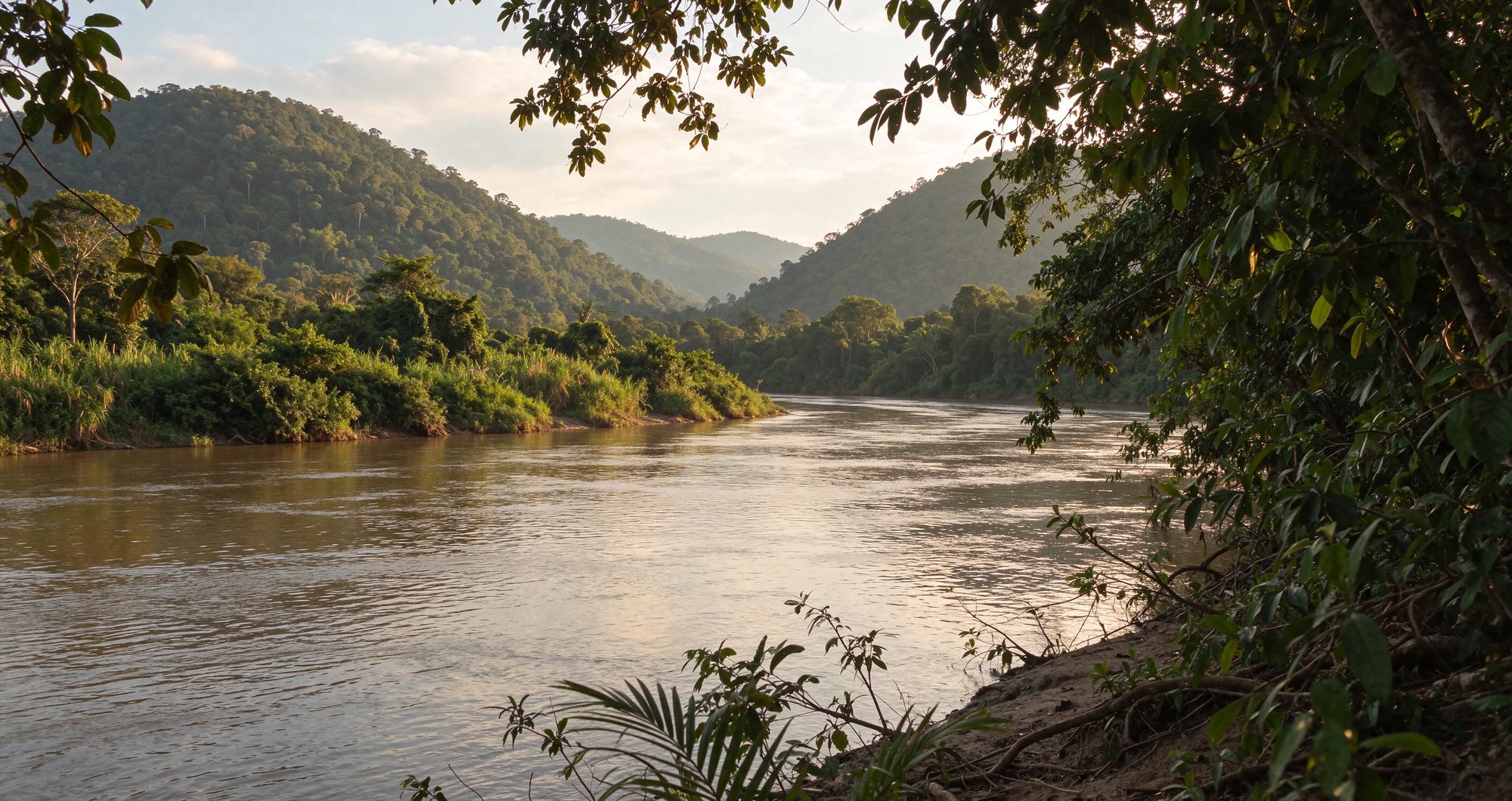
Tests by Thailand’s Pollution Control Department in August found arsenic above standard levels at several locations along the Kok, Sai and Ruak rivers. The Kok flows from Shan State into Chiang Rai province, while the Sai and Ruak form sections of the border between the two countries.
Thai researchers said analysis of water and sediment, together with satellite imagery, pointed towards upstream mining. They reported that arsenic concentrations were higher at the border and declined farther downstream. However, determining the contribution from an individual mine requires samples from the sites themselves.
Thailand has requested a six-month suspension of operations at mines suspected of contributing to the contamination. That proposal remained under consideration on 26 November. It is separate from the monitoring framework and has not resulted in an agreed shutdown.
Clean water and health checks
For communities downstream, the response includes measures to provide alternative drinking water while investigations continue. Thailand’s Department of Groundwater Resources is drilling deep wells to supply 14 villages in Mae Sai district, according to the government’s account.
The Ministry of Public Health has established a forward operations centre in Chiang Rai to monitor risks associated with heavy-metal contamination. It has distributed 2,000 urinary arsenic screening kits and introduced quarterly inspections of drinking-water production facilities, the government said.
Schools in affected areas have also been instructed to assess water quality and coordinate safety inspections with relevant agencies. These measures address water supplies and potential exposure alongside the longer-term effort to trace pollution upstream.
Yodchanan said Thailand wants Myanmar to identify which mines it can control. If the authorities cannot control all of them, he said Thailand would seek China’s help. Not all mining areas are under the control of Myanmar’s government.
The Thai government said it was exploring scientific cooperation with China, including technical assistance, joint surveys and laboratory development. The proposed cooperation offers another route for gathering evidence, but does not settle which mines are responsible or what restrictions might follow.
The next steps are the planned joint sampling and exchange of results. Thailand’s January evidence target and six-month ambition for concrete action remain ministerial objectives, rather than commitments jointly announced by both governments.







