
For many people carrying loss or persistent worry, the struggle is not the absence of feeling. It is the inability to give that feeling a shape that can be held, examined, and eventually shared. Talk therapy helps some. Journaling helps others. But there remains a gap for those who need a different medium, one where melody can carry what words alone keep failing to express. A growing body of research suggests that AI-assisted music interventions can support reductions in anxiety and depressive symptoms while improving emotion regulation. I tested the Ai Song Maker to see whether a tool designed for personal storytelling could serve as a low-barrier entry point for emotional processing, and where its limits become visible.
What Songwriting Offers That Conversation Sometimes Cannot
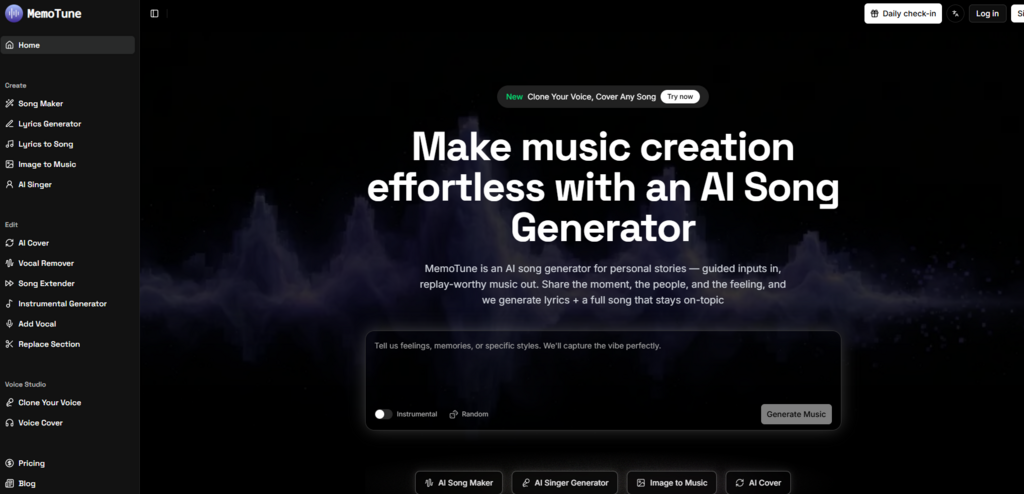
When someone is grieving, the question “How are you feeling?” can land like an accusation. There is pressure to summarise a vast, shifting internal landscape into a socially acceptable sentence. Songwriting bypasses that pressure by externalising the emotion into a structure. The verse can hold the raw ache, the chorus can carry the longing, and the bridge can offer a shift in perspective. In music therapy contexts, songwriting has long served as a powerful medium for expressing unconscious emotions and fostering self-awareness. The platform‘s design, which guides the user to describe a memory, the people in it, and the feeling attached, maps naturally onto therapeutic frameworks that prioritise narrative and emotional specificity over musical skill.
A Personal Processing Session, Step by Step
I approached this session not as a product test but as a private emotional exercise. The goal was not a publishable track but a container for something difficult.
Step 1: Name the Hardest Part Without Editing Yourself
I wrote about a loss I had not fully processed, focusing on a specific moment: the phone call, the quality of silence afterwards, the way ordinary objects in the room suddenly looked foreign. The guided prompts for people, events, and feelings kept me tethered to sensory detail.
Why Writing for an AI Lowered the Internal Censor
There was no therapist in the room, no friend waiting with concern. The blank input field did not offer sympathy or judgment. This neutrality, in my experience, made it easier to write the truth without softening it. I described the exact weight in my chest, the specific song that was playing in the background, the guilt that arrived later. That honesty later became the lyrical and emotional spine of the generated song. From a practical user perspective, the act of writing alone already provided a measure of clarity I had not achieved through rumination.
Step 2: Let the AI Return the Emotion in Musical Form
After submission, the platform generated a complete song that seemed to mirror the emotional contour of my description. The opening was sparse and slow, almost hesitant. The chorus swelled with a grief I recognised.
Hearing Your Own Pain Reflected Back as a Listener
The experience was disorienting in a useful way. I had written the words, but hearing them sung back by a voice that was not mine created distance. The pain was still mine, but it was now outside of me, organised into verses and a bridge. The structure imposed a kind of order on chaos. Research on AI-composed music has found that it can reduce psychological arousal in healthy participants, suggesting that personalised, mood-aligned music may have measurable calming effects. In my testing, the song did not resolve the grief, but it made it feel less shapeless and overwhelming.
Step 3: Refine the Emotional Arc Through Editing
The platform‘s editing features, verse replacement, song extension, and stem separation allowed me to adjust the emotional journey of the song. I wanted the ending to hold more hope without erasing the sadness.
Extending the Outro to Create Space for Breath
I extended the final instrumental section by several measures, letting a soft piano line hold the last note longer. I also replaced a single line in the bridge that felt too resolved, swapping it for something more ambiguous. The stem separation let me lower the percussion and bring the vocal forward during the most vulnerable verse, making the delivery feel more intimate. These adjustments did not require musical knowledge, only honest listening and the willingness to ask whether the song felt true.
Three Emotional Processing Scenarios Tested
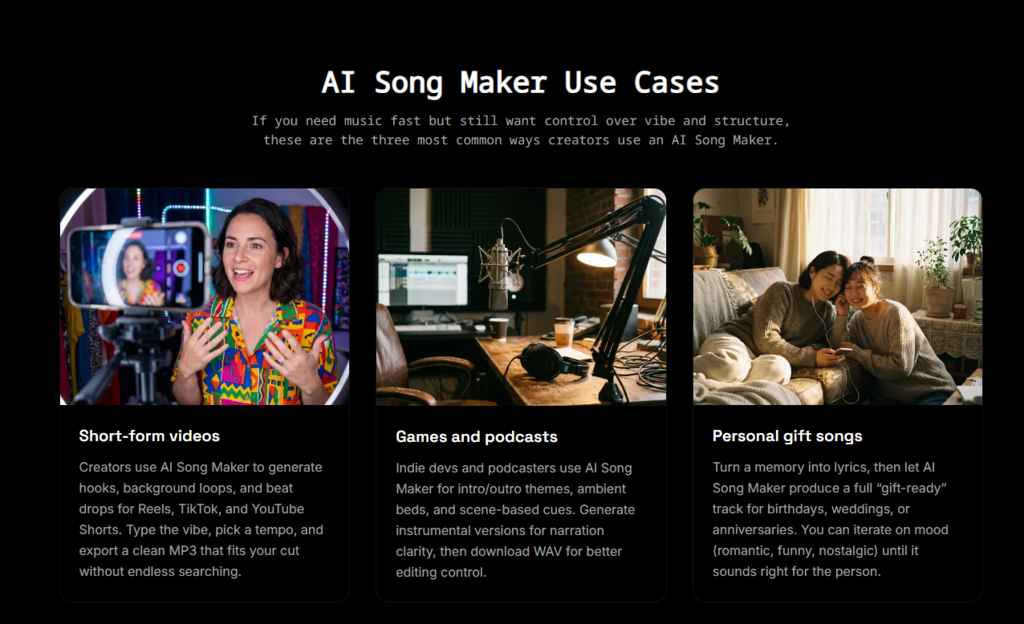
I ran the platform through three distinct inner experiences to see whether the output varied with the emotional complexity of the input.
Test 1: Anxiety Before a Major Life Decision
The task was to turn the diffuse anxiety before a career change into a song. The difficulty was that anxiety resists narrative. It is not a story with a beginning, middle, and end. It is a loop.
I described the physical sensations, the tight shoulders, the racing thoughts at 3 a.m., the fear of regret, and the quiet voice underneath that said this change was necessary. The AI did something interesting. It structured the looping anxiety into verses that built tension and a chorus that released it, then returned to tension in the next verse. The song did not resolve the anxiety, but it modelled a rhythm of tension and release that felt more manageable than the endless mental spiral. Listening back days later, the song served as a timestamp of a difficult state I had since moved through. The limitation was that the AI defaulted to a broadly uplifting chorus, and I had to edit to preserve the ambivalence that felt more authentic.
Test 2: A Song for Someone Who Cannot Receive Your Words Anymore
The task was to write a song for a family member who had passed away, saying the things left unsaid. The difficulty was avoiding sentimentality while staying emotionally direct.
I wrote about a specific regret, a missed visit, and a piece of advice they had given that I only understood years later. The output was gentle and direct. The lyrics name the regret without wallowing. The melody held a tender, questioning quality. For someone carrying unfinished emotional business, the song became a vessel for words that could no longer be delivered in person. The Ai Song Maker functioned here not as entertainment but as a private ritual. The ability to download and keep the file meant the message was not lost to memory.
Test 3: Marking the End of a Difficult Chapter
The task was to create a song that acknowledged surviving a prolonged period of depression. The difficulty was balancing honesty about the darkness with genuine celebration of the return to light.
I described the fog, the slow re-emergence, the people who stayed, and the fragile gratitude of feeling okay again. The song captured the contrast. The verses were in a minor key, subdued and introspective. The chorus lifted into a major key that did not erase the minor verses but surrounded them with warmth. This felt psychologically accurate. Recovery does not delete the hard chapters. It incorporates them. The generated song, with some editing to ensure the bridge did not rush the resolution, became a personal anthem that I could return to on harder days.
Comparing Emotional Processing Modalities
The table below contrasts different ways a person might process difficult emotions through creative means.
| Modality | Journaling or Free Writing | Traditional Music Therapy | Memotune‘s Story-Driven Song Creation |
| Required Skill | Basic literacy; no training needed. | Facilitated by a trained therapist. | None; starts with a personal memory in plain language. |
| Externalisation of Emotion | On the page; private and unstructured. | Guided by therapist; interpersonal. | Into a structured song; the emotion becomes a listenable artefact. |
| Privacy and Autonomy | Completely private unless shared. | Shared in a professional relationship. | Private unless the user chooses to share; the platform states it does not use content for training. |
| Accessibility | High; pen and paper or any device. | Limited by cost, availability, and stigma. | High; web-based and available at any hour. |
| Tangible Output | Written words. | Therapeutic insight; possibly recorded music. | A downloadable MP3 or WAV file that can be kept and replayed. |
Where a Song Cannot Replace a Conversation or a Clinician
The platform is not a therapeutic device, and it should not be mistaken for one. It does not diagnose, it does not respond with empathy, and it cannot intervene in a crisis. A person in acute distress needs human support, not an AI output. The generated song reflects only what the user puts into it, so if the user is stuck in a distorted self-narrative, the song may reinforce rather than challenge that distortion. The vocal delivery, while pleasant, cannot convey the specific warmth or concern of a human voice, which limits its capacity to soothe in the way a loved one‘s voice can. Custom voice models, which might allow a user to hear a comforting familiar voice, are listed as coming soon and were not available during testing. Additionally, the platform’s privacy commitment, while stated, should be verified by users who are processing especially sensitive material. The result may vary, and I learned to treat the song as a supplement to, never a substitute for, appropriate care.
Who Might Find a Processing Partner in a Song Generator
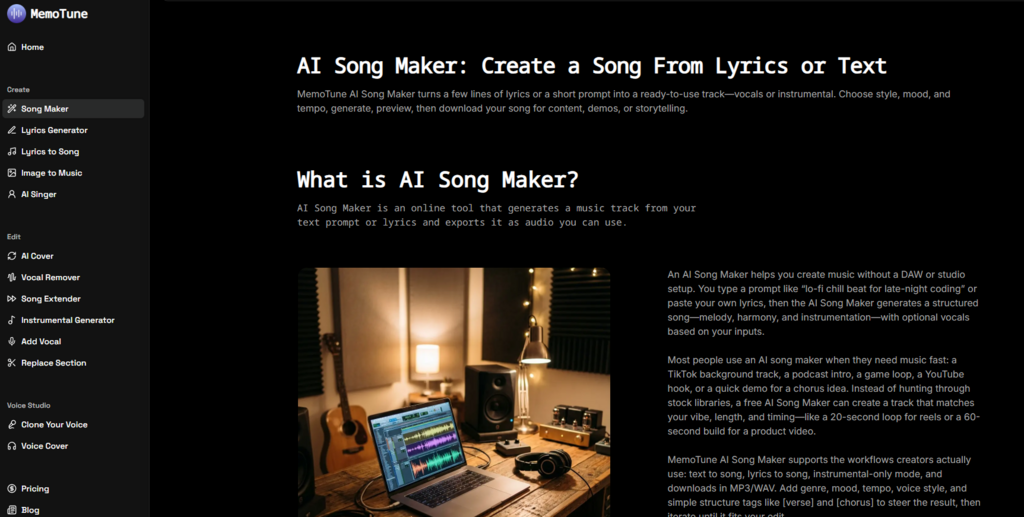
The platform will most benefit individuals who find that conventional talk-based processing leaves something unexpressed. Those navigating grief, anxiety, life transitions, or the need to say something to someone no longer reachable may discover that turning a memory into a structured song externalises the emotion in a way that makes it easier to examine, share, or simply set down. It works best when the user approaches the input with emotional honesty and specific detail. It is not therapy, but it can function as a companion practice, one that meets a person at 2 a.m. when no one else is awake, and offers a way to turn the weight into something that can be heard.