
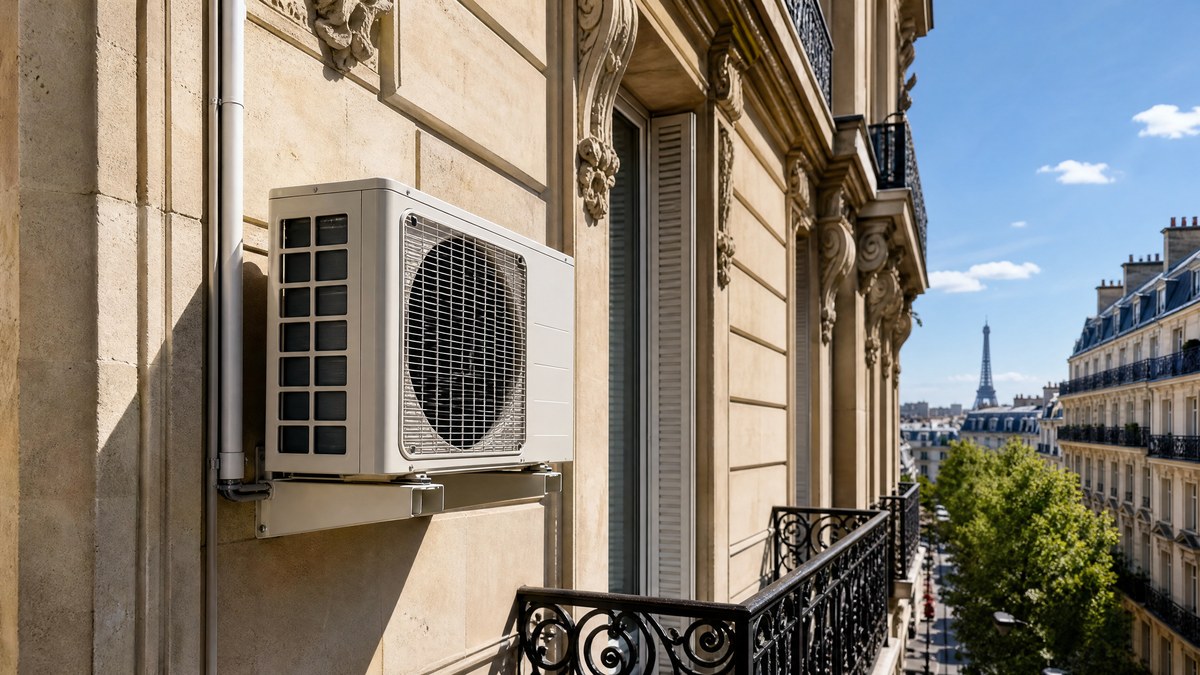

France’s record-breaking heatwave in late June 2026, culminating on a Tuesday when temperatures nudged 40°C, has reopened a contentious national debate about air-conditioning. The extreme temperatures, and the disruption they caused to schools, hospitals and everyday life, have pushed policymakers and political figures to confront a long-standing ambivalence towards mechanical cooling, balancing urgent public-health needs against environmental and energy concerns.
Heatwave exposes gaps in public infrastructure
On the day that became the hottest in the country’s recorded history, thousands of schools were forced to close, highlighting how ill-prepared many public buildings are for prolonged high temperatures. French hospitals and schools are only rarely equipped with air-conditioning, a condition that has been repeatedly noted in recent coverage of the crisis. The closures affected pupils and parents directly, while hospitals faced the additional strain of caring for vulnerable patients in overheated wards.
A report by Paris correspondent Hugh Schofield, dated 24 June 2026, set out striking figures on household air-conditioning uptake that help explain part of the problem, noting that only about 25% of homes in France have an air-conditioning unit. That contrasts sharply with levels recorded in some other countries, where AC is far more widespread. The same report cited approximately 50% penetration in Spain and Italy, and around 90% in the United States and Japan.
Political responses, and an unusual cross-spectrum alignment
The heatwave has prompted fast political reactions. On the right, Marine Le Pen has urged a mass subsidised roll-out of air-conditioning, framing mechanical cooling as a necessary adaptation to more frequent extreme temperatures. On the left, Marie Tondelier, leader of the Ecologists party, has signalled a break with her party’s previous opposition to large-scale air-conditioning expansion, saying that cooling will be needed in schools and hospitals.
The convergence of views from traditionally opposed parts of the political spectrum underscores how acute the public-health dimension has become. Calls for rapid adaptation measures, such as installing or retrofitting air-conditioning in critical public buildings, are being driven by immediate risks to health and daily functioning during heat extremes. The debate is no longer solely about long-term climate policy, but also about practical responses to an event unfolding now.
Policy tensions, energy and environmental trade-offs
Expanding air-conditioning raises several policy dilemmas. Air-conditioning can protect vulnerable people and maintain normal activity during heatwaves, but it also increases electricity demand, which can strain grids and, depending on the electricity mix, raise greenhouse gas emissions. The balance between short-term adaptation to protect lives and the long-term goal of reducing emissions is at the heart of the renewed argument.
Policy options being discussed include targeted subsidies for public buildings, stricter efficiency standards for cooling units, and prioritising low-carbon electricity sources to power any expansion. There is also a broader set of non-mechanical measures that experts commonly recommend, including improved building insulation, reflective roofing, shading, urban greening, and adjusted school and work schedules to avoid peak heat.
France’s relatively low household penetration of air-conditioning helps explain why the shock of the heatwave has been so acute. Many cities and towns were designed for more temperate summers, and civic planning has not prioritised mechanical cooling. Installing AC at scale will require careful coordination between national and local authorities, funding mechanisms, and adjustments to building codes, particularly for historical buildings where retrofitting presents technical and aesthetic challenges.
Implications for travel and tourism
The tourism and travel sectors are closely watching the debate. Visitors, and domestic tourists, increasingly expect comfortable accommodation and transport in high temperatures. Hotels and rental properties that lack effective cooling risk losing business during heatwaves, while transport operators face operational challenges when rolling stock and stations are not designed for sustained heat.
At the same time, any large-scale increase in air-conditioning use has implications for peak electricity demand in popular destinations during the busiest months. That could require investment in grid resilience and contingency planning to avoid blackouts that would be damaging for spectators, travellers and residents alike. For destinations marketing themselves as summer escapes, the ability to offer reliable cooling will become a competitive consideration.
Where the debate may move next
The immediate political pressure is likely to focus on schools and hospitals, given the visible closures and the vulnerability of patients and children. Any government response will face questions about who pays for installations and how to ensure the measures are efficient and environmentally responsible. The apparent shift in the Greens’ stance, with Marie Tondelier acknowledging the need for cooling in public institutions, signals potential cross-party space for pragmatic measures aimed at protecting health.
Longer term, the challenge will be to integrate cooling into a broader resilience strategy that also advances decarbonisation goals. That will mean pairing any expansion of mechanical cooling with energy efficiency upgrades, incentives for low-emission power, and planning standards that reduce heat gain in buildings. How France reconciles the immediate demand for relief from heat with its climate commitments will be a central political test in the coming months.
Frequently Asked Questions
Why has this heatwave reignited debate about air-conditioning?
Because the heatwave produced the hottest day on record in France, with temperatures approaching 40°C, and forced thousands of schools to close. That exposed how few public buildings are equipped to cope with extreme heat, prompting calls for a rapid expansion of cooling to protect public health.
How common is air-conditioning in France compared with other countries?
Only about 25% of households in France have an air-conditioning unit, considerably lower than in several other countries. The comparison figures cited in recent reporting are approximately 50% in Spain and Italy, and about 90% in the United States and Japan.
What are the main concerns about expanding air-conditioning?
The principal concerns are increased electricity demand and potential rises in emissions if the electricity used is not low-carbon. There are also costs and practical challenges in retrofitting public and historical buildings. Policymakers must weigh the immediate public-health benefits against environmental impacts, while seeking efficiency and renewable-energy solutions.
About the author: Senior travel correspondent at London Daily News. Read more at https://www.londondaily.news/







