
Sri Lanka is to receive a further $110 million in financing to repair and rebuild 600 kilometres of roads damaged by Cyclone Ditwah, under a transport project now extended by three years. Approved on 30 September, the financing is directed towards links needed to reconnect communities with markets, schools and health facilities.
The additional financing is being provided through the International Development Association’s Crisis Response Window, which enables eligible countries to draw on dedicated resources after severe crises. It extends the ongoing Inclusive Connectivity and Development Project. With the new allocation, total World Bank investment in Sri Lanka’s transport connectivity under that operation reaches $610 million.
Restoring access after widespread damage
The 600 kilometres targeted by the new package are a fraction of the transport network affected by the cyclone, but are intended to restore essential connections in the hardest-hit communities. The works are expected to reach close to two million people across eight districts, with more than 830,000 expected to benefit directly. Specific roads and districts have not yet been identified.
That distinction matters in a country where damaged local links can separate households from everyday services and prevent agricultural produce from reaching buyers. The programme is expected to benefit close to 22,000 tea, vegetable and paddy farmers by reconnecting them with markets and supply chains. It also forecasts about 5,671 new or improved jobs in reconstruction and maintenance. These are projected benefits, rather than outcomes already delivered.
Cyclone Ditwah struck in November 2025 and affected nearly two million people across all 25 districts. Estimated damage across the country was $4.1 billion. Transport infrastructure suffered an estimated $973 million in damage, including close to 2,000 kilometres of provincial roads, more than 3,500 kilometres of rural roads and nearly 700 bridges. Recovery needs for the transport sector were put at $1.31 billion.
Rebuilding to withstand future shocks
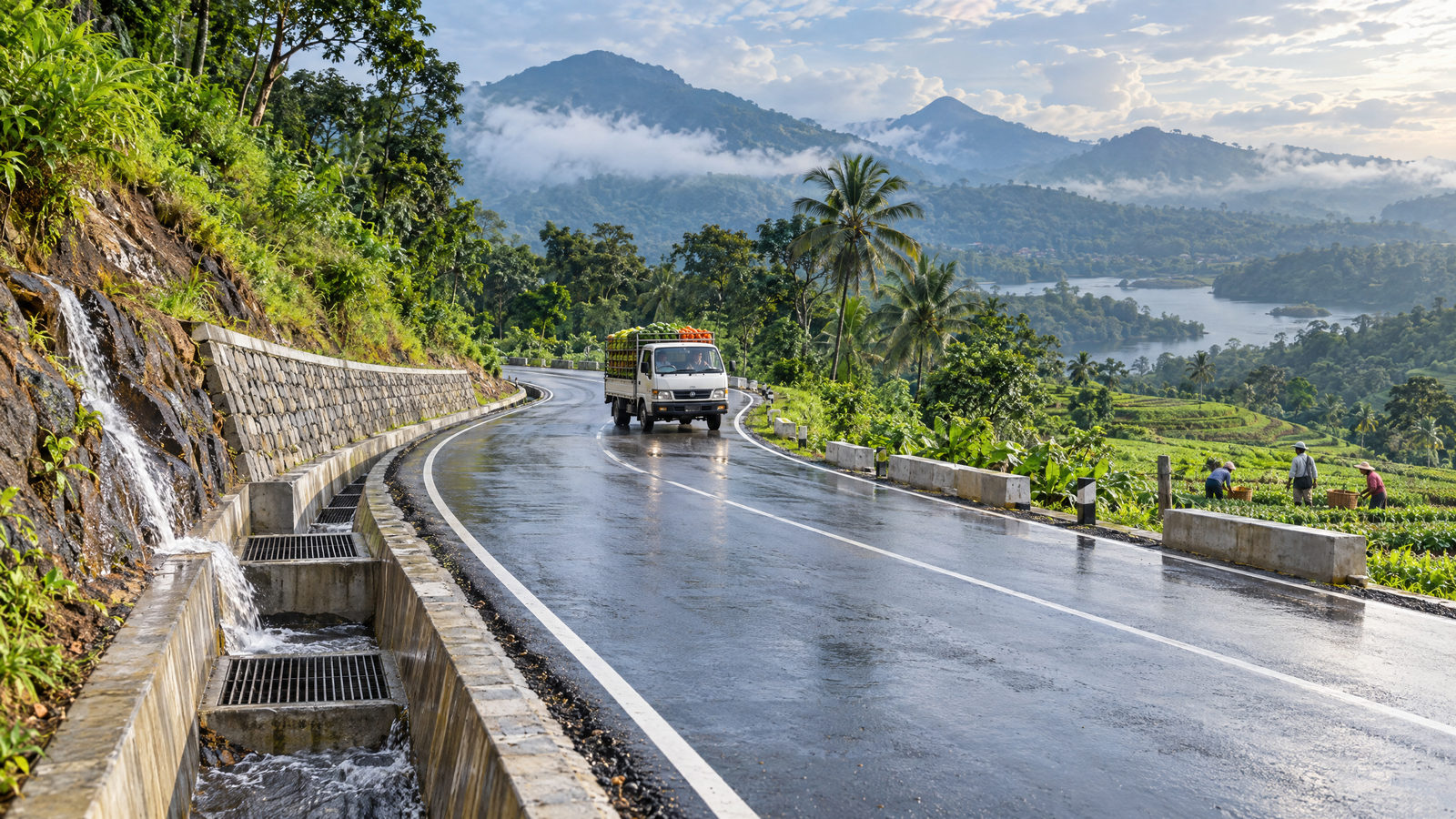
The planned repairs are to use climate-resilient standards rather than simply restore damaged roads to their previous condition. Design measures include better drainage, protection against landslides and updated engineering intended to withstand more frequent and severe extreme weather. Those features are especially relevant where heavy rain can trigger slope failures, wash out road surfaces or overwhelm drainage, although the measures to be used on each route have not been specified.
Building resilience into repairs can reduce the chance that the same links will fail again in future storms. It can also help keep access open for emergency services, pupils, patients and producers. The practical value will depend on choices made during detailed design and construction, as well as how drainage and protective works are maintained after completion.
The three-year extension gives the existing project a longer period to carry out the recovery work, while bringing the operation’s overall transport investment to $610 million. A completion date for the 600 kilometres, procurement timetable and route-by-route schedule remain unspecified. The next stages will need to translate the funding approval into selected road sections, engineering plans and construction and maintenance work.
For farmers, a repaired road is useful only if it remains passable and provides a dependable connection to buyers. For residents, reliable links can make essential services more reachable. The scale of expected reach is substantial, but the figures remain forecasts; the effects will depend on which communities are connected and how effectively the upgraded infrastructure holds up during future severe weather.
A new recovery allocation
The package is a new road-recovery allocation following the cyclone, distinct from the World Bank’s earlier emergency response, which repurposed up to $120 million from existing projects for a broader set of essential services and infrastructure. This approval is specifically tied to repairing and reconstructing roads through the extended connectivity project. It therefore marks a significant step in a longer recovery, not evidence that the wider transport damage has been resolved.
With sector recovery needs estimated at $1.31 billion, the $110 million financing will address part of the challenge. Its public impact will ultimately be measured not only by kilometres rebuilt, but by whether communities regain safer, more durable access to schools, healthcare, markets and livelihoods.